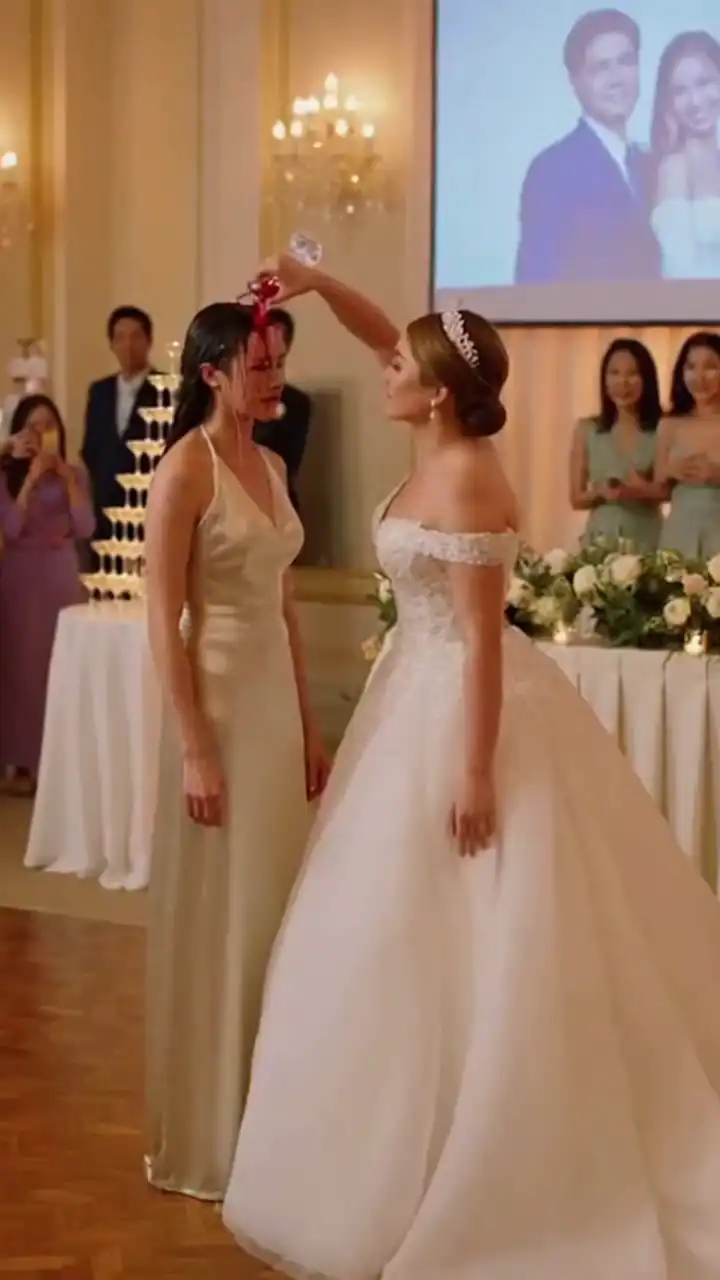
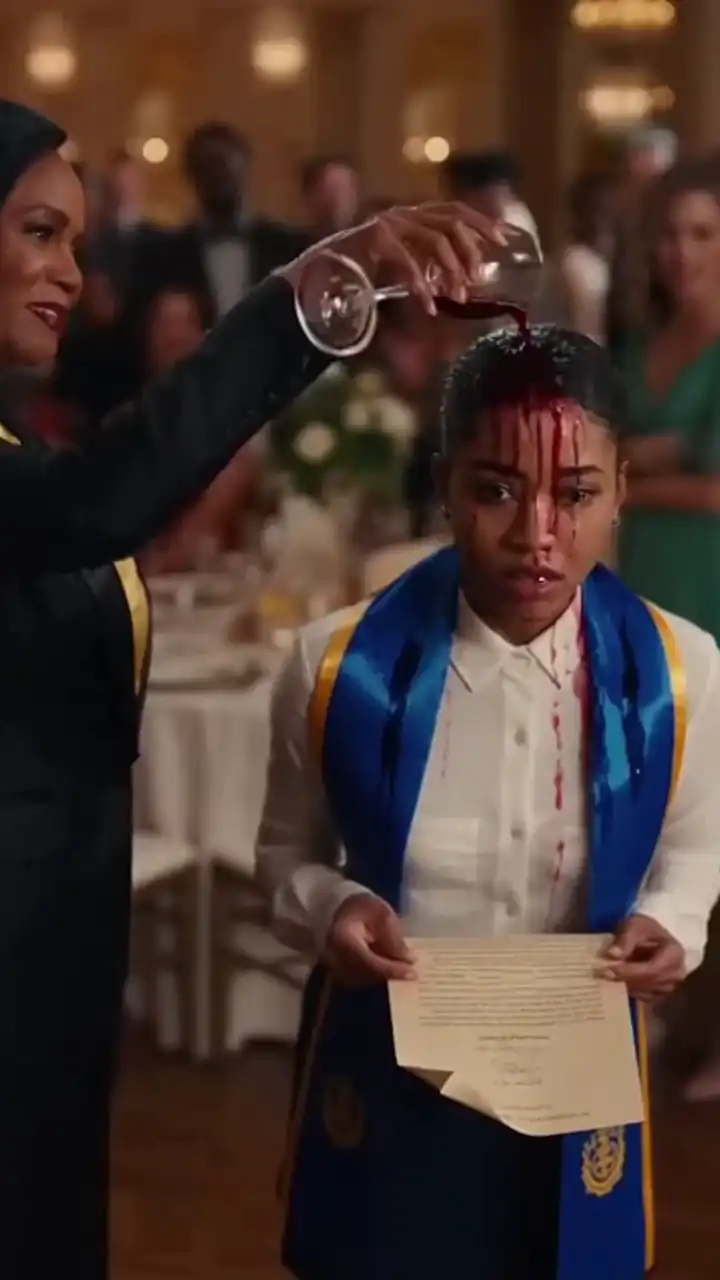
RED WINE ON THE ACCEPTANCE LETTER
The officer came in first.
Not fast.
Certain.
The three people behind him wore dark suits, flat expressions, and state badges clipped where everyone could see them. One of them, a woman with a silver folder under her arm, scanned the room once and landed on the giant screens.
She didn’t look surprised.
My boss did.
“Turn those off,” Vanessa said immediately, too sharp, too loud. “Now.”
Nobody moved.
The AV tech in the back had gone still with both hands lifted off the console like touching anything else might get him arrested.
The spreadsheet stayed up.
So did the heading.
Grant Diversion.
Under it were rows of dates, transfer amounts, student program codes, and internal notes I knew by heart because I had entered half of them under instructions that had never looked clean enough to trust.
Vanessa took one step toward me.
Then another.
Her face had lost all color except two bright patches high in her cheeks. Wine still glistened on her fingers.
“What did you do?” she said.
I looked at her hand first.
Red on her rings.
Red on my letter.
Then I looked at her.
“What you trained me to do,” I said. “Document everything.”
That got a sound from the room.
Not cheering.
Worse.
That intake people make when they realize they were invited to stand inside someone else’s collapse.
The officer moved between us before Vanessa could grab my arm.
“Ma’am,” he said.
She tried to smile for him.
It came out wrong.
“This is a private family event,” she said. “My assistant is unstable and—”
The woman with the silver folder cut in. “Vanessa Cole?”
Vanessa stopped.
“Yes?”
“I’m with the State Office of Higher Education Oversight. We have an order to secure records connected to the North Bridge Access Initiative, the Cole Foundation scholarship accounts, and associated disbursements.”
No one at the tables was pretending not to listen anymore.
A fork hit a plate somewhere near the back.
Vanessa laughed once.
A bad sound.
“At my son’s graduation dinner? Seriously?”
The woman opened the folder and removed one page. “Your son’s graduation dinner is being held in the university conference ballroom purchased in part with restricted student access funds.”
That landed.
Hard.
The room changed shape around us.
A few guests who had been standing with drinks took one step back, as if distance could edit them out of photos later.
The giant screens cycled again.
More pages.
A transfer log.
Vendor invoices.
A scanned email approval.
Then an image of my own work dashboard appeared, with my employee login in the top corner and an archive timestamp in red.
Vanessa saw that and pointed at me.
“There,” she said. “There it is. She hacked internal files. I want her removed.”
“I didn’t hack anything,” I said.
I didn’t need to raise my voice.
The room was silent enough already.
“I exported records I was ordered to clean.”
That silence sharpened.
At the head table, Vanessa’s son slowly stood up in his graduation sash, staring at the screen behind his mother. He was twenty-two, handsome in the polished way money makes easy, and for the first time all evening he looked his age.
“Mom,” he said.
She didn’t turn.
“Not now.”
He looked at the transfer line with his own name tied to a “leadership fellowship” payment larger than most people in that room made in a year.
“Why is my summer stipend on a scholarship account?”
Vanessa finally looked at him.
Only for a second.
It was enough.
The answer was on her face before she tried to manufacture one.
Because she thought no one would ever ask in public.
Because she thought she owned the public.
I had worked for Vanessa Cole for three years.
Assistant was the title.
In practice, I was scheduler, fixer, ghostwriter, travel coordinator, donor liaison, and the person who stayed late making impossible things appear ethical on paper. She ran a foundation attached to the university and called it philanthropy. Other people called it influence. She preferred the phrase “opening doors.”
When she hired me, she was all praise.
You’re sharp.
You’re loyal.
You know how to make people comfortable.
She said I had instincts she couldn’t teach.
What she meant was this:
I could make a bad request sound ordinary in an email.
I could reformat numbers until they looked administrative instead of predatory.
I could sit with anxious parents, smiling, while their kids waited to hear whether the “access pipeline” scholarship promised in every donor speech would actually exist by August.
At first, I believed in the mission.
That part is the worst to admit.
I was the first person in my family to finish college. My mother cleaned houses and pressed uniforms at a hotel laundry for fifteen years. My uncle drove county inspection routes in a state car with a cracked cupholder and an attitude that scared contractors into following code. We were not connected people. We were paperwork people. Rule people. Keep copies people.
Vanessa liked that background when it served her.
She introduced me at donor lunches as “proof our programs work.”
When she needed someone to sit in photos with scholarship recipients, she pulled me in beside them.
When she wanted to sound compassionate, she’d put one manicured hand on my shoulder and say, “Talent is everywhere. Opportunity is not.”
The line always got applause.
Then she’d send me upstairs to move money between sub-accounts so the gala flowers could clear before the quarter closed.
The first time I flagged a transfer, she smiled.
The second time, she sighed.
The third time, she shut the office door and explained the real arrangement.
“Large donors don’t pay for sad brochures,” she said. “They pay for access, naming rights, and outcomes. If we need to bridge funds temporarily, we bridge them.”
Temporarily became repeatedly.
Repeatedly became structurally.
By year three, whole scholarship pools were being “borrowed” to cover events, travel, executive perks, and favors for board families whose children somehow always landed fellowships, campus housing upgrades, and overseas stipends under program codes meant for first-generation students with verified need.
I started keeping copies six months before the dinner.
Not to destroy her.
To protect myself.
That is less noble and more true.
The first clue that she was preparing to throw me overboard came in a meeting I wasn’t supposed to hear. Her office door was almost shut. Her son had just gotten into a graduate program after a donation-heavy admissions season, and the foundation accounts were under tighter review because one donor’s accountant had asked the wrong question.
I heard Vanessa say, “If anything surfaces, it goes through her login.”
Her deputy asked, “Will she fight it?”
Vanessa answered, “Not if she wants a recommendation.”
After that, I copied everything.
Exports.
Approval chains.
Text messages.
Drafts with tracked changes.
A voicemail where she told me to “reclassify the student housing reserve into donor cultivation before audit season.”
I didn’t know what to do with it until three weeks before the graduation dinner, when a reimbursement form crossed my desk for the ballroom rental, floral installations, valet upgrades, and engraved wine service for what was described as “student recognition programming.”
It was her son’s party.
Billed to the same initiative that had just denied emergency textbook grants to eleven incoming freshmen.
I sent her a note.
Just one sentence.
This cannot be charged to the grant.
She called me into her office and read my own email back to me like it was a joke.
Then she softened her voice.
That was always the dangerous part.
Gentle Vanessa.
The version that came close, lowered her tone, and made cruelty sound maternal.
“You’re getting emotional,” she said. “Take the weekend. On Monday, bring me your laptop and we’ll talk about whether this role is still a fit.”
A severance trap.
A data wipe.
A quiet burial.
Instead, I called my uncle.
Not because he was powerful.
Because he was exact.
He worked for the state in facilities and compliance, and he knew one thing better than anyone I had ever met: where to hand a problem so it couldn’t be hidden.
I told him I wasn’t asking for favors.
He said, “Good. I don’t do favors. I do routes.”
Then he asked for dates, copies, account names, and whether I had preserved originals offsite.
I had.
He didn’t touch the files himself.
He gave me two names.
One in university compliance.
One at the state oversight office.
He told me how to submit them.
He told me what not to say on the phone.
He told me to print the acceptance letter I had been too afraid to celebrate yet.
That part threw me.
A week earlier, I’d been admitted to a graduate program in public administration on partial scholarship. Night classes. A path out. Vanessa knew, because her office had intercepted the recommendation request before I submitted it elsewhere. She congratulated me in front of staff, then later told me that “this season might not be the time to get ambitious.”
When the invitation to her son’s graduation dinner arrived in my inbox, I knew it wasn’t an honor.
It was a stage.
She wanted me there in neutral colors, smiling at donors, available to absorb blame if needed.
I went because by then the files were already submitted and the oversight office had told me only one thing: keep access open, do not alter anything, and wait.
I didn’t know they were coming that night.
I only knew someone was finally looking.
And then, in the middle of toasts and applause and fake praise, Vanessa came toward me with that soft face.
She touched my arm.
Leaned in.
And whispered, “You should leave before someone asks why support staff brought an acceptance letter to a family celebration.”
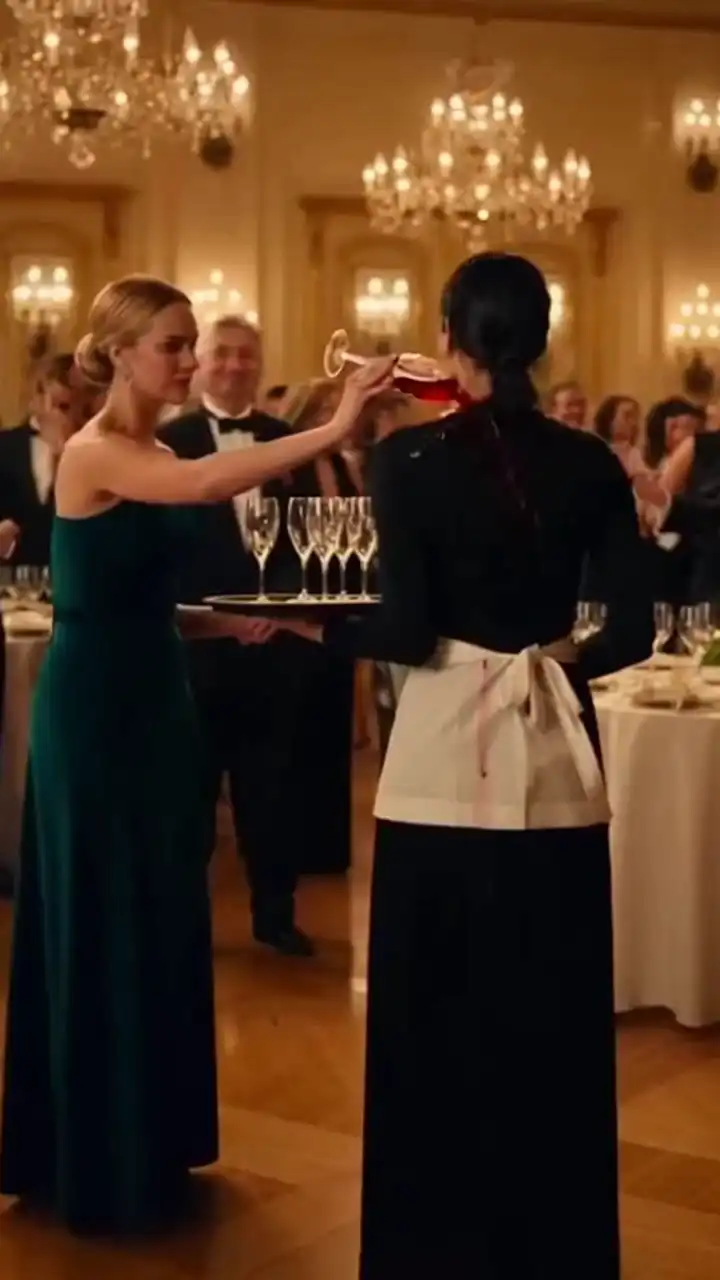
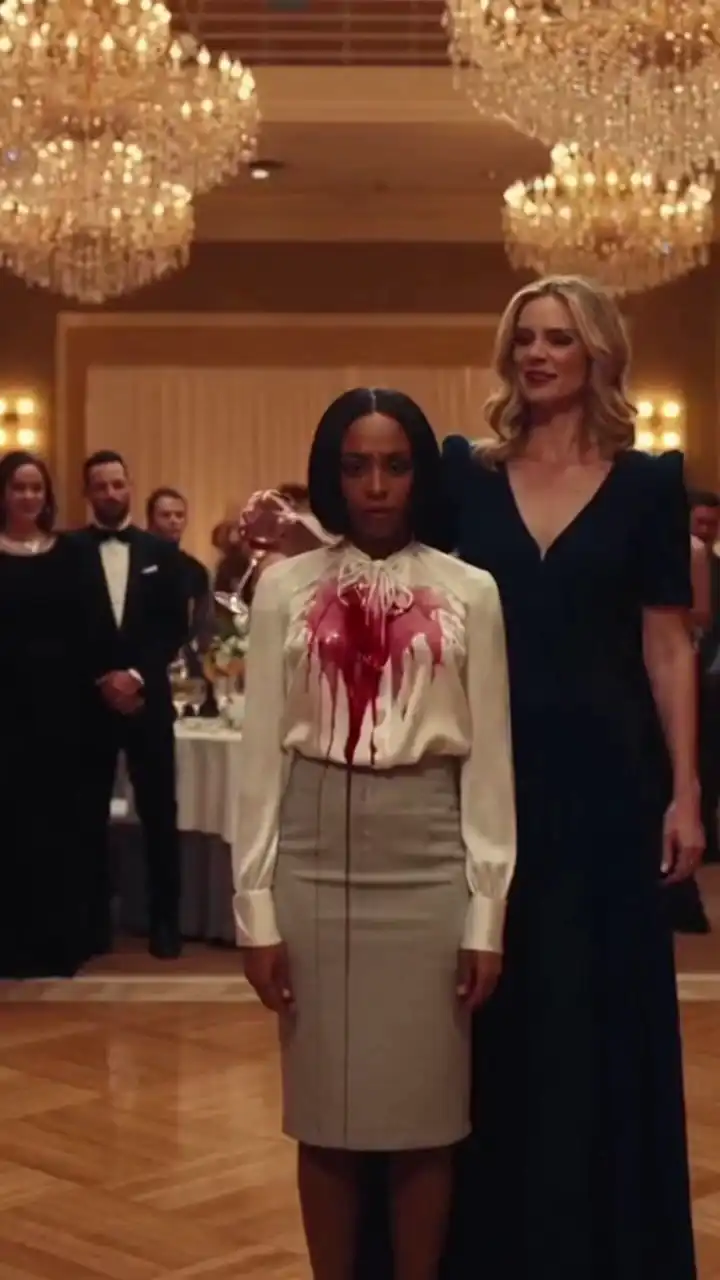
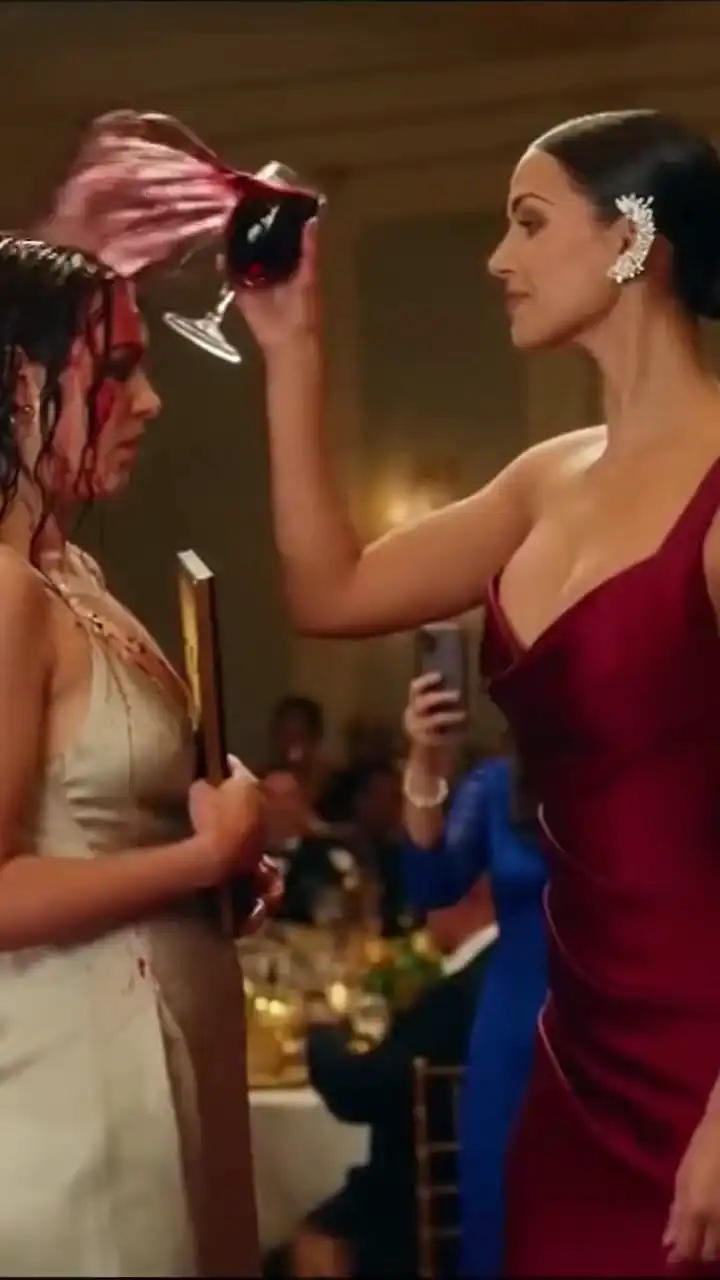
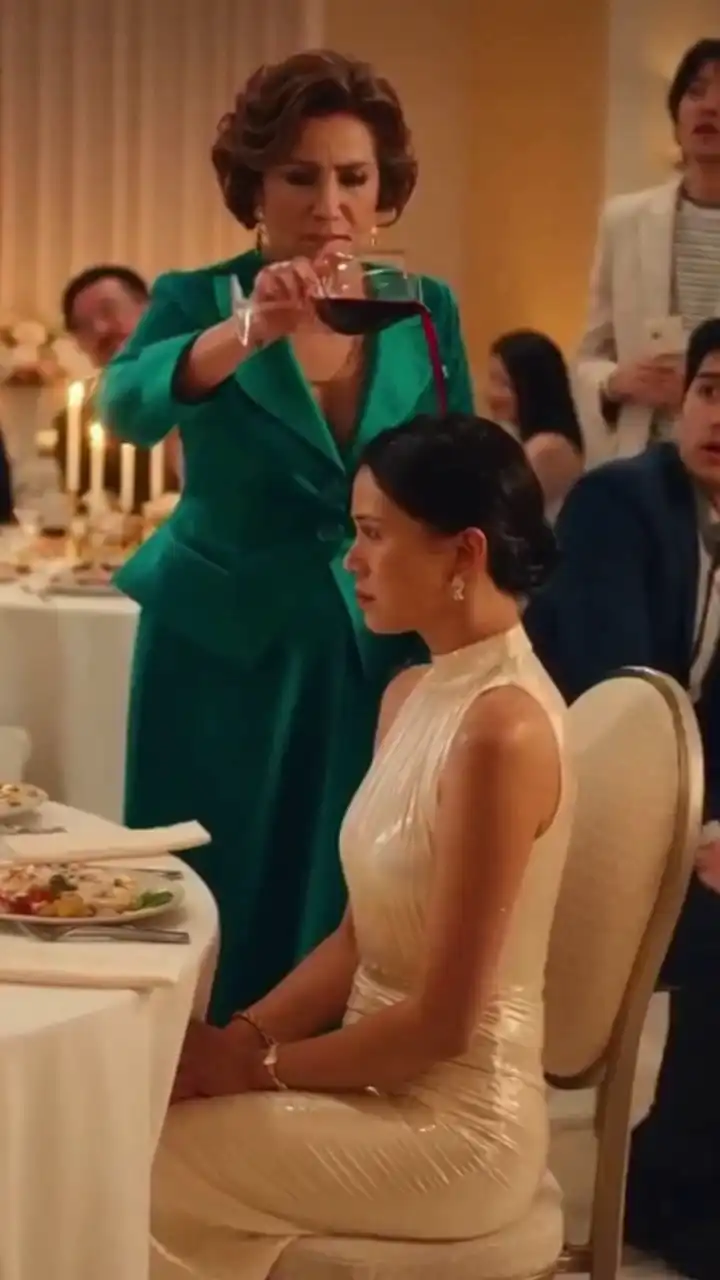
Then she poured the wine.
Not in anger.
In control.
Like she was signing her name.
Back in the ballroom, one of the oversight officers spoke quietly to the AV tech. The screens froze on an expense summary that tied catering and alcohol service to restricted student retention funds.
People started checking their own phones.
They were filming less now and forwarding more.
Vanessa saw that too.
She pivoted fast, choosing a new audience.
“Everyone, please,” she said, facing the room. “There’s clearly been a misunderstanding involving internal drafts and a disgruntled employee.”
“Disgruntled?” I said.
She glared at me.
The officer beside her said, “Ma’am, stop addressing the room.”
That almost made a few people laugh, but no one wanted to be the first.
Her son stepped away from the head table.
He looked at me, then at the acceptance letter hanging wet from my hand.
“I didn’t know,” he said.
Maybe he meant the funds.
Maybe he meant the setup.
Maybe he meant any of it.
I nodded once.
“I know.”
Vanessa snapped toward him. “Ethan, sit down.”
He didn’t.
That was the first thing she lost that no one could return.
Immediate obedience.
A man I recognized from the university board rose halfway from his chair and asked the officers whether they had a warrant.
The woman with the folder corrected him without heat. “An order. And yes, counsel has copies.”
He sat back down so fast his chair legs scraped.
Two security staff who had started toward me when Vanessa called for them were now standing uselessly by the doors, unsure whether they worked for the venue, the foundation, or the state.
The answer, for tonight, was none of the above.
One of the officers asked for Vanessa’s phone.
She stared at him.
“You cannot be serious.”
“I am.”
She took one step back.
That was enough for the uniformed officer to shift his stance.
Not threatening.
Final.
“Ms. Cole,” he said, “do not make this harder than it is.”
She looked around for rescue.
From donors.
From board members.
From the dean who had just praised her generosity twenty minutes earlier.
No one stood up.
A woman in emerald silk quietly moved her purse off the neighboring chair as if Vanessa might be contagious.
Vanessa handed over the phone.
Then she remembered me again.
This time her voice went low enough that only the people nearest us heard.
“You think this makes you safe?”
“No,” I said.
It was the most honest answer I gave all night.
Safety had left the building when I hit send on the files.
What this made me was finished.
With her.
With begging.
With letting polished people decide what counted as truth.
The oversight team split.
One officer headed upstairs with the university compliance director, who had arrived breathless and sweating through his collar.
Another began photographing the display screens, the ballroom signage, the event invoices left at the registration desk.
The woman with the silver folder asked me, “Do you still have access credentials?”
“For about another hour, probably,” I said.
“Come with me.”
Vanessa lunged at that.
“No. She doesn’t go anywhere with state personnel without counsel.”
The woman looked at her. “She’s not the one we’re here for.”
That line traveled across the room faster than any scream could have.
I went with them to a small conference room behind the ballroom where centerpieces were stacked on carts and spare place cards lay in open boxes. My blouse was still wet. The acceptance letter was ruined beyond saving, pink and curling at the edges.
The officer asked me for my laptop.
I told her it was in the coat room.
A venue attendant retrieved it using two fingers, as if it were evidence already.
It was.
We sat under fluorescent lights while the party died on the other side of the wall.
I logged in.
Showed them the mirrored archive.
The email chains.
The reimbursement tags.
The internal calendar notes where “student recognition dinner” transformed into “Ethan private celebration” between draft versions.
The officer asked short questions and wrote fast.
When she got to the voicemail transcript, she looked up.
“Do you have the original audio?”
“Yes.”
“Good.”
Outside, I heard raised voices.
Then one sharp cry.
Then nothing.
Later I learned what happened in that gap.
A donor had cornered the dean.
The dean had denied knowledge.
The donor’s attorney, who had come as a guest, had requested copies of everything on the screens for his client’s records before leaving.
Two board members walked out through the kitchen to avoid cameras at the front.
Vanessa tried calling a trustee from another phone and was told not to contact anyone until counsel arrived.
By midnight, the ballroom was half stripped.
Florals gone.
Candles boxed.
Linens stacked in gray carts.
The wine stain on the floor near the head table had been blotted into a larger, uglier shadow.
I came back in once to get my bag.
That was when I saw the rest.
Vanessa sitting alone at a side table without her son.
No glass.
No phone.
Mascara tracked lightly under one eye, not enough to look ruined, just enough to show the cost.
She looked at me as if we were still in her office and she still had moves left.
“You think they’ll admire you for this?” she asked.
I put my bag on my shoulder.
“This was never about admiration.”
“Then what?”
I glanced at the ruined slideshow screen, now black.
At the place cards still reading CELEBRATING ETHAN in gold script.
At the catering staff quietly packing untouched desserts into trays.
“Records,” I said.
And I walked out.
The next months were ugly in concrete ways.
Vanessa was placed on leave within forty-eight hours.
Then removed.
The foundation accounts were frozen pending review.
The university announced an external audit and a “temporary pause” on discretionary programming, which was their cowardly way of admitting they had no idea how much of the machine had been built on deliberate blindness.
Three board members resigned before subpoenas reached them.
Two did not resign fast enough.
The dean survived, barely, by claiming inadequate oversight and sacrificing half his senior staff.
Vanessa’s son deferred his graduate program.
The venue invoice for the ruined party was reissued to the family personally after the grant charge was voided.
The school newspaper printed the first story.
Then the city paper.
Then local TV found old scholarship applicants willing to speak on camera about disappearing aid, delayed housing, and promises that evaporated after photo ops.
My name leaked by week two.
Not from the state.
From someone inside the university who still thought assistants existed to be used and discarded.
I got messages.
Some grateful.
Some filthy.
A donor’s wife wrote that I had “humiliated a respected woman during a sacred family milestone.”
One student whose grant had been denied sent me a photo of her bookstore receipt with the caption, They told me there was no money.
That one I kept.
The graduate program let me defer one semester and preserve my scholarship because I spent half the summer in interviews, document reviews, and one closed-door session with attorneys who wanted every timeline down to the minute.
I bought three new blouses.
I replaced the acceptance letter by printing another copy from the portal, but I never framed it.
The original mattered because of what was on it when she tried to drown it.
The replacement was clean.
Less true.
My uncle never once said he was proud of me.
That wasn’t his style.
He came by my apartment one Saturday with a plastic folder of forms I might need for whistleblower protections and a secondhand scanner he’d fixed himself.
Before he left, he looked at the scanner, then at me.
“Keep copies,” he said.
“I know.”
“I know you know.”
That was his version.
Months later, after the indictments were filed, I had to go back to campus to sign one last affidavit. Students were crossing the quad with backpacks and coffee and the ordinary urgency of people who still believed institutions were mostly what the brochures said.
On the administration lawn, workers were removing a bronze donor plaque with the Cole family name from a stone pedestal outside the scholarship office.
They had already loosened the bolts.
The plaque tilted forward, caught the morning light once, and then disappeared into a padded crate.
Disclaimer: Mention of any brand or trademark is for identification only and does not imply partnership or endorsement