BLOOD RED ON WHITE SATIN
The room changed in less than three seconds.
Not emotionally.
Physically.
You could see it.
Phones that had been pointed at me swung toward the screens. A waiter froze with a tray of champagne tilted in both hands. The auctioneer still had his little wooden hammer raised halfway over the podium, but he wasn’t looking at the paddle numbers anymore.
He was looking at the wire transfers behind him.
So was everyone else.
The giant donation display that had spent all night showing pledges and smiling sponsor logos now held a row of scanned contract pages, each one stamped with the letterhead of Ethan Cross’s redevelopment company. Beside them sat bank transfers from the Cross Family Foundation to shell vendors with identical billing addresses.
And under the third document was the piece I knew would cut deepest.
A signature page.
Mine on one side.
Forged initials on the other.
Valerie’s hand slid off my arm completely.
She took one clean step back from me, then one quick step away from Ethan.
That part almost made me laugh.
Almost.
The agents came in fast but not rushed.
That’s always what unnerves people most. Panic expects panic back. Procedure feels worse.
“Federal investigators,” the woman with the folder said, voice clear enough to cut through the ballroom without any microphone at all. “Nobody leaves.”
The nearest security guard looked at Ethan first.
That told me everything.
Not what his job was.
What his habit was.
Ethan found his voice before anyone else did. “This is absurd,” he said, with the offended calm he used when cameras were around. “Who authorized this interruption?”
I did not answer.
The woman agent did.
“A warrant did.”
She held up the packet.
The man nearest the side door moved to block it just as one of Ethan’s donors, a flushed man in a velvet jacket, made a quick turn like he had remembered another engagement.
He sat back down.
Slowly.
Valerie tried the softer approach.
She always did.
Her face changed first, draining from triumphant pink to the kind of pale that looked expensive and fragile under chandelier light. Then she reached for Ethan’s sleeve with trembling fingers and said, almost sweetly, “Baby, tell them this is some mistake.”
Baby.
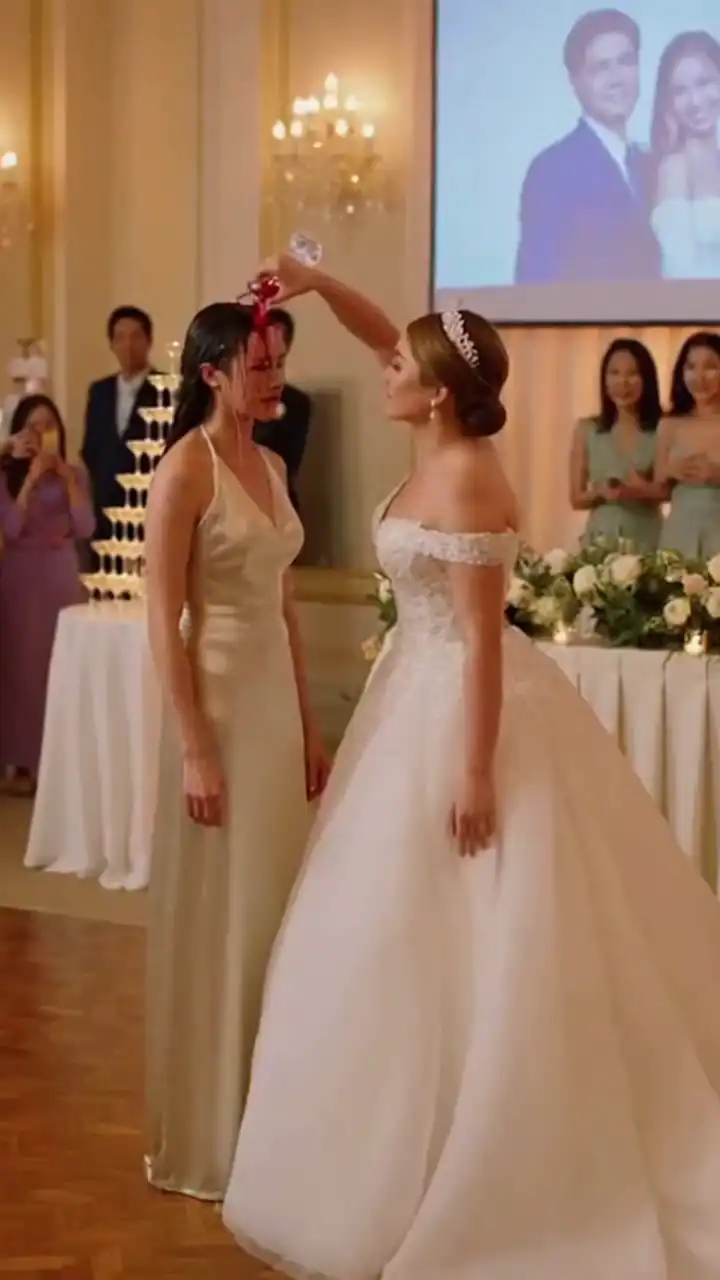
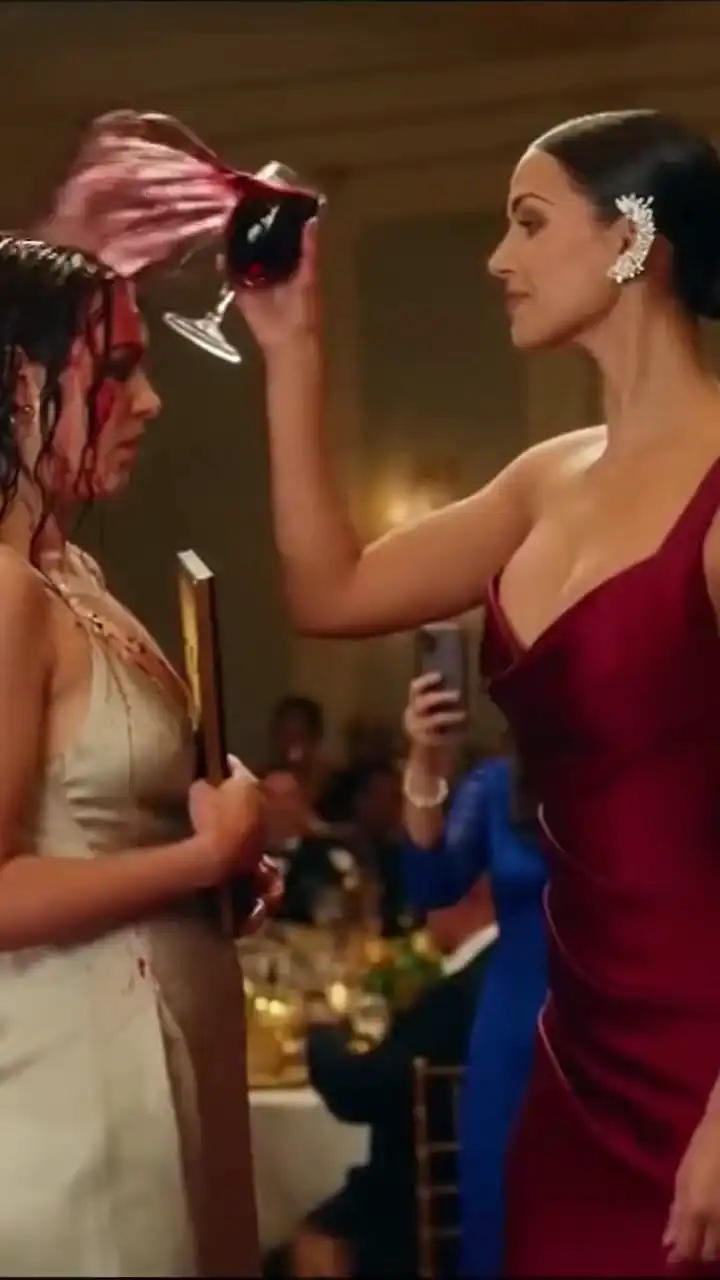
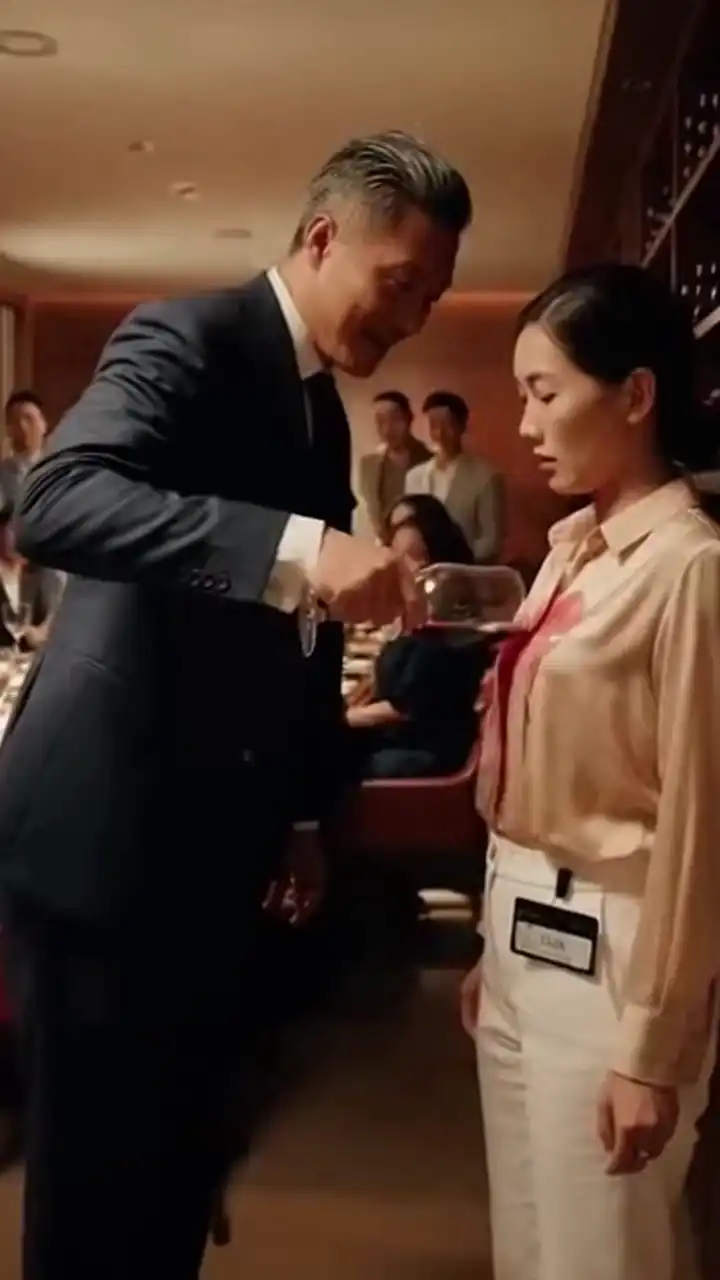
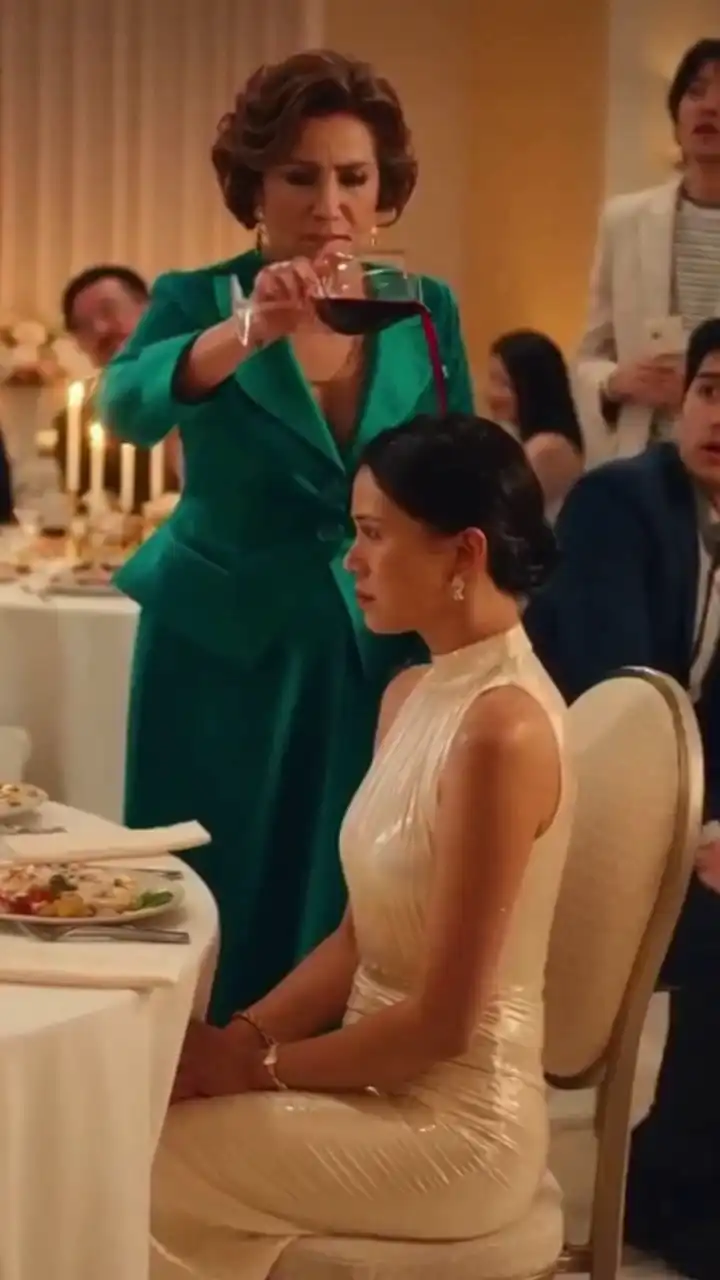
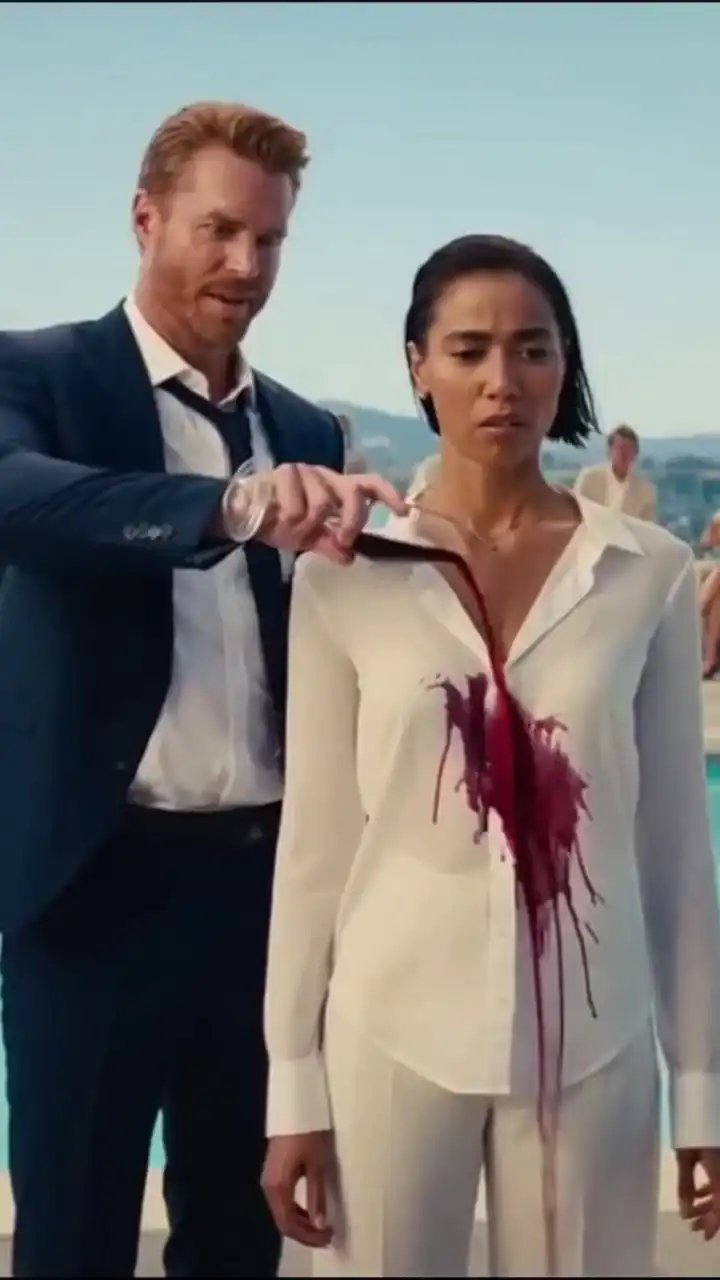
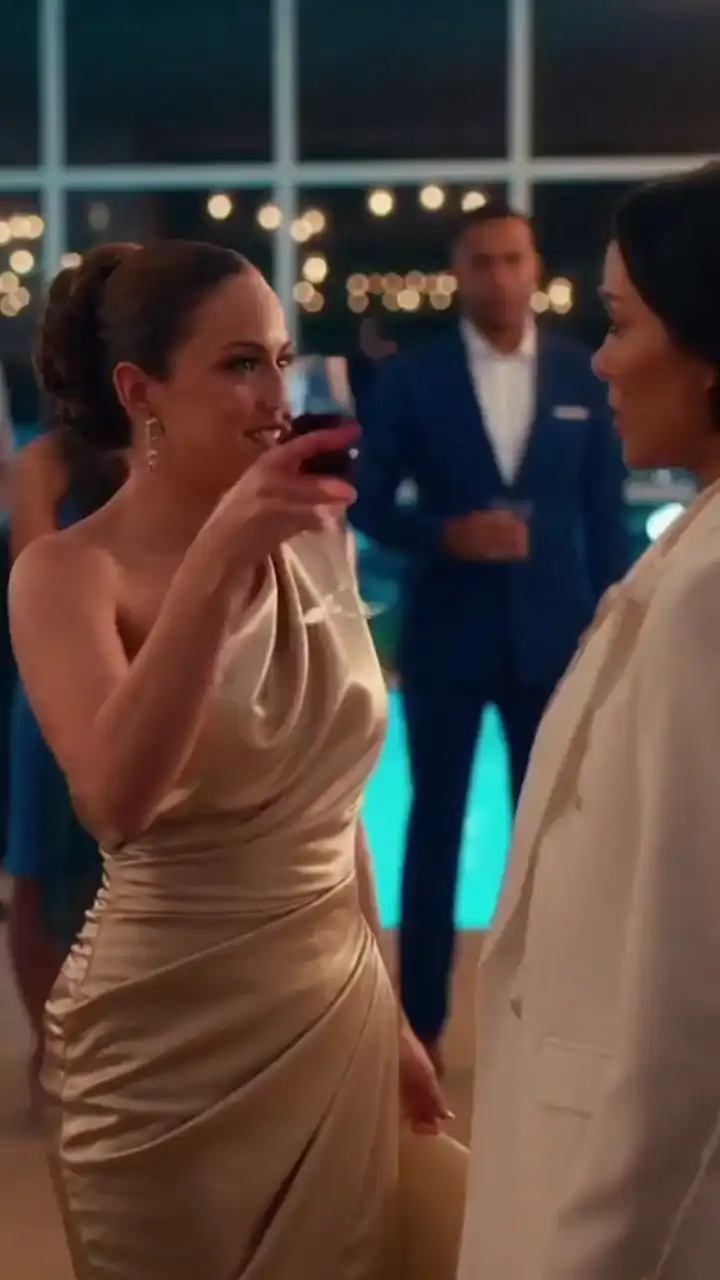
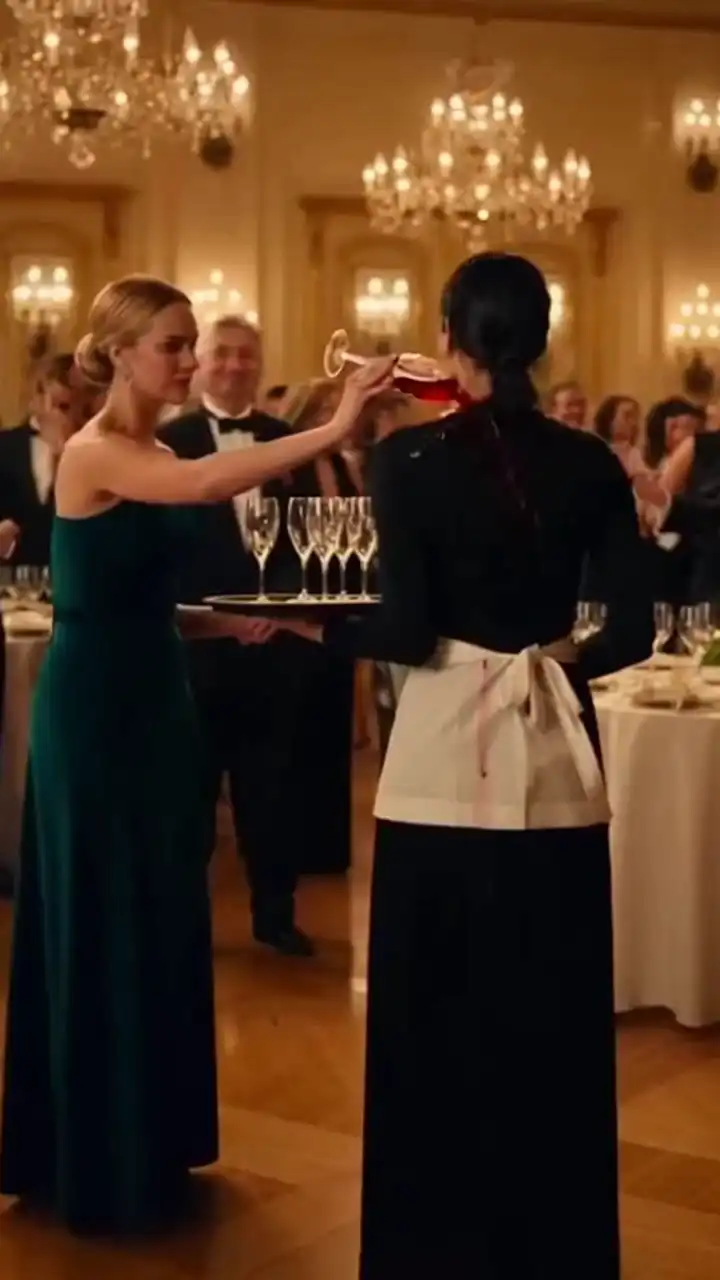
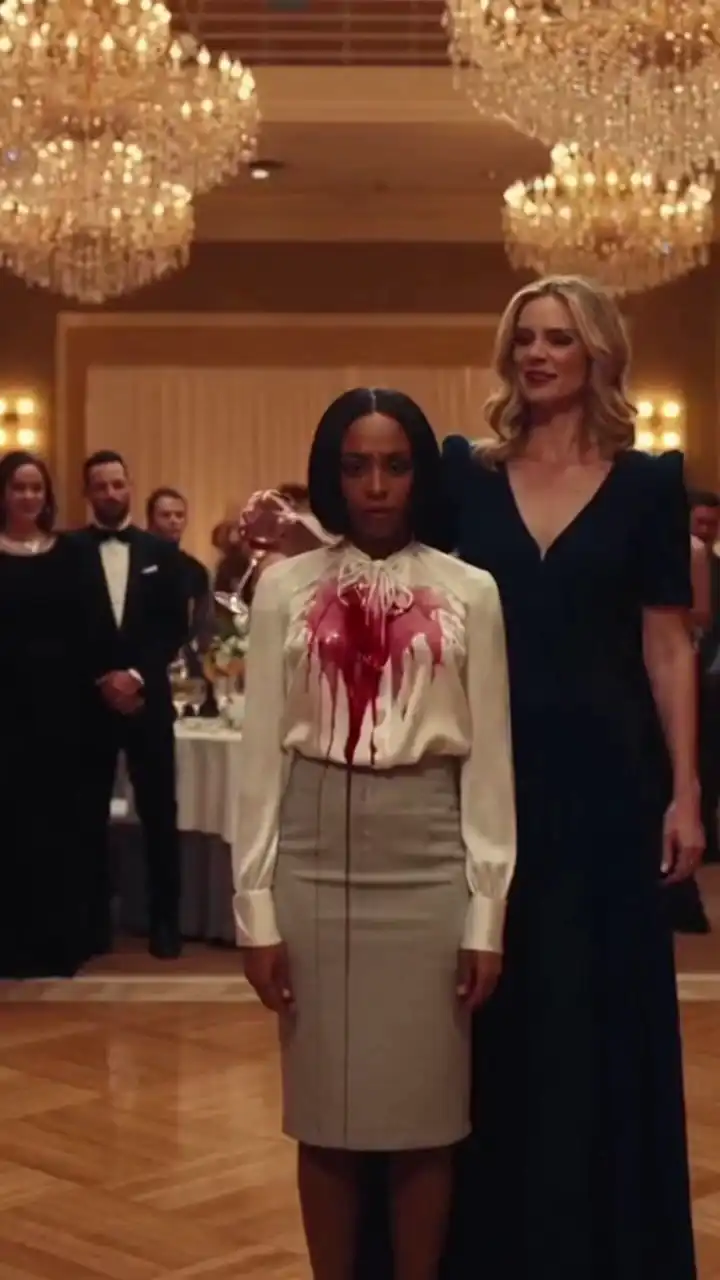
Ten minutes earlier she had poured Cabernet over my chest and told me I was there to make real women feel generous.
Now she sounded twelve.
Ethan did not look at her.
He was staring at the screen where the fourth slide had just appeared.
The engagement contract.
Not the public one.
Not the glossy prenup they’d bragged about in society pages as a symbol of trust and modern love.
The real one.
An internal financial agreement tying Valerie’s marriage settlement to the successful acquisition of three nonprofit-owned properties, all of which had been routed through his foundation’s “urban literacy initiative.”
That was the lie under all the prettier lies.
The gala was supposed to raise money for community libraries.
The foundation had spent two years starving those same libraries, pushing them into “partnership” defaults, and then transferring the real estate to Ethan’s private development group at discounts buried under charitable language.
I knew because I had written the compliance reviews he later altered.
That was my profession.
Not donor relations.
Not event planning.
Not revenge.
Forensic contract auditing.
You can replace a face at a gala. You can’t replace somebody who knows where the commas are buried.
Ethan finally looked at me.
“You did this?” he asked.
His voice had dropped low again.
That was his real voice.
The public one had velvet on it. This one had teeth.
I looked at the wet red stain across my blouse, then at him.
“I finished it,” I said.
The first shout came from the back of the room.
Not from a guest.
From one of the junior staff near the sound booth.
“There are more files loading.”
That made everyone look up again.
Good.
I had wanted the room watching the truth arrive in pieces.
Not because I enjoyed spectacle.
Because denial survives one document.
It struggles with twenty.
The screen rolled to an email thread. Then invoices. Then a recorded board vote with transcript captions running at the bottom. Ethan’s foundation director, who had called in sick that morning and resigned by text at six-thirty, appeared on-screen explaining how donor funds were being split, layered, relabeled, and moved.
A woman in diamonds near the front whispered, “Oh my God.”
A man beside her muttered, “Turn that off.”
No one did.
The hotel’s AV system was no longer taking ballroom commands. I’d seen to that before the first appetizer left the kitchen.
Not personally.
Professionally.
There is a difference.
Six months earlier, after Ethan left our apartment and our seven-year relationship for Valerie and a magazine cover story about “unexpected second chances,” I learned something useful: humiliated men become sloppy when they think they have won.
He had wanted me gone quickly.
Quietly.
With a settlement.
A condolence bouquet.
A confidentiality clause.
And one very ugly accusation.
He told mutual friends I’d become unstable after the breakup. He told board members I’d mishandled donor files. He implied I’d been dismissed before I could resign. Valerie, who had started as a “brand consultant” and ended as his fiancée in under a year, repeated all of it with soft eyes and sympathetic sighs.
That part mattered.
The smear was not social.
It was professional.
I make my living reading documents nobody else wants to read until they cost someone millions. If Ethan could stain my credibility, he could bury every objection I had ever raised about his foundation.
So I did what I have always done when a file looks wrong.
I kept copies.
Legally.
Systematically.
I logged discrepancies, version histories, timestamp mismatches, metadata, courier receipts, donor letters that didn’t match accounting summaries, and the revised contracts Ethan kept sending back through assistants with “minor language cleanup” notes.
The more polished his public image became, the dirtier the paper trail underneath it looked.
He did not know that by the time he proposed to Valerie under drone cameras on the steps of the museum, I had already given a full evidence package to a federal task force looking at nonprofit land seizures tied to redevelopment fraud.
He did not know because federal investigators had asked me not to move too early.
He did not know because I agreed.
He did not know because tonight was the night they chose.
And he definitely did not know because he still believed he was the smartest person in every room entered under his own name.
The female agent stepped toward the stage. “Mr. Cross, you need to come with us.”
“You’re arresting me over a slideshow?” Ethan snapped.
“No,” she said. “Over the crimes behind it.”
A small sound went through the ballroom.
Not one sound.
A chain of them.
Sharp breaths.
Chair legs scraping.
Someone crying quietly into a napkin, though whether from shock or fear of being photographed in the wrong room at the wrong moment, I couldn’t tell.
Valerie turned to me then.
The sweetness was gone.
“You planned this,” she said.
“Yes.”
“At a children’s literacy gala?”
“At your real estate auction,” I said.
That landed.
Hard.
Her mouth opened.
Closed.
For the first time all night, she looked not glamorous or cruel or triumphant.
Just uninformed.
That was Ethan’s pattern with women.
Give them the penthouse view.
Never show them the basement ledgers.
One of the agents asked for Valerie’s phone.
She blinked. “Why?”
“Because your messages appear in three exhibits already.”
That was when her knees nearly gave.
A nearby guest, a woman who had laughed when the wine hit my blouse, suddenly moved her chair away from Valerie as if fraud traveled by touch.
Ethan saw it too.
That was the beginning of the real collapse.
Not badges.
Not screens.
Social oxygen leaving the room.
He tried one last performance. He spread his hands, looked around at the donors, and forced out a laugh. “You all know me. This is my ex trying to weaponize private business disputes because she couldn’t handle being left.”
There it was.
His favorite rewrite.
A few people did look at me then, measuring.
So I reached into my clutch and handed the nearest agent the original paper contract she had already seen scanned on-screen.
The one with the fiber analysis notes attached.
The one proving my signature had been lifted and inserted.
The one showing Ethan tried to assign me legal responsibility for transfers I had flagged as fraudulent.
The agent raised it slightly, enough for the nearest cameras to catch the tabbed certification page.
“This document was authenticated this afternoon,” she said.
No one looked at Ethan after that.
They looked at the paper.
Paper is a strange thing.
People trust spoken lies for years, then watch a stack of signed pages hit a podium and rearrange their entire memory of someone.
The board chair of the foundation, an older man with silver hair and a red pocket square, pushed back from his table so abruptly his water glass tipped over. “Ethan,” he said, voice shaking with rage more than surprise, “you told this board the acquisitions were donor-approved.”
Ethan didn’t answer.
“Were they donor-approved?” the man shouted.
“No,” I said.
I hadn’t meant to answer for him.
But someone had to.
The board chair looked at me. “You knew?”
“I reported it internally three times,” I said. “Then externally.”
The woman beside him, who had spent most of the night praising Valerie’s taste in flowers, pressed her fingertips to her forehead like she might faint. “Those libraries already closed.”
“Yes,” I said.
Another silence.
This one heavier.
Not spectacle now.
Arithmetic.
Buildings closed.
Funds moved.
Names attached.
A photographer near the front lowered his camera for the first time all evening. He looked almost ashamed.
Then one of Ethan’s attorneys called his phone.
I knew because the screen lit up in his hand and I saw the firm name. He stared at it. Declined it. The phone rang again instantly.
The agent took it from him.
That was the moment Ethan finally seemed to understand there was no corridor left.
He lunged.
Not at the agents.
At the screen remote on the podium.
He made it two steps before two men caught his arms and turned him cleanly aside. It wasn’t dramatic. No wrestling. No shouting. Just control.
But something tore.
Not fabric.
Image.
The whole room saw him fight the evidence with his body.
A donor near the back actually hissed.
Valerie backed farther away, one hand over her mouth, staring at Ethan as if she had discovered him in a stranger’s house.
The irony there was dense enough to stand on.
She found me again through the crowd. “Why didn’t you tell me?”
I laughed once.
A dry, short sound.
“Tell you what?” I asked. “That the man you helped humiliate me for sport launders philanthropy through shell vendors?”
Her eyes filled instantly.
I did not feel sorry for her.
Not yet.
Maybe not ever.
But I saw, suddenly, how little Ethan had explained to her. She had known enough to enjoy the power. Maybe not enough to understand the machinery. She had worn the ring. Hosted the teas. Practiced the speeches about access and equity and community. She had poured wine on me under chandeliers while standing in front of a donor wall bought with stolen school property.
Complicit is still complicit.
Even when it is accessorized.
An agent asked me quietly, “Were you physically assaulted?”
I looked down at my blouse.
Red wine had dried darker at the seams.
Every phone nearby tilted with me.
“Yes,” I said. “And there are about sixty recordings of it.”
Good.
Those mattered less to the case than the contracts, but more to the room. Fraud confuses people. Humiliation doesn’t. They had all just watched a man and his fiancée reveal who they were before the handcuffs even touched skin.
The female agent nodded once and said to another, “Add it.”
Valerie whispered, “Ethan, say something.”
He did.
To me.
“You think this makes you clean?” he said. “You stayed. You signed what I put in front of you for years.”
There it was again.
The half-truth sharpened into a blade.
I met his eyes. “I stayed long enough to document you.”
He smiled then.
A broken-looking smile.
Cruel out of habit, not power.
“And ruined yourself in the process.”
“No,” I said. “I ruined your timing.”
The agents moved him toward the side doors.
He twisted once to look back at the ballroom, at the donors, at the board, at the giant frozen evidence behind the stage, as if sheer outrage could still return the evening to him.
It couldn’t.
One of the biggest donors stood up and quietly told his assistant to stop payment on the pledged auction lot. Another asked for his family name to be removed from every printed program before press photos circulated. The foundation treasurer sat at her table typing with both thumbs like her hands were on fire.
Loss came fast after that.
Not poetic loss.
Specific loss.
The board voted before midnight to suspend foundation operations pending forensic review.
The hotel preserved all footage.
The museum withdrew its planned partnership announcement with Ethan’s development arm at 11:43 p.m.
By morning, the city froze the three nonprofit property transfers.
By afternoon, two lenders called their notes.
By the next day, Valerie’s engagement photos were gone from every publication site that had run them, replaced by statements from her publicist saying she had “no knowledge of alleged financial misconduct.” The comments under those statements were brutal, and accurate enough.
As for the gala itself, it ended in patches.
No grand dismissal.
No final speech.
Guests left in clumps, murmuring into phones, stepping around coiled cables and abandoned champagne flutes. Florists came in through the service door while investigators were still photographing the stage. The auction items sat untouched under spotlights like props after a canceled play.
I went to the restroom only when the ballroom had emptied by half.
In the mirror, the wine looked almost brown now.
My blouse was unsalvageable.
A staff woman I didn’t know came in behind me carrying paper towels. She looked at my reflection and said, carefully, “I’m sorry nobody stepped in.”
I met her eyes in the mirror.
“You just did,” I said.
She nodded once and handed me the towels.
When I came back out, the donation screen was dark.
For the first time all night, it showed nothing.
The female agent who had spoken first found me near the coat check. “We’ll need you tomorrow,” she said.
“I know.”
“You timed that reveal very precisely.”
“You asked me to wait.”
She gave the smallest hint of a smile. “You enjoyed that part.”
I thought about Valerie’s face when the contracts appeared.
About Ethan lunging for the podium.
About the room finally seeing what he did when he thought image was armor.
“A little,” I said.
Outside, the red carpet was still damp from an earlier rain. Black cars lined the curb. Reporters were already being held behind barriers farther down the block, lights blinking blue-white across the hotel glass.
My coat check ticket was soaked through in my hand where wine had touched it.
I didn’t put the coat on right away.
I stood under the awning and watched two event workers wheel out the giant floral letters that had spelled READ TO RISE beside the entrance.
The R had snapped loose from its stand.
It leaned sideways on the dolly, roses shedding one by one onto the wet pavement.
Disclaimer: Mention of any brand or trademark is for identification only and does not imply partnership or endorsement