STOLEN VOWS, SPILLED WINE
<<
She came through the ballroom doors with a camera operator on one side and a phone already raised in her own hand.
“Lena Vale,” she said, staring straight at the bride. “Did you knowingly present another woman’s work as your own brand launch during your wedding reception?”
The room broke in layers.
Not all at once.
First the guests nearest the doors turned.
Then the people farther in saw the lights.
Then the sound crew realized the ballroom speakers were no longer connected to the wedding playlist.
Then everyone looked up at the screen.
Still blue.
Still centered on the file folder.
The bride, Serena, tightened both hands around the microphone.
“What is this?” she snapped, but the sharpness had gone thin. “Who let media in here?”
No one answered.
Because another clip started.
Audio only.
Serena’s voice again.
Lazy this time.
Confident.
“She won’t fight back. People like Mara always think talent protects them.”
My name moved through the room like a draft under a door.
Not loud.
Fast.
“Mara?”
“That’s her?”
“Wait, she made the line?”
The groom, Adrian, took one step toward the sound booth, then stopped when two more reporters came through with badges already visible.
One of them said his name before he even reached the aisle.
“Adrian Cross, did you know the bridal capsule was registered under Mara Kessler’s company six months before your fiancée announced it as hers?”
That one landed.
Not because people understood the paperwork yet.
Because they understood the timing.
Six months meant planning.
Six months meant lying.
Serena swung toward me so hard her veil shifted off one shoulder.
“You did this.”
I looked at her.
“Yes.”
No speech.
No apology.
No wobble in my voice.
Just that.
Around us, the wedding planner—someone Serena had hired after firing me from the visible parts of the event—was frantically whispering into a headset that clearly wasn’t helping. Two servers froze beside the cake table. A florist in black stood flat against the wall clutching zip ties and pruning shears like she’d been caught in a storm.
Then the screen changed again.
Not audio this time.
Documents.
Design drafts.
Invoices.
Timestamped emails.
Every concept board I had built for the Cross-Hale bridal collaboration appeared one after another above the head table: the lacework pattern modeled after Serena’s grandmother’s veil; the hand-cut place cards; the monogram; the signature burgundy label for the custom wine favors stacked near the guest book.
My work.
Not abstractly.
Not “in spirit.”
Every line.
Every sketch.
Every revision.
I had spent eleven months building the launch Serena was now calling her “natural creative gift.”
And I had spent four months after that preserving every receipt, message, and voice memo that proved whose hands had actually done it.
Serena lifted the mic again.
“She was employed by me,” she said quickly, latching onto the room before it could turn. “Of course she worked on things. That doesn’t mean she owns them.”
A few faces shifted back toward her.
She saw it.
So did I.
That was always Serena’s real skill—not beauty, not taste, not the polished whisper everyone mistook for grace.
Timing.
She knew exactly when a room wanted an easier version.
So I gave them the harder one.
I touched the screen on the tablet still hidden beneath the folded linen at my place setting.
I had put it there an hour before the ceremony started, while the seating staff was fixing the last-minute switch Serena demanded to put me near the back.
Another file opened.
Video.
Serena in her dressing suite three nights earlier, robe half-on, sitting under soft lights while one of her bridesmaids laughed off-camera.
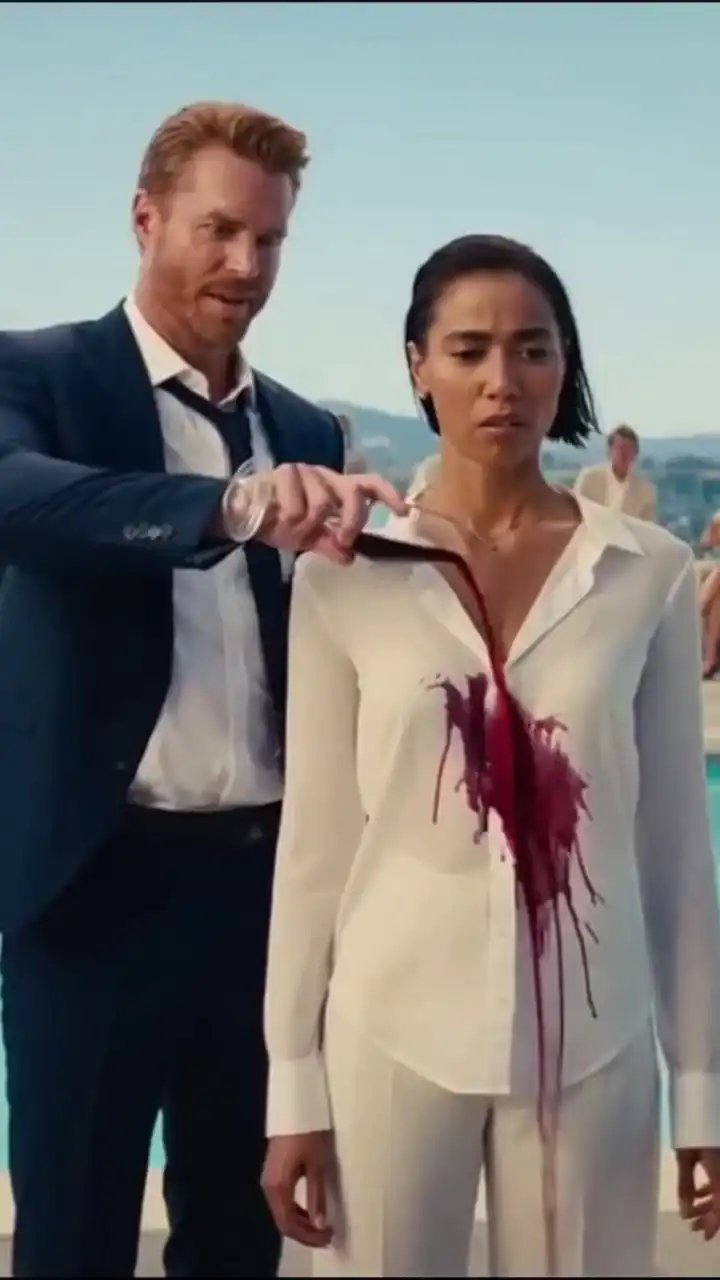
“I don’t care whose concept deck it was,” Serena said, holding up one of my fabric samples between two fingers. “By Saturday, it’s mine. She signed an NDA and took my money. If she acts dramatic, Adrian will call her unstable and security will drag her out. If needed, I’ll pour something on her and make it a moment.”
The room made a sound then.
A collective one.
Not cheering.
Not gasping.
Recognition.
The bridesmaid beside Serena stepped back first.
A clean, visible step.
Then another woman took her phone down instead of filming.
Then Adrian looked at Serena not like a groom, but like a man rapidly recalculating what survival would cost.
That was the next thirty seconds.
Not outrage.
Math.
He turned to me.
“Mara, whatever this is, we can handle it privately.”
I almost laughed.
That line was so Adrian it could have been engraved.
Private was his favorite word.
Private meant hidden.
Private meant delay.
Private meant by Monday, his lawyers would call me vindictive, his PR team would leak that I was obsessed, and Serena would post a honeymoon photo with a caption about protecting peace.
“No,” I said.
The first time I met Adrian, he was standing in a warehouse full of unmarked garment racks and borrowed chandeliers, trying to launch a luxury events brand with no aesthetic and just enough family money to rent confidence. I was twenty-eight, exhausted, and good enough at impossible things that rich people kept mistaking me for temporary.
He said he loved that I understood elegance without making it stiff.
Three months later, he said he loved me.
Eight months after that, he asked me to build a private bridal capsule tied to the Cross family vineyard, with selective distribution and a launch party designed like an engagement dinner.
He brought me a sketchbook.
He called it ours.
By then I knew enough not to put romance above paperwork.
So my designs stayed under my company.
My trademark filings stayed in motion.
My drafts stayed backed up.
When Adrian started going quiet for whole afternoons, I assumed he was slipping into one of his family moods—the kind where his mother wanted more old money and less visible ambition. When he stopped mentioning the capsule on calls, I assumed he was nervous about rollout.
Then I saw Serena.
Not on his arm first.
On my mood board.
She had posted a story from Adrian’s penthouse in a silk slip, tagging a wall behind her that showed one of my pinned textile layouts in the background.
Twenty-four hours later, Adrian told me we needed “space.”
A week after that, Serena announced their engagement with the caption: building beauty together.
Together.
Using my boards.
My supplier chain.
My prototypes.
My launch notes.
When I confronted him, he did what cowards with expensive watches always do.
He softened his voice.
“Mara, don’t make this uglier than it is.”
As if ugliness only counted once I named it.
I would have sued immediately if they had just stolen the work quietly.
But Serena couldn’t resist performance.
That was why we were here.
She didn’t only want the capsule.
She wanted the stage where she could recast me from creator to intruder.
She started slowly.
A repost without credit.
A press leak calling her “the visionary bride behind a heritage-inspired luxury line.”
Then messages to shared vendors telling them I was no longer authorized.
Then a legal threat over “confidential brand materials” I had designed before her name ever touched them.
I should thank her, really.
If she had stayed disciplined, she might have won.
Instead, she kept talking.
And every time she talked, I collected.
She left voice notes.
She forwarded instructions.
She bragged to people who liked repeating things.
The final gift came from her own vanity.
Three weeks ago, one of the junior stylists she fired for “looking nervous on camera” sent me a message request with two attached videos and a sentence: She records everything before events. Thought you should have this.
That was the dressing suite clip.
The other was better.
I played it now.
Serena on screen again, this time with Adrian in the reflection of a makeup mirror.
He was adjusting his cuff.
She was practicing her toast.
“If his ex shows up tonight,” Serena said, smiling at herself, “I’ll use the wine. It’ll make the story easy. She ruined our peace, security escorted her out, end of narrative.”
Adrian, in the mirror, laughed.
Not a shocked laugh.
Not a protest.
A laugh.
Then he said the sentence that had made three journalists drive across the city before dessert.
“She’s already stolen from this family once. People will believe it again.”
The ballroom went still enough for glass to matter.
Someone at the back set down a champagne flute too hard.
The crack carried.
Serena turned toward Adrian so slowly it looked mechanical.
For one second, she seemed less angry with me than with him.
Because he had said it on tape.
Because he had turned her cruelty into conspiracy.
Because what sounded mean in a room sounded criminal in a transcript.
One of the reporters took that opening instantly.
“Again?” she asked. “Mr. Cross, are you referring to prior allegations? Were any ever filed?”
Adrian didn’t answer.
He reached for Serena’s elbow.
She pulled away.
The guests saw that too.
They saw the split.
And once a room smells division, it stops protecting power.
Voices started rising.
“Is the brand hers or not?”
“She said she poured wine on her on purpose.”
“Turn it back.”
“Don’t turn it off.”
The sound tech—a man Serena had barked at twice during rehearsal—folded his arms and very deliberately stepped away from his controls.
Best decision of his evening.
Then came the part Serena never planned for.
Not the press.
Not me.
Her investors.
The bridal capsule wasn’t just a vanity project. She and Adrian had been courting three buyers all month for a licensing deal tied to the Cross vineyard and Serena’s new social following. Two of those buyers were in the room because Serena wanted the wedding to double as a proof-of-concept spectacle.
One was an older woman in ivory with a diamond brooch and a face like closed doors.
The other was a man with silver cuffs and the habit of never speaking before he had already decided.
They had watched every second.
Now the woman in ivory stood up.
“Is any of this disputed by documents you can produce right now?” she asked Serena.
Serena stared.
That was answer enough.
The woman turned to me.
“Can you?”
“Yes,” I said.
I held up my phone.
“And copies were sent to counsel, trade media, and the trademark office at seven tonight.”
Not a bluff.
At 7:00 p.m. exactly, a scheduled release had gone out with a file tree, a timeline, and a formal statement from my attorney. The wedding trap was not the whole strategy.
It was the visible part.
The silver-cuffed man exhaled once through his nose, stood, adjusted his jacket, and left without touching the wine at his table.
Deal gone.
Just like that.
Then the older woman followed.
Also gone.
Money leaves quietly.
Status does not.
Status leaves in public.
One bridesmaid took off the custom burgundy shawl meant for the launch photos and draped it over a chair like she didn’t want to be seen wearing evidence. A content creator near the dance floor deleted three stories, then realized too late that ten other people were already posting. The officiant slipped out a side door with the careful speed of someone who wanted no quote, no clip, no mention.
Serena saw all of it.
Her face didn’t crumble.
That would have been simpler.
It sharpened.
She pointed at me with the hand still holding the microphone.
“You waited,” she said. “You could have done this before today.”
“Yes.”
The word hit harder the second time.
“Why?”
That was the only question she asked me all night that deserved the truth.
Because if I had filed quietly, they would have lied quietly.
Because he would have called me bitter.
Because she would have called me unstable.
Because the same people who were watching now would have kept drinking, scrolling, and assuming the prettier story was the true one.
So I told her the shortest version.
“Because you needed witnesses.”
She actually flinched.
Not at the accusation.
At the accuracy.
Adrian stepped in then, finally abandoning charm for command.
“This event is over,” he said to the room. “Everyone needs to leave. Media has no right to be here.”
A reporter raised her press badge higher.
“Invitation from a source,” she said.
I didn’t smile.
But I could have.
I had invited them from a burner account using clips, timestamps, and one very specific line: If you want the exact second a luxury wedding turns into an intellectual property confession, be at the Halcyon Ballroom at 8:40.
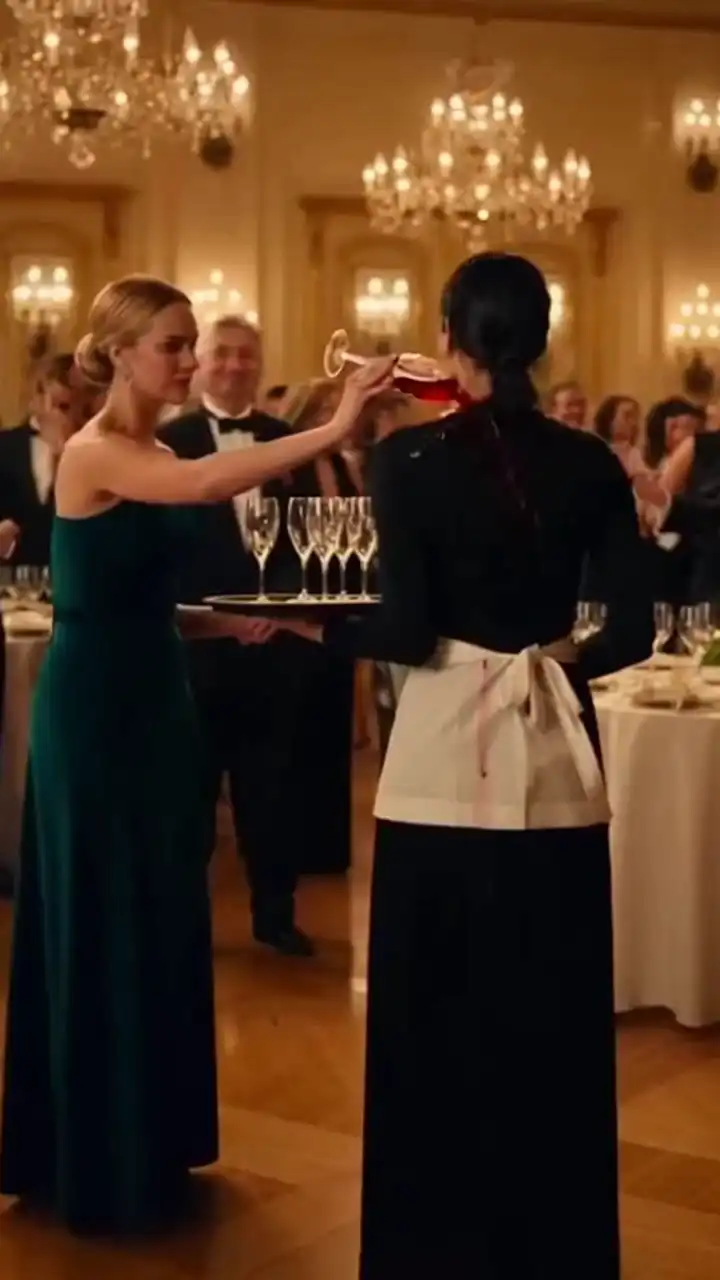
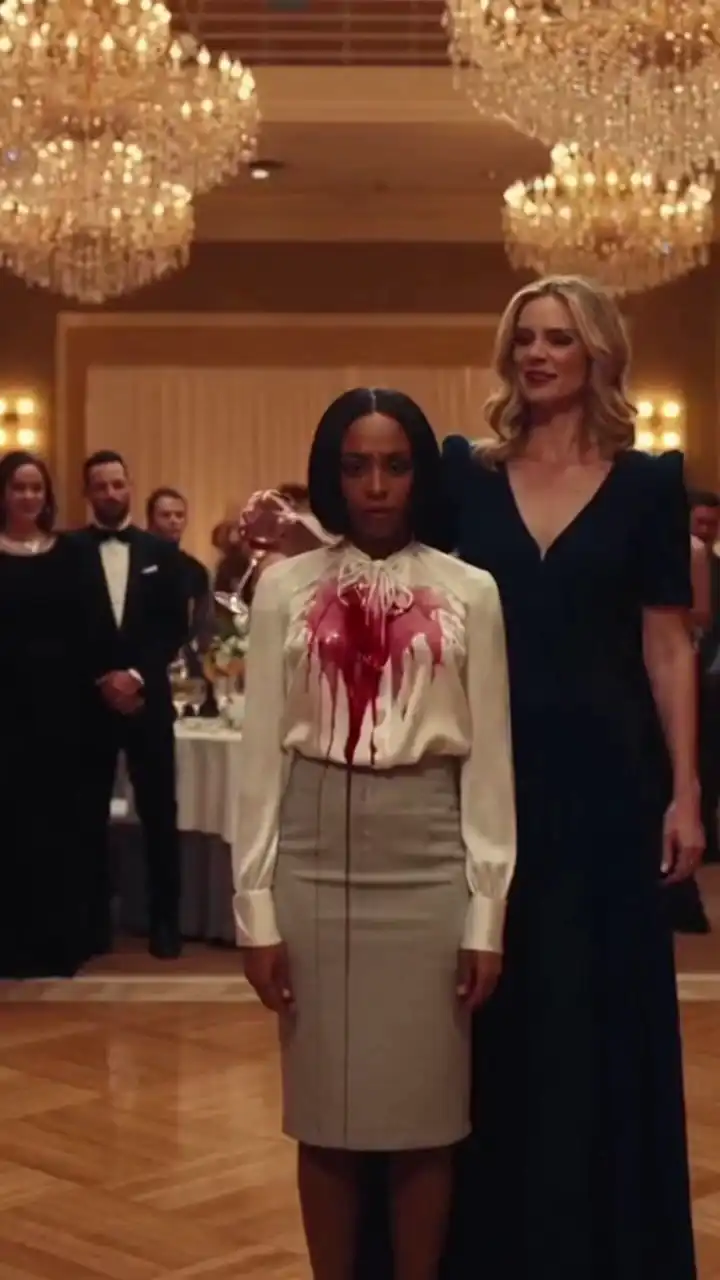
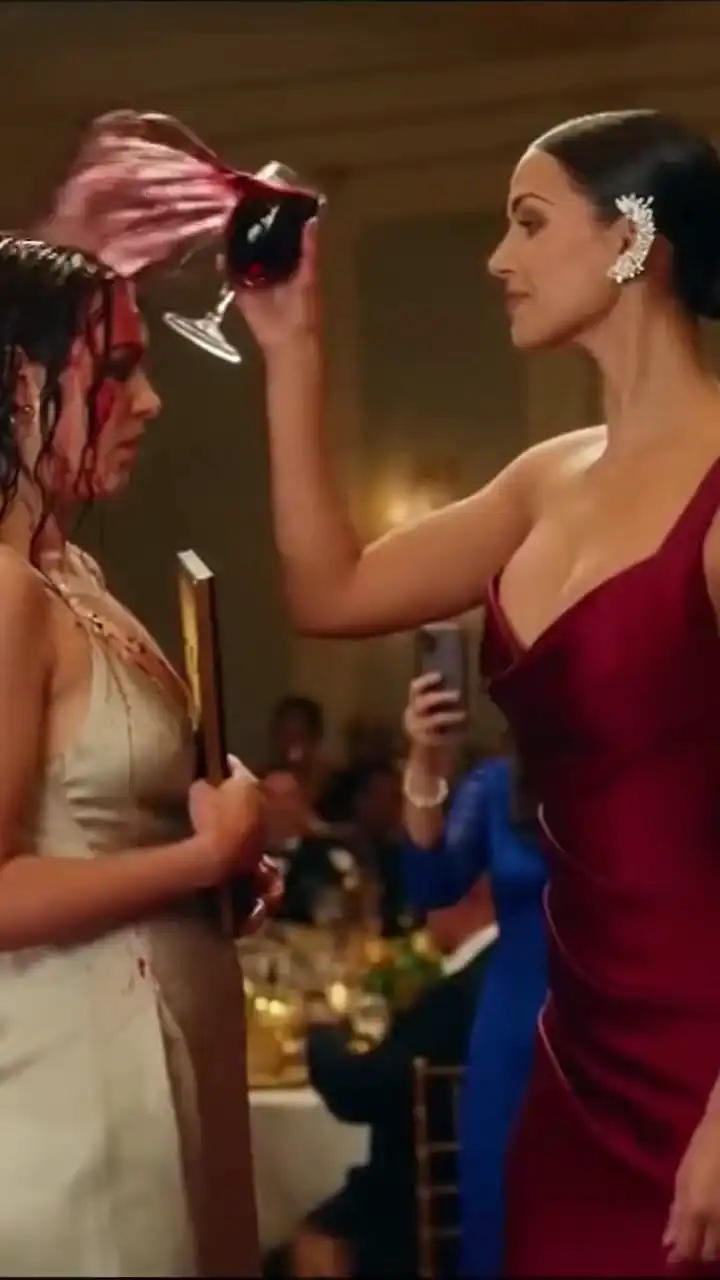
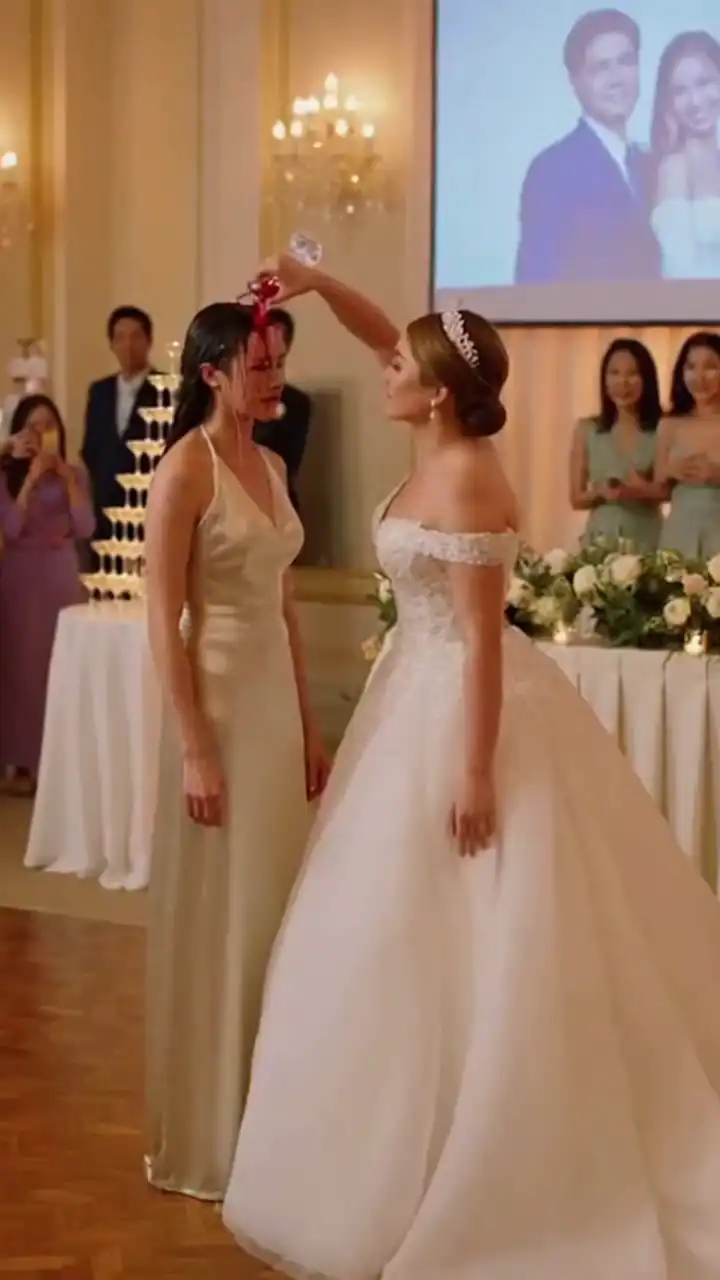
At 8:43, Serena poured.
At 8:44, the screen switched.
At 8:45, Adrian buried himself.
Security finally moved, but not toward me.
The hotel’s events director had arrived, drawn by the press and the rapidly spreading horror of a ballroom now functioning as a live scandal feed. He spoke to security in a low voice while looking at the wine stain on my dress, the open microphones, and the reporters recording everything.
They escorted the media nowhere.
They escorted Serena and Adrian into a side lounge.
Or tried to.
Serena yanked free halfway there and shouted, “This is my wedding.”
One of the reporters caught that too.
Of course.
By midnight, the clip was everywhere.
Not the whole evidence dump.
Just the cleanest pieces.
The pour.
Her line.
The screen.
Adrian’s “again.”
My “Because you needed witnesses.”
Online, people did what they always do: picked teams fast and facts slowly. But facts had a way of outlasting sentiment when they were timestamped and attached to filings.
By morning, the Cross vineyard announced a “temporary pause” on the capsule collaboration.
By noon, temporary became indefinite.
Two days later, the private bank handling Adrian’s expansion loan requested review materials tied to the brand valuation he had used in meetings.
That valuation depended on assets he did not own.
Three days later, Serena’s management company dropped her.
One week later, my attorney filed in open court.
Trademark infringement.
Fraudulent attribution.
Commercial defamation.
Tortious interference.
The ugly words looked beautiful in black print.
They settled nothing immediately.
People like Adrian never collapse in one dramatic motion.
They shed layers.
First the partnership.
Then the lenders.
Then the vendors who suddenly remembered unpaid invoices and verbal promises.
Then the family friends who stopped returning calls because “unfortunate attention” had become “possible exposure.”
The bridal capsule launch died before its first retail meeting.
The custom wine favors were pulled.
The monogrammed packaging was destroyed.
The venue that had hosted the wedding quietly updated its contracts to include language about unauthorized media escalation and reputational damage.
I know because six months later they hired my firm to redesign their event identity.
Not out of guilt.
Out of pragmatism.
Results redeem more cleanly than apologies.
As for the marriage, it lasted seventy-three days on paper.
Less in practice.
There were no glossy honeymoon posts after all.
No vineyard portraits.
No anniversary captions about choosing love through storms.
Adrian moved into a furnished rental near the financial district while his family tried to firewall the business mess from the social one.
Serena sold the ring back through a broker in Palm Beach.
That detail reached me through a jeweler who recognized the stone from the wedding content and enjoyed precision more than loyalty.
My own aftermath was less cinematic.
Lawyers.
Depositions.
A thousand tiny administrative acts that turn violation into record.
I changed passwords.
I moved studios.
I rehired two of the vendors Serena had bullied off my roster.
The junior stylist who sent me the videos now runs production on my biggest accounts.
I paid her double what Serena used to promise and never deliver.
The dress from that night came back from cleaning with the wine still ghosting the silk in faint brown shadows near the hem.
The stain never fully lifted.
I kept it anyway.
Not framed.
Not displayed.
Just zipped into a garment bag at the back of my studio closet beside archived sample pieces and retired campaign mockups.
A month after the wedding, the final prototype bottles for the capsule arrived from the glassmaker. The order had been too far along to stop. Six cases. Deep green glass. Custom punt. Burgundy labels.
My labels.
My trademark.
My name now printed where it should have been from the start.
I opened one alone after the last filing of the week.
No guests.
No music.
No toast.
Just my worktable, the city lights in the window, and the clean click of the cork easing free.
I poured a single glass and set it beside the stained dress bag on the chair.
The wine held the light without spilling.
Disclaimer: Mention of any brand or trademark is for identification only and does not imply partnership or endorsement