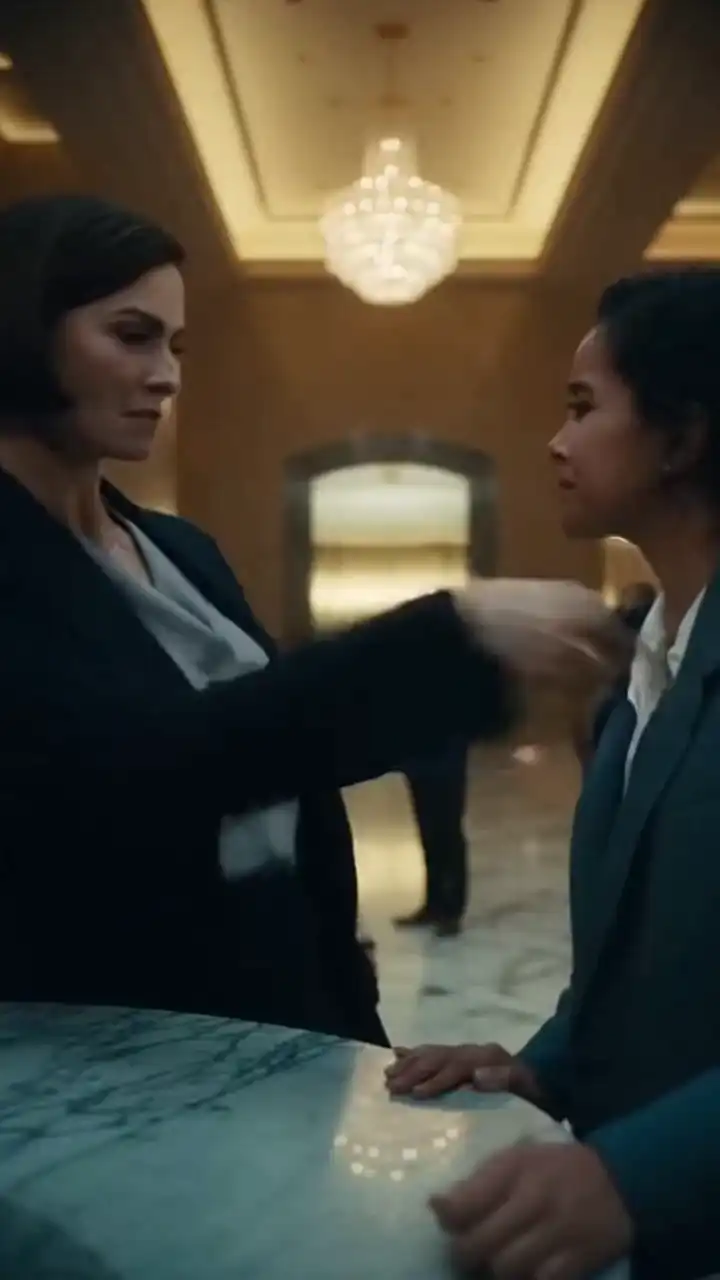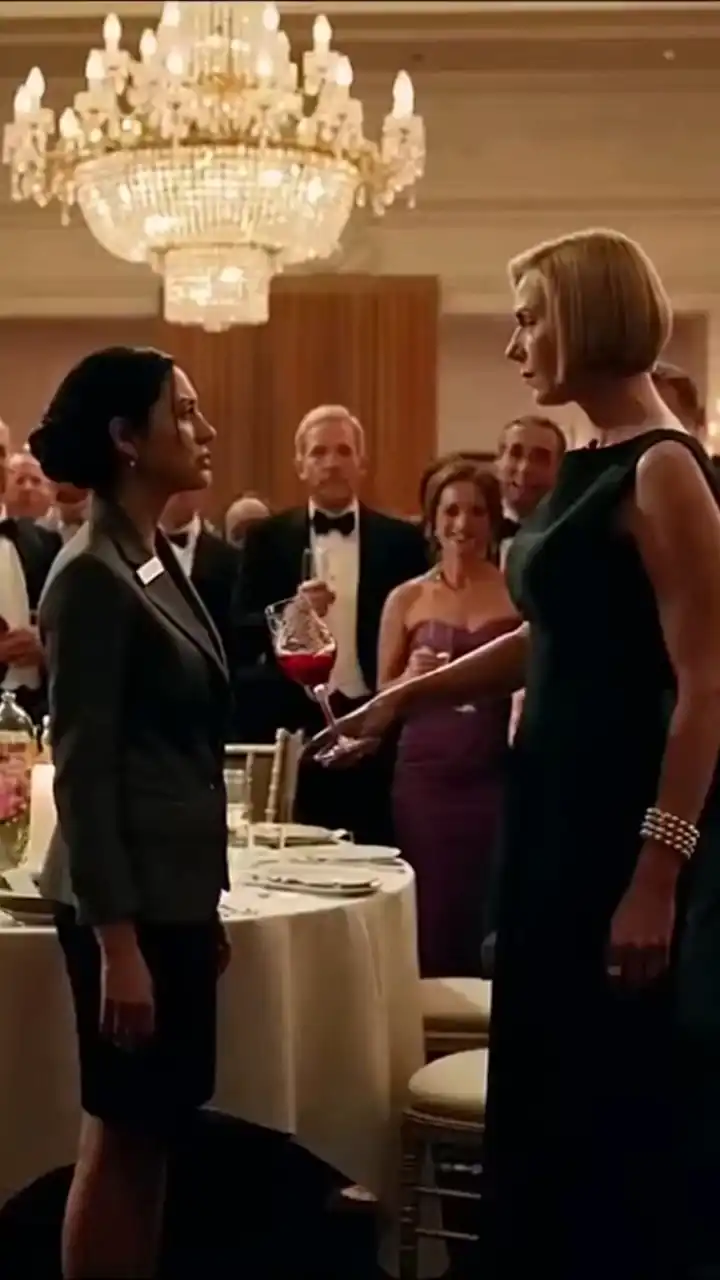
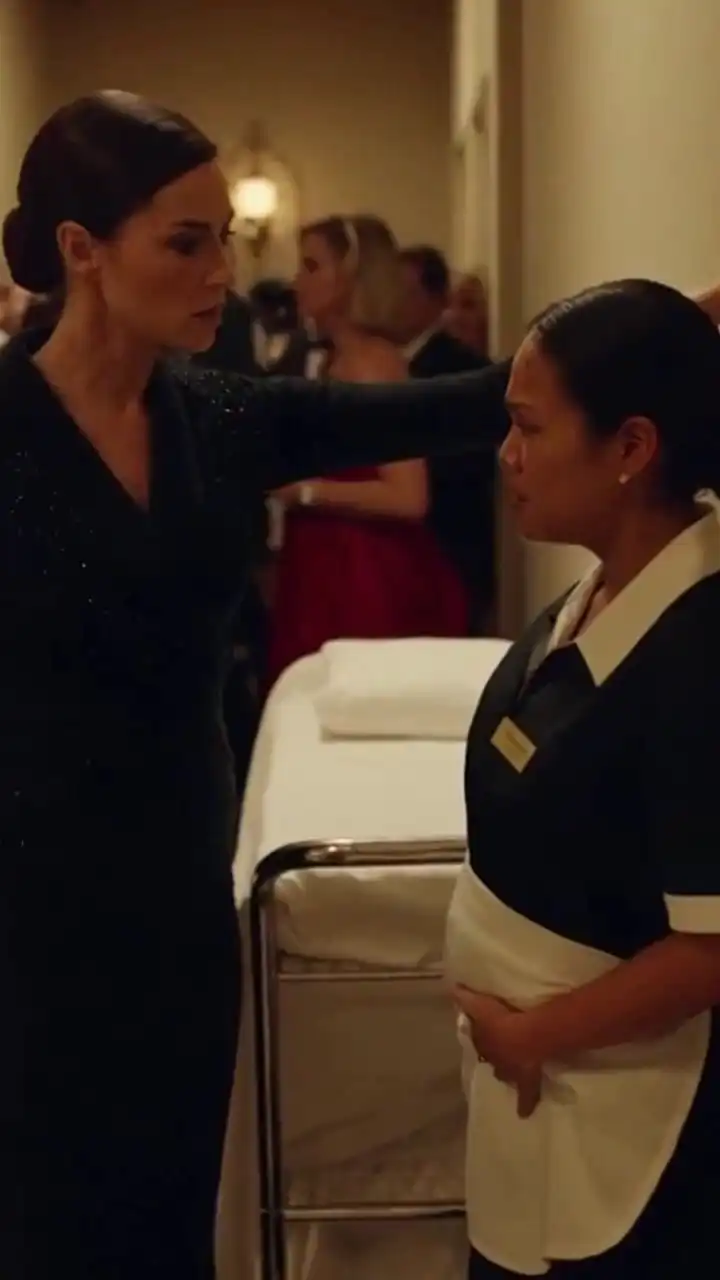
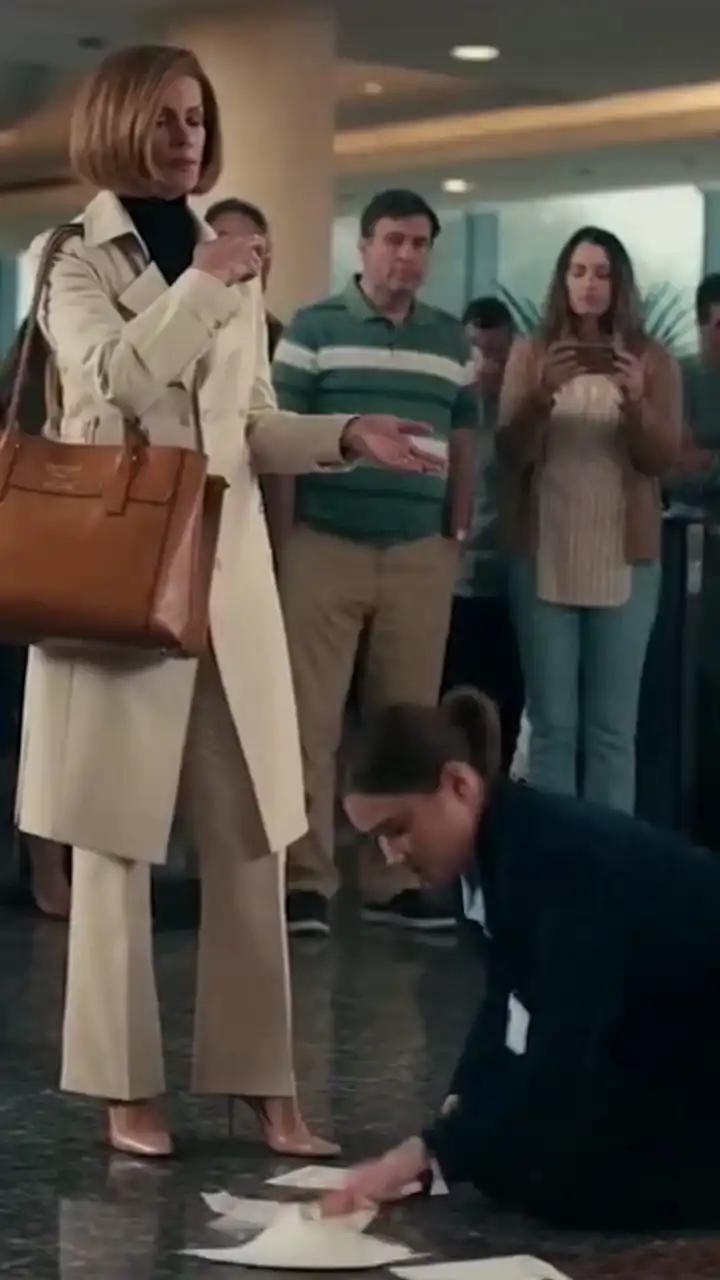

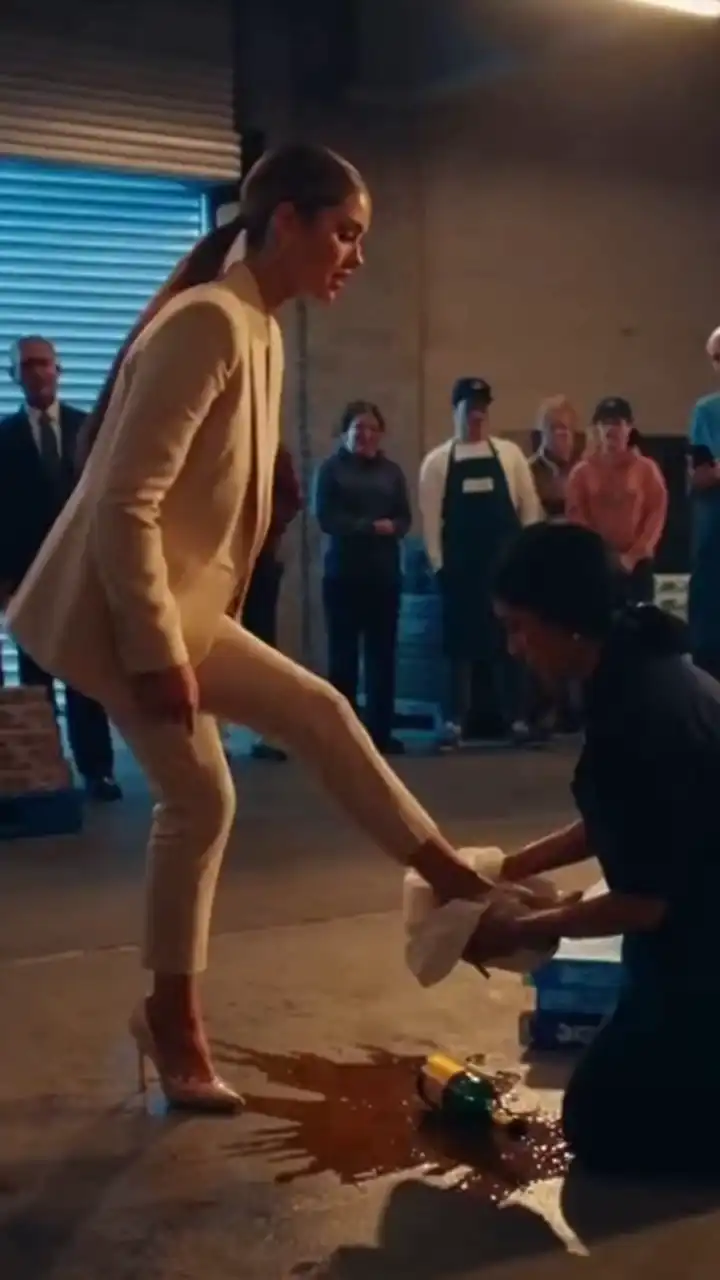
SHE FORCED THE QUIET WOMAN IN THE LOADING BAY TO WIPE HER SHOES IN FRONT OF EVERYONE, THEN NOTICED THE ONE MAN WHO WASN’T SMILING
The event manager, Glen Foster, moved first, but only half a step. It was the kind of movement people made when instinct got there before courage did.
Vanessa noticed it and smiled like she was still in control.
“Glen,” she said, tossing the wet towel toward Marisol’s feet, “please make sure she’s removed from the floor before guests start arriving. If she can’t manage a delivery without creating a hazard, she shouldn’t be anywhere near tonight’s event.”
Marisol didn’t bend to pick up the towel.
Her hands were still trembling, but now she held them clasped in front of her so nobody could see it as clearly. She kept her chin level. She didn’t look at the people filming. She didn’t look at the staff who had laughed. She looked straight ahead.
The silver-haired man by the receiving desk finally spoke.
“Removed by whom?” he asked.
His voice wasn’t loud. It didn’t need to be.
Vanessa turned, brightening instantly. “Mr. Whitaker, I’m so sorry you had to see this. We had a service issue in the bay, but I handled it.”
Nobody answered.
The silence that came back at her had weight.
Mr. Whitaker was chairman of the Mercer Children’s Foundation board, the single biggest reason half the money in that building existed. Everyone in the bay knew his face, even if they had only seen it on gala invitations and donor walls. Tonight’s event was meant to impress him. Vanessa had been orbiting him all morning like she was already sitting in her father’s seat on the fundraising committee.
He didn’t look at Vanessa. He kept looking at Marisol.
Then he asked, “Handled what, exactly?”
Vanessa laughed once, thin and careless. “A worker dropped supplies, splashed me, and got defiant when corrected.”
Mr. Whitaker’s eyes shifted to the wet concrete, the broken bottle, the misaligned dolly wheel trapped against the drain grate.
“Defiant,” he repeated.
Vanessa crossed her arms. “Yes.”
One of the board members beside him, a woman in a charcoal suit named Denise Harper, glanced at Marisol and then at Glen. “Did she drop it by herself?”
Glen opened his mouth, closed it, then said, “The wheel caught.”
Vanessa shot him a look sharp enough to cut paper. “That doesn’t excuse attitude.”
Marisol finally spoke. “No one was hurt. I was cleaning it.”
Vanessa snapped back, “Nobody asked you.”
Mr. Whitaker’s gaze landed on Vanessa for the first time. “I did.”
A few feet away, the teenage volunteer slowly lowered her phone.
Vanessa’s posture shifted, but only slightly. “Of course. I just meant—”
“What is your name?” Mr. Whitaker asked Marisol.
There was a pause so small most people wouldn’t have noticed it. Marisol knew what happened next the second she answered. She had worked too hard, too quietly, for too many years to enjoy scenes like this. Exposure had never felt like victory to her. It felt like skin being peeled back.
Still, she answered.
“Marisol Vega.”
The sound of her own name in that room seemed to travel farther than it should have.
Denise Harper inhaled sharply. Glen looked like he wanted the concrete to open under him.
Vanessa looked from one face to another, confused now, but not yet afraid. “Okay? And?”
Mr. Whitaker said, “Ms. Vega, were you asked to wipe her shoe?”
Marisol’s fingers tightened once around themselves. “Yes.”
“In front of this staff?”
“Yes.”
“And made to kneel?”
The drivers had stopped pretending to work. One prep cook leaned against a rolling rack, staring openly now. The event assistant who had smirked a minute earlier looked sick.
Marisol kept her voice even. “Yes.”
Vanessa gave a disbelieving laugh. “This is ridiculous. She’s making it dramatic because she got embarrassed.”
Mr. Whitaker turned toward Glen. “Did that happen?”
Glen wiped one hand over his mouth. He looked at Vanessa, then at the floor, then at Marisol. “Yes,” he said quietly. “It happened.”
That was the first real crack.
Vanessa took a step forward. “Glen, are you serious? She’s temporary help. Why are we acting like—”
“Because temporary help is still human,” Denise said flatly.
Vanessa blinked at her. “I wasn’t talking to you.”
“No,” Denise said, “you were talking at everyone.”
Mr. Whitaker folded his hands behind his back. “Perhaps someone should tell Ms. Crain who she ordered to the floor.”
Vanessa’s face hardened again, trying to recover ground through contempt. “I don’t care if she’s head of housekeeping. She caused a disruption.”
Nobody rescued her from the sentence.
Denise did it instead, with a precision that made several people visibly straighten.
“Marisol Vega designed the pediatric logistics system this foundation now licenses to six hospitals,” Denise said. “She is the operations consultant your father has been trying for nine months to persuade back onto the advisory board. She is also the reason the new family intake wing opened under budget.”
The loading bay went so still the hum of the refrigeration unit suddenly sounded huge.
Vanessa stared at Marisol.
The navy work shirt, the plain slacks, the hair pulled back, the lack of public ceremony around her arrival — all the things Vanessa had sorted into one category now looked dangerous in hindsight.
Vanessa recovered badly. “Then why is she carrying boxes?”
Marisol answered that one herself.
“Because I asked to come through receiving,” she said. “When the bay runs badly, the event runs badly. It saves time to see where things break.”
Her voice wasn’t sharp. That made it land harder.
Mr. Whitaker added, “And because unlike some people in this building, she does not need an audience to do her work.”
Vanessa flushed deep red. “I had no way of knowing who she was.”
Marisol looked at her then, finally, fully.
“That was the point,” she said.
The sentence hit harder than a shout.
Because everyone there understood it. Vanessa had needed Marisol to be nobody. The humiliation only worked if the target had no visible protection, no name worth checking, no one important likely to object.
Vanessa turned to the room as if she could still win by reframing it. “This is being twisted. She spilled on me in the middle of a critical setup. I expected professionalism.”
One of the drivers, an older Black man named Leon, spoke before he could stop himself. “Professionalism would’ve been asking for a mop.”
A few heads turned toward him. Leon looked braced for fallout anyway.
Then the prep cook beside the rolling rack said, “She was already cleaning it.”
The teenage volunteer swallowed and raised her phone slightly. “I recorded part of it.”
Vanessa whipped around. “Delete that.”
The girl flinched. “No.”
That was the second crack: the room no longer agreeing to keep Vanessa comfortable.
Mr. Whitaker held out his hand. “May I see it?”
The volunteer hurried over and handed him the phone with both hands.
Nobody moved while he watched.
The recording was short, maybe twenty seconds, but it caught the worst of it cleanly: Vanessa’s heel pressing into the wet patch, the towel shoved forward, her voice saying, No, on your knees. I said my shoe. Then that final line, bright and poisonous: Maybe next time you’ll remember where you belong.
Mr. Whitaker handed the phone to Denise. She watched it too. Glen didn’t ask to see it. He looked like he already knew enough to be ashamed.
Vanessa’s confidence started slipping for real.
“People say things in the moment,” she said. “This is insane. We’re blowing up a misunderstanding in a service corridor.”
“A misunderstanding?” Denise asked. “You forced a consultant and board adviser to kneel in a loading bay because your shoe got wet.”
Vanessa snapped, “I didn’t force her. She chose to do it instead of apologizing properly.”
Marisol’s face didn’t change, but one of the kitchen workers let out a short sound of disgust.
Mr. Whitaker’s tone cooled another degree. “Ms. Crain, what exactly is your official role here tonight?”
Vanessa hesitated.
That question mattered more than outsiders would have realized.
She liked acting as if she belonged to the institution. In truth, her access was borrowed: donor family, committee guest, unofficial fixer, the kind of person who had enough proximity to power to issue orders to people too cautious to challenge her.
She lifted her chin. “I’m representing my father’s office on the gala host committee.”
Denise corrected her at once. “You are listed as a guest liaison, pending final approval for junior board observation next quarter.”
Vanessa frowned. “Same difference.”
“No,” Denise said, “it absolutely is not.”
Mr. Whitaker turned to Glen. “Who authorized her to direct operations staff in this bay?”
Glen swallowed. “No one explicitly did.”
“Then why was she doing it?”
The question hung there like a blade.
Glen looked at Vanessa, then away. “Because people assumed…”
“People assumed her last name was a job title,” Denise finished.
Vanessa’s voice rose. “This is unbelievable. My family gave millions to this foundation.”
Mr. Whitaker answered without heat. “Your family did. You did not.”
That landed hard.
Vanessa took another step, anger overtaking strategy. “So now I’m being humiliated because some consultant decided to play dress-up with the staff?”
Marisol’s eyes flashed at that, the first visible break in her restraint.
But she still didn’t raise her voice.
“I came through the bay because your father asked this foundation to trust his daughter with more influence,” she said. “I wanted to see how she treated people she thought didn’t matter.”
Several people looked at Vanessa so fast it was almost audible.
Vanessa stared. “What?”
Denise turned to Mr. Whitaker. “You didn’t tell her.”
“No,” he said.
Because this wasn’t random. That truth rolled through the room in waves.
The donor office had been pushing hard for Vanessa Crain to receive a formal institutional seat — junior board track now, operations visibility next, maybe leadership later if nobody stopped the slide. The older donors loved legacy. The staff feared it. Mr. Whitaker and Denise had asked Marisol, who had rebuilt half the foundation’s working systems and walked away from politics years earlier, to observe quietly during event prep and give an honest assessment.
Vanessa had mistaken the observer for help.
And then she had shown everybody exactly who she was.
Vanessa looked from Mr. Whitaker to Denise and back again. “You set me up.”
“No,” Marisol said. “You were given a hallway and a choice.”
The words stayed in the air.
Vanessa tried one more angle. “This is biased. She came in here wanting to judge me.”
Mr. Whitaker said, “You were not being judged for making a mistake. You are being judged for converting a mistake into a ritual.”
Even people who didn’t fully understand the board politics understood that sentence.
Vanessa looked to Glen for support. “Say something.”
Glen exhaled slowly. “I should have stopped it.”
It wasn’t enough, but it was true.
Then Denise made the part official.
“Vanessa Crain,” she said, voice crisp and public, “your event credentials are revoked effective immediately. You are no longer authorized to represent donor relations, guest liaison, or any committee activity under the Mercer Foundation name. Your pending junior board observation is canceled. Security will escort you from the service level and remove your access badge.”
The words hit one by one.
Revoked. No longer authorized. Canceled.
Concrete loss. Public, clean, irreversible.
Vanessa actually laughed at first, because people in her position often laugh before panic catches up. “You can’t do that to me over a spill.”
Denise held up the phone. “This is over abuse of staff, misuse of donor access, interference with event operations, and conduct unfit for institutional affiliation.”
Mr. Whitaker added, “Your father will receive formal notice before the luncheon.”
That finally pierced her.
“You’re calling my father?”
Denise’s expression didn’t move. “Yes.”
Vanessa’s gaze snapped to Marisol again, desperate now to drag her back down to a level where she could still attack. “You loved this, didn’t you? Standing there acting humble so you could ruin someone.”
Marisol shook her head once.
“No,” she said. “I hated every second of it.”
That answer stripped Vanessa of the last excuse that this had been some mutual game.
Two security officers arrived from the corridor entrance, summoned quietly by someone near the desk. Not dramatic. Not rough. That somehow made it worse. One of them, a woman named Tasha who had been in the bay since setup started, approached with a neutral expression and held out her hand.
“Badge, ma’am.”
Vanessa stared at her. “You’re serious.”
Tasha didn’t blink. “Badge.”
Vanessa yanked the laminated credential from the clip at her waist and slapped it into Tasha’s palm. “Fine. Enjoy your little power trip.”
Nobody in the room moved to comfort her.
That, more than the revocation itself, seemed to finally register. She looked around for the loyal smiles she’d been getting ten minutes earlier. They were gone. The event assistant who had laughed with her was suddenly focused on a clipboard. The volunteer wouldn’t meet her eyes. Leon the driver looked openly unimpressed.
Even Glen didn’t step in.
Vanessa pointed at Marisol with a trembling finger. “This is not over.”
Marisol answered, “For me, it is.”
Security guided Vanessa toward the corridor doors. She kept trying to talk over her shoulder — threatening complaints, naming donors, promising consequences — but the sound faded as the doors swung shut behind her.
The bay stayed quiet a second longer.
Then all the noise that had paused came back in pieces: a cart wheel rolling, someone setting down a box, a refrigeration fan kicking louder, a breath released too fast.
No applause. No cinematic nonsense. Just workers trying to figure out how to stand in the same room after seeing what they had seen.
Glen turned to Marisol first. “Ms. Vega, I am deeply sorry.”
She looked at him with tired eyes. “You were sorry while it was happening.”
He had no answer.
Denise handed the volunteer’s phone back with a nod. “Thank you for not deleting it.”
The girl looked shaken. “I should’ve said something sooner.”
“So should a lot of people,” Denise said.
Leon picked up the broken bottle neck with a rag and muttered, “That woman would’ve had any of us fired if this went her way.”
Marisol crouched back down by the spill before anyone could stop her and picked up the abandoned towel.
Glen stepped forward at once. “Please, don’t.”
She straightened. “I wasn’t going to clean her shoe.”
Then she handed him the towel.
“Get a mop,” she said.
A few people let out the kind of breath that almost turns into a laugh when tension finally cracks. Not because anything was funny, but because they were still alive inside their own bodies again.
Glen personally went to get the mop.
Denise moved closer to Marisol, lowering her voice. “You don’t need to stay for the event.”
Marisol glanced around the bay — the stacked floral crates, the prep tables, the drivers waiting for someone competent to restart the flow.
“Yes,” she said. “I do.”
Mr. Whitaker studied her face for a second. “Can you?”
It was the first question anyone had asked all morning that sounded like care instead of assessment.
Marisol flexed her fingers once. They were steadier now.
“I can finish the walkthrough,” she said. “But donor family access to service zones ends today.”
Mr. Whitaker almost smiled. “Done.”
She pointed to the drain grate. “That wheel lock needs replacing before someone actually gets hurt.”
Glen, returning with the mop and a maintenance lead, said quickly, “I’ll handle it.”
Marisol nodded. “Also, nobody without operations clearance gives instructions in this bay again. Not guests. Not committee relatives. Not board cousins. Nobody.”
Denise said, “Put it in writing.”
“I will.”
And they did.
The strangest part came in the next twenty minutes, after the public drama had ended and the real institutional shift began. Systems changed fast once the right people were embarrassed enough. Temporary barriers went up around the receiving lane. New access instructions were texted to all event staff. Security was given names, not just vibes and expensive suits. By noon, donor family credentials had been reclassified under guest movement rules. By two, Vanessa’s digital access had been disabled entirely.
By lunch, her father had called.
Marisol wasn’t in the room for that, but Glen was, and later Denise repeated the clean version: Mr. Crain demanded to know whether this had been exaggerated; Denise sent the video; there was a long silence; then he asked if revocation could be kept private.
It could not.
The foundation had too many witnesses, too much liability, and too much simmering resentment toward people who treated staff like props. Keeping it private would have told everyone in the bay exactly what their dignity was worth.
So a notice went out to committee leadership before the gala opened: Vanessa Crain was no longer affiliated with event operations or junior board observation. Future participation subject to review.
Polite language. Brutal meaning.
As for the people in the loading bay, they adjusted around Marisol with a different kind of caution now, but not because she had turned out to be powerful. The bigger shame was that they had only started seeing her fully when someone important said her name.
Marisol noticed that too.
When the teenage volunteer passed by with wristband rolls later, she stopped and said, “I’m sorry.”
Marisol took the box from her and set it where it needed to go. “Next time, speak sooner.”
“I will.”
Leon, on his way back to the truck, gave Marisol a small nod. “You held yourself together better than most people would.”
She looked at the stained patch on the concrete where the scene had happened.
“Barely,” she said.
That was the truth of it. She had not been secretly unhurt. Her knees still ached from the concrete. Her stomach still clenched when she remembered the phone pointed at her, the heel extended toward her hands, the command in Vanessa’s voice. Composure had not meant ease. It had meant survival.
Near the end of setup, Glen came back with a printed draft of the new service-level protocol.
He stood beside a prep table, not too close, and said, “Would you review this before I send it?”
Marisol wiped her hands and took the pages.
At the top, in bold, it read:
SERVICE ACCESS RESTRICTIONS: NO DONOR OR FAMILY INTERFERENCE WITH OPERATIONS STAFF.
She read the full page, marked two lines, and handed it back.
“Add a reporting line that bypasses event management if the problem is event management,” she said.
Glen nodded immediately. “Done.”
That mattered too.
By evening, the gala upstairs glowed the way rich charity events always do — speeches, glassware, auction boards, smiling photos, polished lies about effort appearing seamless. But downstairs, in the receiving bay, something had actually changed.
People checked badges.
People asked names.
People thought twice before barking orders at the quiet person moving faster than everyone else.
And where Vanessa had made Marisol kneel that morning, there was now a bright yellow maintenance plate bolted over the bad grate and a fresh non-slip mat laid across the concrete.
Small thing. Real thing.
Late that night, after the final trucks pulled out and the last floral trash bins were rolled away, Marisol stood alone for a moment by the freight doors.
The bay smelled like wet cardboard, metal, and coffee gone cold. Her body felt wrung out.
Denise came down from upstairs carrying her heels in one hand and said, “For what it’s worth, you saved us from a much bigger mess.”
Marisol gave a tired half-smile. “I was trying to prevent one.”
“You did.”
Denise hesitated, then added, “They’ll ask you to come back to the advisory board now.”
Marisol looked out at the dark alley beyond the loading dock. “Maybe,” she said.
Because coming back on her terms was different from being dragged into someone else’s theater.
Before she left, she glanced once more at the concrete where Vanessa had pushed the towel at her and told her to remember where she belonged.
Now the bay was empty, the mop water gone, the shoe print gone, the audience gone.
Only the rule remained.
And this time, it wasn’t written for workers like Marisol.
It was written for people like Vanessa.
Disclaimer: Mention of any brand or trademark is for identification only and does not imply partnership or endorsement
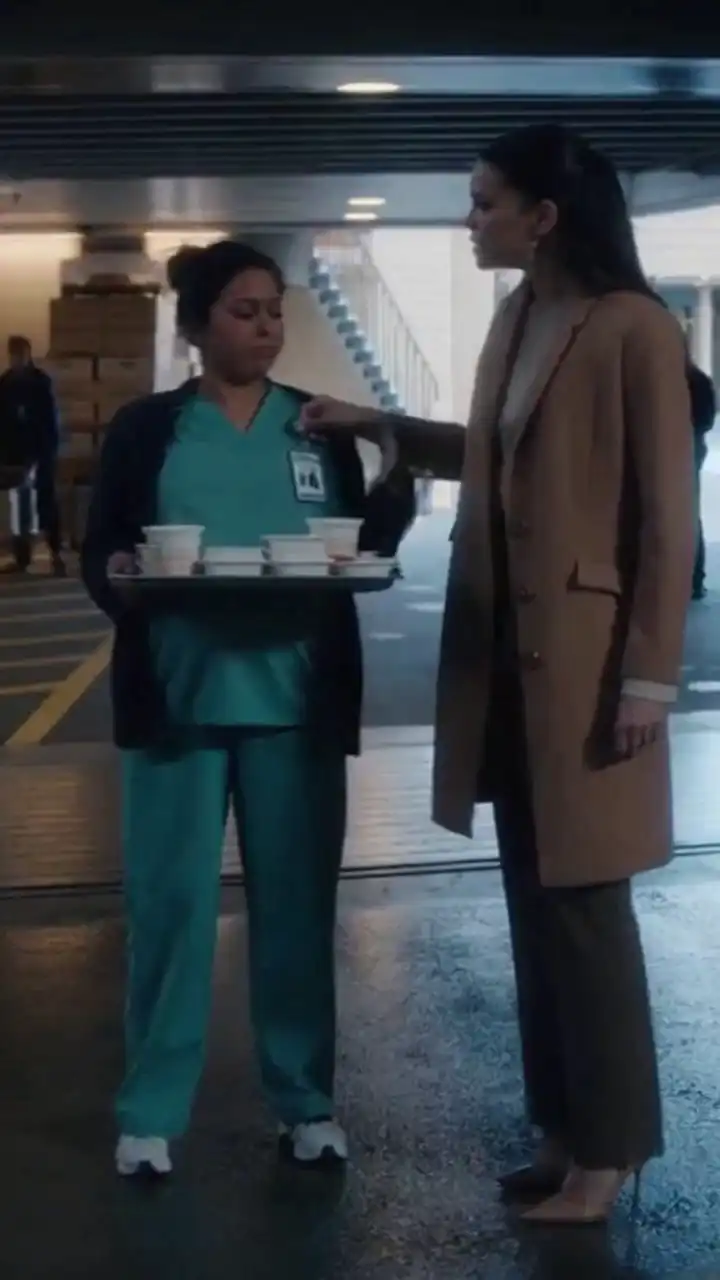
SHE RIPPED THE BADGE OFF A PREGNANT NURSE AIDE IN THE LOADING BAY TO SHOW EVERYONE WHO MATTERED—AND PICKED THE WORST POSSIBLE WITNESS
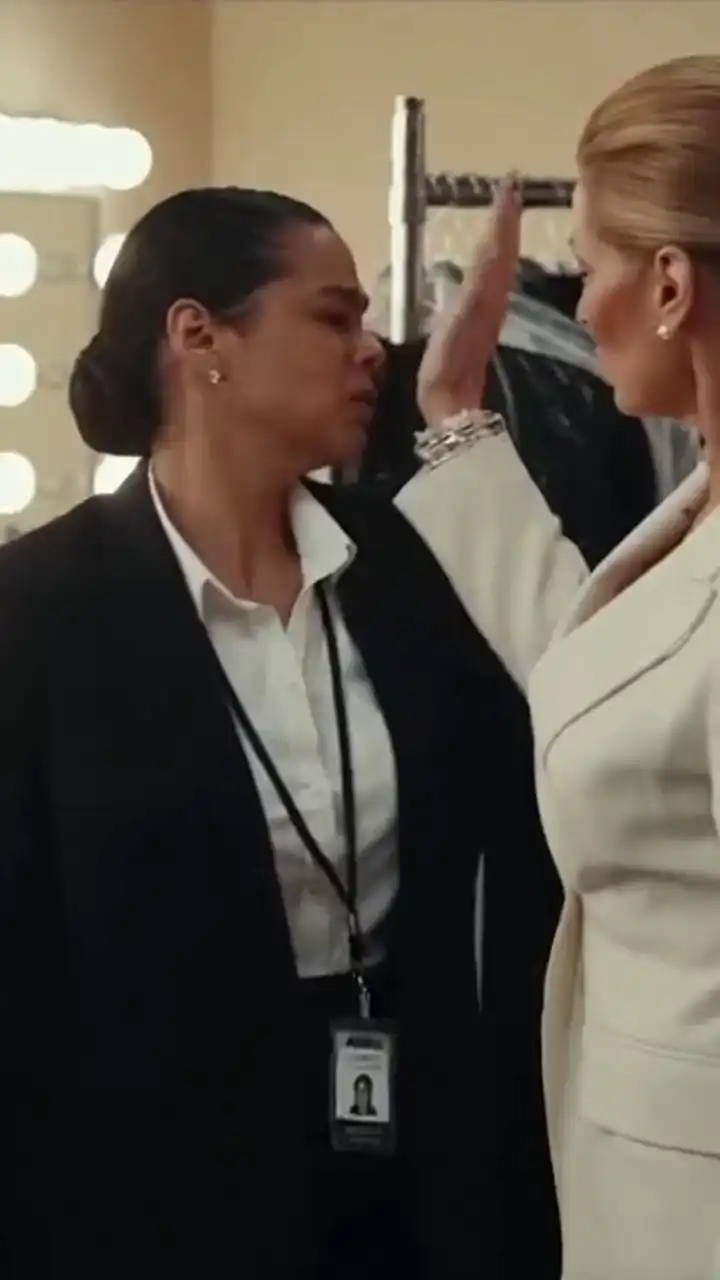
SHE SLAPPED THE THEATER USHER IN THE FITTING ROOM AND TURNED HER INTO A LESSON—UNTIL A QUIET VOICE FROM THE DOOR SAID HER NAME
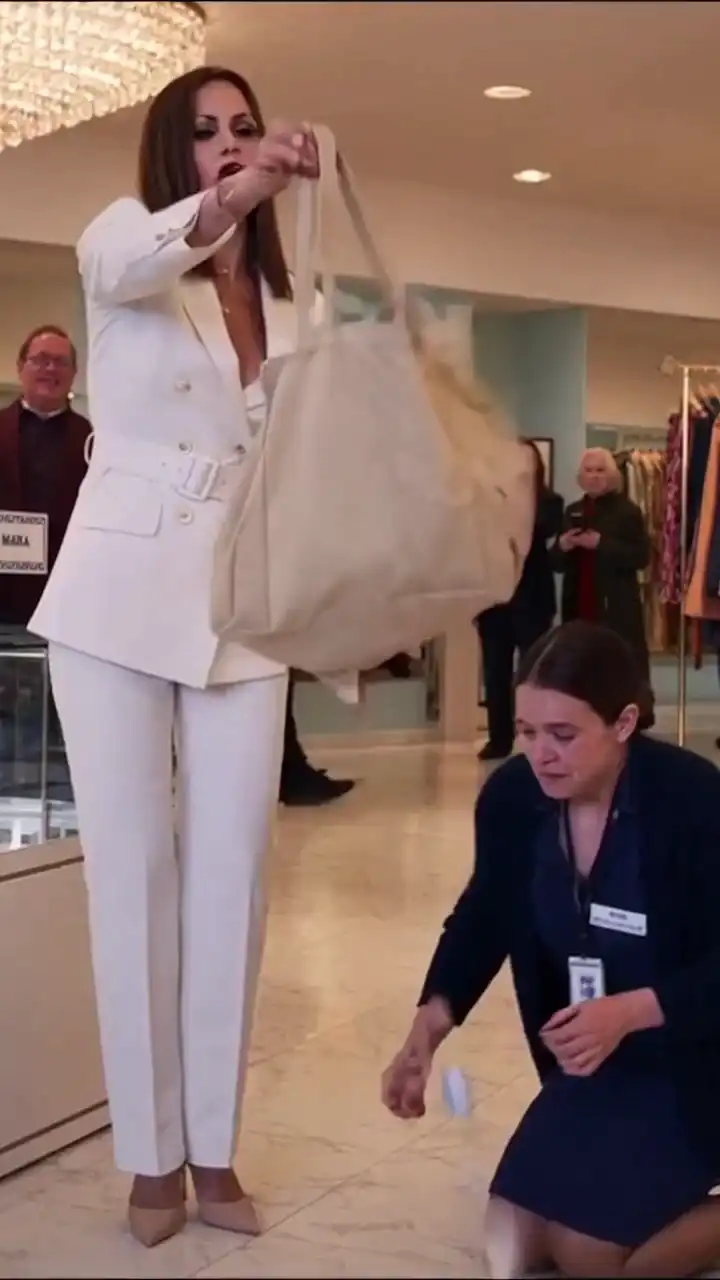
SHE DUMPED A CHURCH VOLUNTEER’S BAG ACROSS THE SHOWROOM FLOOR TO “PROVE A THEFT” — THEN THE QUIET WOMAN BY THE MIRROR SPOKE