
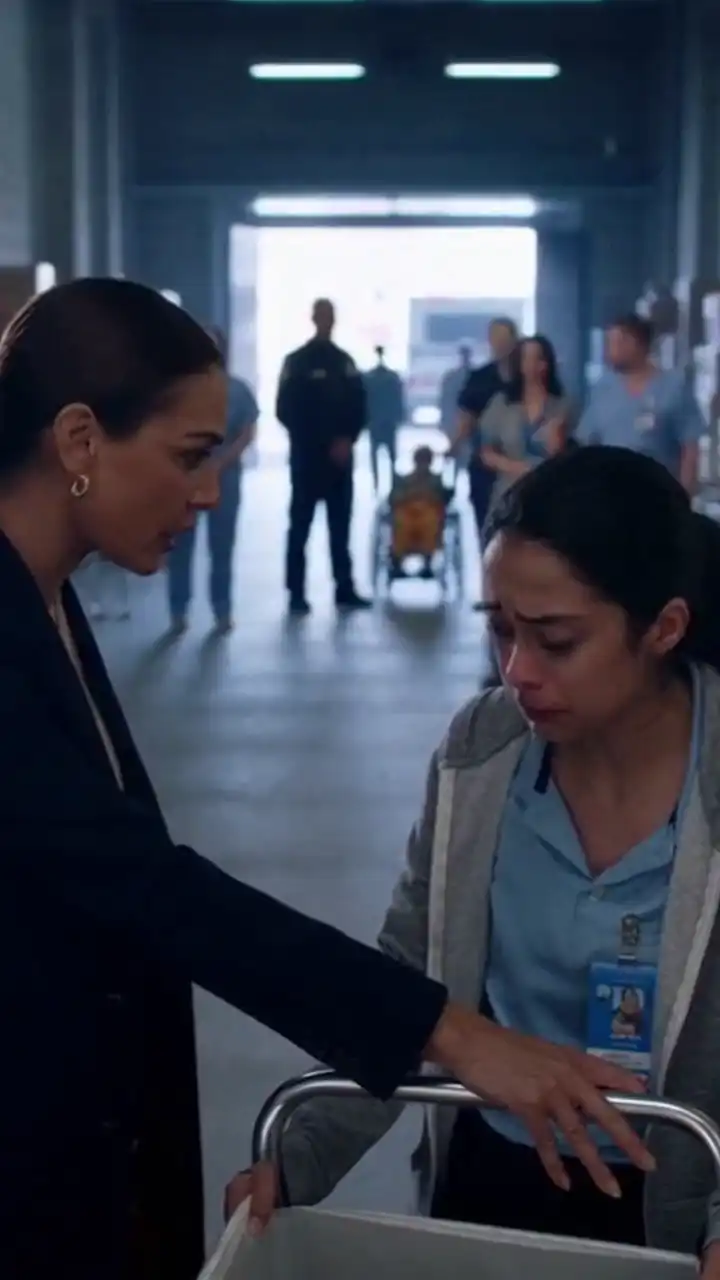
SHE FORCED THE HEARING-IMPAIRED CASHIER TO REPEAT HER DISABILITY IN THE LOADING BAY—RIGHT UNTIL THE HOSPITAL BOARD CHAIR HEARD EVERY WORD
Vanessa’s smile flickered, just for a second.
The boy’s mother tightened her grip on the wheelchair handles and looked from Nina to Vanessa like she had finally understood what she had walked into. The stuffed fox sat tucked under the boy’s chin, one ear dark from where it had hit the damp concrete.
Vanessa recovered fast. People like her always did when a room threatened to slip.
“That is not what’s happening,” she said, voice suddenly softer, almost maternal, like she was correcting a child. “Sweetheart, adults are talking.”
The boy frowned. “You were mean.”
A stock clerk let out an awkward cough that sounded too much like a laugh. Vanessa heard it. Nina saw her hear it. The whole point of what Vanessa was doing was control. She had dragged the scene into the loading bay because service spaces had rules, and people in uniforms knew those rules better than anyone. They were supposed to smooth things over, swallow it, keep the donor happy, and disappear.
If even one person openly sided with Nina, the performance cracked.
So Vanessa pushed harder.
She looked back at Nina and sharpened her voice. “Finish the sentence.”
Nina’s chest felt tight. Her hearing aid whined again, a thin electrical squeal that made the whole moment feel even more exposed. She wanted to reach up and fix it, but Vanessa was staring at her like any movement would become another accusation.
“I said apologize correctly,” Vanessa said. “Or should I call downstairs and ask whether the gift shop hires anyone who can actually hear instructions?”
That got the reaction she wanted. One nurse flinched. The security guard shifted his feet. The transport aide who had almost stepped in looked angry now, but anger and action were not the same thing.
Nina forced air into her lungs. “I helped the child,” she said.
Vanessa gave a laugh that landed hard in the concrete space. “No, you ignored me. Don’t start rewriting this because an audience showed up.”
She turned, gesturing to the bystanders like she was presenting evidence. “This is exactly the problem in this hospital now. Everybody wants an excuse. Everybody wants special exceptions. Meanwhile the people funding this place get treated like an inconvenience.”
That line was for the room, and the room knew it. It reminded them who she was. Not staff. Not management. Something worse in a place like this: protected.
A volunteer coordinator came jogging through the service door, breathless and alarmed. “Ms. Cole? Is everything okay? We heard raised voices.”
Vanessa didn’t even face her fully. “No, it isn’t. This employee refused a simple request and now refuses to apologize. I want her supervisor, and I want her full name documented.”
Nina’s stomach dropped. The coordinator looked at Nina’s badge, then at Vanessa, and did what everyone else had done. Measured power. Chose the safer side.
“Nina,” she said carefully, “maybe just clear this up?”
Clear this up.
As if Nina had created a storm instead of being pinned inside one.
Vanessa seized on it immediately. “Exactly. Tell everyone. Say your name. Say your condition. Say why you failed.”
The words hung there, ugly and deliberate. Not just an apology. A public labeling. A forced declaration so the room could file Nina under defective and move on.
The little boy clutched his fox tighter. “Mom, make her stop.”
His mother finally spoke, voice low but shaking. “She picked up his toy. I saw that part.”
Vanessa turned to her with a polite smile so fake it barely covered the threat under it. “And I’m sure you didn’t see the rest.”
“I saw enough.”
Vanessa’s face hardened. “Then perhaps you’d like to explain why a donor family was ignored in a restricted corridor.”
The mother went silent. Her son was wearing a patient wristband. Her own visitor badge was crooked and old. She looked like someone who had already spent too many nights asking for mercy from people with clipboards.
Vanessa knew exactly which people would go quiet if pressed.
Nina felt humiliation and fury knot together so tightly she almost shook. She still didn’t raise her voice. “I can call someone to help with your bags,” she said. “But I’m not saying that sentence.”
Vanessa stepped closer until Nina could smell her perfume over disinfectant and cardboard. “You don’t get to refuse me and then set terms.”
She reached out and tapped Nina’s badge with one finger. “Students like you always think you’re one scholarship away from becoming important. You are here to serve.”
The hit landed because it was aimed well. Nina had never told her about school. Vanessa had seen the lanyard tag from the local university tucked behind the gift shop badge. That was enough. She had looked Nina over, guessed exactly where to press, and pressed there in public.
The volunteer coordinator finally murmured, “Ms. Cole, maybe this can be handled privately.”
Vanessa rounded on her. “No. Privately is why standards collapse. Say it now,” she barked at Nina. “Or I’ll make sure administration hears that you were rude to a donor family and unsafe around patients.”
Unsafe.
That word changed everything in Nina’s body. Not because it was true, but because it was usable. One accusation like that in a hospital could bury context under policy before she ever got to defend herself.
Her eyes stung. She hated that. Hated that Vanessa got to see it.
Still, she said nothing.
Vanessa smiled again, sensing the edge. “There it is. So you do understand.”
A new voice cut across the bay.
“What exactly does she understand, Ms. Cole?”
The question wasn’t loud. It didn’t need to be.
Heads turned first. Then shoulders straightened. Then the security guard actually moved.
An older man had just stepped through the service door from the internal corridor, silver-haired, broad-shouldered, no rush in him at all. Beside him was the hospital’s chief nursing officer, and behind them trailed two administrators Nina recognized from the annual donor photo wall but had never spoken to.
Dr. Arthur Bell.
Even Nina knew him on sight. Board chair. Founder’s grandson. The man donors tried to impress.
Vanessa’s posture changed so fast it was almost violent. “Dr. Bell. I didn’t realize you were back here.”
“I can see that,” he said.
He looked first at the boy in the wheelchair, then at the mother, then at Nina. His gaze stopped on Nina’s face, on the hearing aid tucked behind her hair, on the trembling hand still wrapped around the supply cart.
Then he looked at the people surrounding her.
“What happened?” he asked.
Vanessa answered before anyone else could. “A misunderstanding. This employee ignored a request from a donor family and became combative when corrected.”
Nina felt the room prepare to accept that version. It was muscle memory by now.
But Dr. Bell didn’t nod. He looked at the child instead.
“Young man,” he said gently, “can you tell me why you’re upset?”
Vanessa’s jaw tightened.
The boy hugged the fox and pointed at Nina. “She got my fox when it fell. That lady was yelling and making her say stuff.”
No one breathed.
Dr. Bell looked at the mother. “Ma’am?”
She hesitated only a beat. Maybe because someone powerful had finally asked in a way that sounded like he wanted the truth, not convenience. “My son dropped his toy near the bay edge,” she said. “She picked it up for him. Then this woman started demanding she apologize. She kept making her repeat that she couldn’t hear.”
The chief nursing officer’s face went cold.
Vanessa let out a brittle laugh. “That is an emotional interpretation.”
“It is a witnessed one,” Dr. Bell said.
He turned to the security guard. “Did you intervene?”
The guard swallowed. “No, sir.”
“Why not?”
He glanced at Vanessa, then down. “I believed administration would want donor relations handled carefully.”
Dr. Bell let that sit in the air long enough to burn. “Donor relations,” he repeated. “Interesting phrase for watching an employee be humiliated.”
Vanessa’s voice sharpened again, but now there was strain under it. “Arthur, with respect, you’re hearing one side. I was simply asking for accountability. If she can’t perform basic guest service—”
Dr. Bell cut in. “Her role is gift shop cashier, not personal porter.”
Vanessa opened her mouth, shut it, then tried another angle. “This hospital runs on support. People like me are the reason—”
“No,” he said, still calm. “Children like him are the reason.”
He didn’t raise his voice. Somehow that made Vanessa look even smaller.
The chief nursing officer stepped beside Nina. “What is your name?”
“Nina Morales,” Nina said, barely above a whisper.
The nurse leaned in enough that Nina could hear clearly. “Ms. Morales, do you need a minute?”
It was the first humane question anyone had asked her since this started. Nina nodded once.
Dr. Bell looked at the volunteer coordinator. “Who allowed a donor to access the service corridor unsupervised?”
The coordinator looked sick. “I… I’m not sure, sir.”
“Find out.”
Then he looked at Vanessa. “And you will stop speaking to staff this way anywhere in this hospital.”
Vanessa straightened, grabbing for rank again. “I think this is becoming performative.”
A transport aide actually stared at her in disbelief.
Dr. Bell took one step closer. “You forced an employee to publicly repeat a medical vulnerability in a loading bay. In front of staff. In front of a child patient. If this feels public to you now, that is because it is.”
The words landed harder than shouting could have.
Vanessa’s cheeks flushed. “I have donated millions to this institution.”
“And none of those dollars bought you the right to degrade people in it.”
Silence. Not the same silence as before. This one didn’t protect Vanessa. It enclosed her.
The chief nursing officer gently took the supply cart from Nina’s hands. Only then did Nina realize how badly they were shaking.
Dr. Bell turned to the administrators behind him. “Effective immediately, Ms. Cole’s unrestricted donor access is suspended pending review. Remove her from today’s pediatric suite list and from gala floor privileges until this is investigated.”
Vanessa stared. “You can’t be serious.”
“I am entirely serious.”
“You would do this over a cashier?”
The sentence slipped out before she could stop it.
Nobody helped her after that.
Not the coordinator. Not the guard. Not the nurses. Not even the stock clerks who had kept their heads down. Because now she had said the quiet part in front of the one man in the building whose reaction mattered more than hers.
Dr. Bell’s expression flattened. “No,” he said. “I’m doing this over your conduct. Toward an employee. Toward a patient family. And inside a children’s hospital you seem to have mistaken for your private club.”
Vanessa looked around for backup and found only faces refusing to hold her up.
She turned on Nina one last time, desperate and ugly. “You let this happen. You could have just apologized.”
Nina finally looked straight at her.
Her voice still shook, but it carried. “I did apologize. You wanted me to announce what was wrong with me so everyone here could watch.”
Nothing dramatic happened after that. No applause. No cheers. Just truth settling onto the floor so solidly no one could step around it anymore.
The little boy said, very quietly, “There’s nothing wrong with her.”
His mother put a hand over her mouth.
Vanessa’s face went stiff. “This is absurd.”
Dr. Bell nodded to security at last. “Escort Ms. Cole to the main lobby. She is not to enter staff corridors again today.”
The guard moved instantly now. Of course he did.
Vanessa jerked her arm away when he tried to guide her. “Don’t touch me.”
“Then walk,” the chief nursing officer said.
That, more than anything, seemed to break the illusion around her. She was no longer directing the scene. She was being removed from it.
As she passed the boy, he turned his face into his mother’s side and ignored her completely.
Vanessa left with her expensive bags swinging against her legs, no audience following, no one rushing to soothe her.
When the service door shut behind her, the bay let out one long, embarrassed breath.
The transport aide who had almost intervened rubbed a hand over his mouth. “Nina, I’m sorry.”
The nurse who had looked away spoke next. “I should have said something sooner.”
Even the stock clerk who had told her to apologize muttered, “That was messed up.”
Nina heard them, but the words came through like sound from another room. The adrenaline was draining, leaving behind nausea, shame, and a kind of exhausted anger that felt heavier than tears.
The chief nursing officer touched her elbow lightly. “Come with me.”
“I have to take the cash pouch back,” Nina said automatically.
One of the administrators took it from the cart. “We’ll handle it.”
Dr. Bell looked at her, not as a symbol, not as a lesson, just as a young employee trying very hard not to fall apart in public. “Your job is not in danger,” he said. “Your tuition assistance is not in danger. And before the end of today, donor conduct rules in staff spaces will be rewritten.”
Nina blinked fast. She hadn’t told him about the tuition. Maybe he had heard Vanessa’s jab. Maybe he just understood what jobs like this held together.
“Thank you,” she said.
The chief nursing officer led Nina into a quieter hallway near employee health. On the way, two staff members flattened themselves against the wall to make room. Not out of contempt this time. Out of respect. It was such a small thing, but Nina felt it.
Inside a break room, someone brought water. Someone else found batteries for her hearing aid from pediatric audiology. A supervisor from the gift shop arrived white-faced and furious, not at Nina, but at what had happened under her watch.
“I already pulled the hallway camera request,” the supervisor said. “Nobody is writing you up. Nobody.”
Nina sat down hard in a plastic chair and finally let herself cry, not loudly, not dramatically, just the kind of shaking cry that comes after a person has been holding up a wall with bare hands.
By late afternoon, the story had traveled through the hospital in pieces. Not gossip exactly. More like correction. The cashier in the loading bay. The donor in the corridor. The board chair hearing it himself. The little boy with the fox.
Vanessa lost more than a few hours of access. Within a week, she was removed from the gala host committee pending a conduct review. Her name disappeared from a new family wing campaign email. Staff were told in writing that no donor, sponsor, or board guest could demand personal service outside assigned channels, and no employee could be forced to disclose a medical condition to “resolve a guest concern.” Security had to intervene, not hover.
The guard got formal retraining. The volunteer coordinator got written up. The transport aide who had tried to speak up was commended in a staff memo after he gave a full statement.
As for the mother and her son, they came by the gift shop three days later.
The boy rolled up holding the same stuffed fox, now washed clean. He parked at Nina’s register and put a crumpled paper on the counter.
It was a drawing in green marker. A girl with a name tag. A fox. A giant yelling lady with a red X over her mouth.
Under it, in uneven letters, he had written: THANK YOU FOR HELPING ME.
Nina laughed before she could stop herself. It came out watery and surprised.
His mother said, “He wanted to bring it himself.”
Nina crouched so she was eye level with him. “I’m keeping this.”
He nodded solemnly. “Good.”
After they left, she taped the drawing inside her locker where only she could see it.
Not because she needed proof Vanessa had been cruel. She would remember that part just fine.
She kept it because in the middle of a room full of adults protecting the wrong person, one sick little boy had told the truth out loud.
And after that, the whole building had to hear it.
Disclaimer: Mention of any brand or trademark is for identification only and does not imply partnership or endorsement
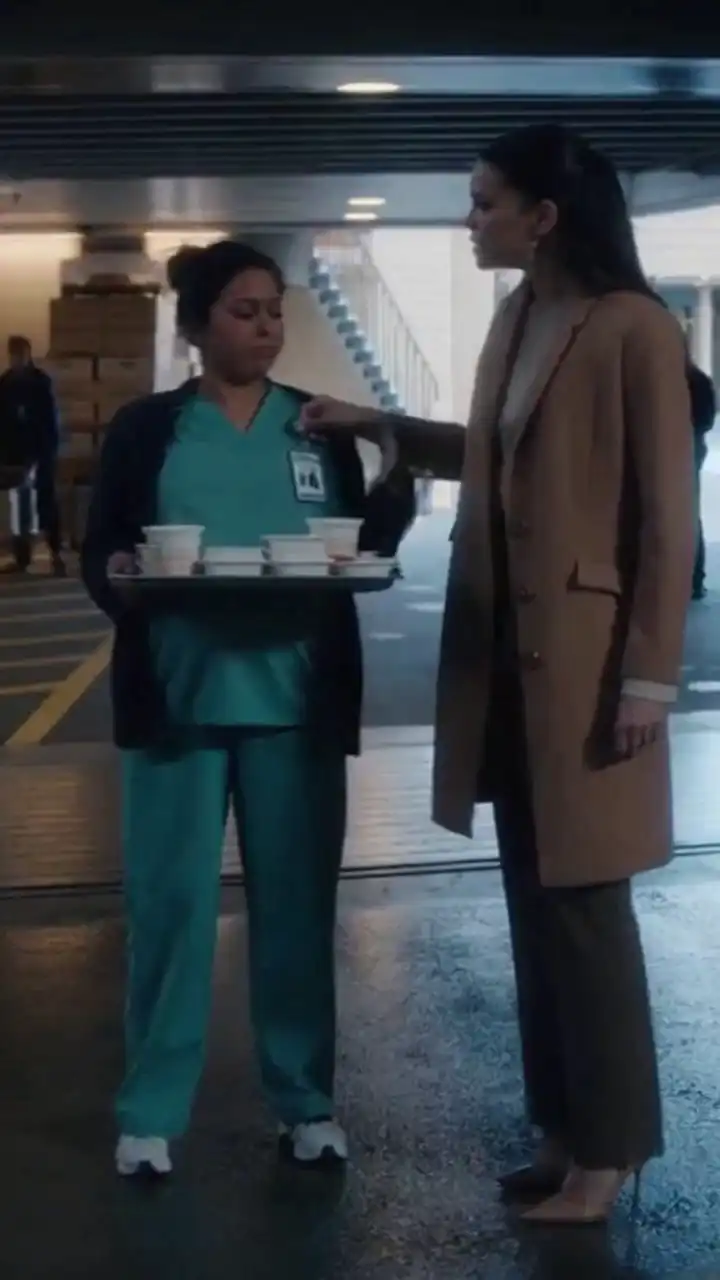
SHE RIPPED THE BADGE OFF A PREGNANT NURSE AIDE IN THE LOADING BAY TO SHOW EVERYONE WHO MATTERED—AND PICKED THE WORST POSSIBLE WITNESS
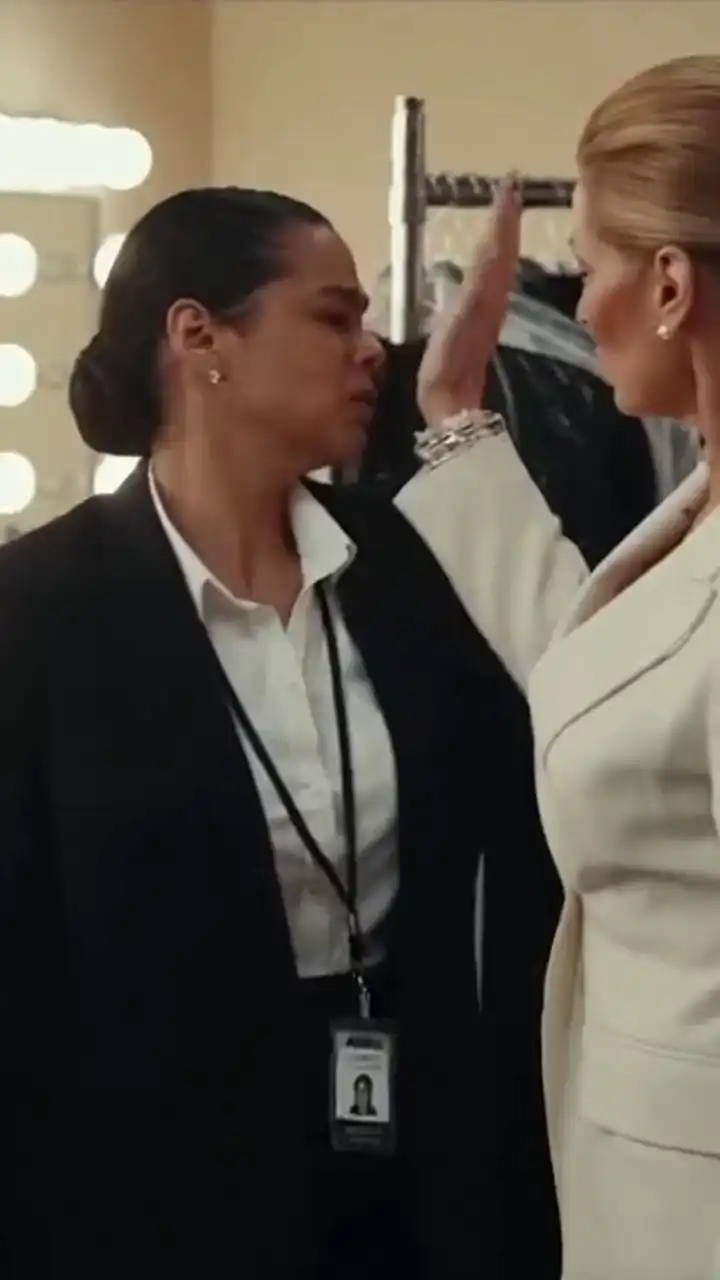
SHE SLAPPED THE THEATER USHER IN THE FITTING ROOM AND TURNED HER INTO A LESSON—UNTIL A QUIET VOICE FROM THE DOOR SAID HER NAME
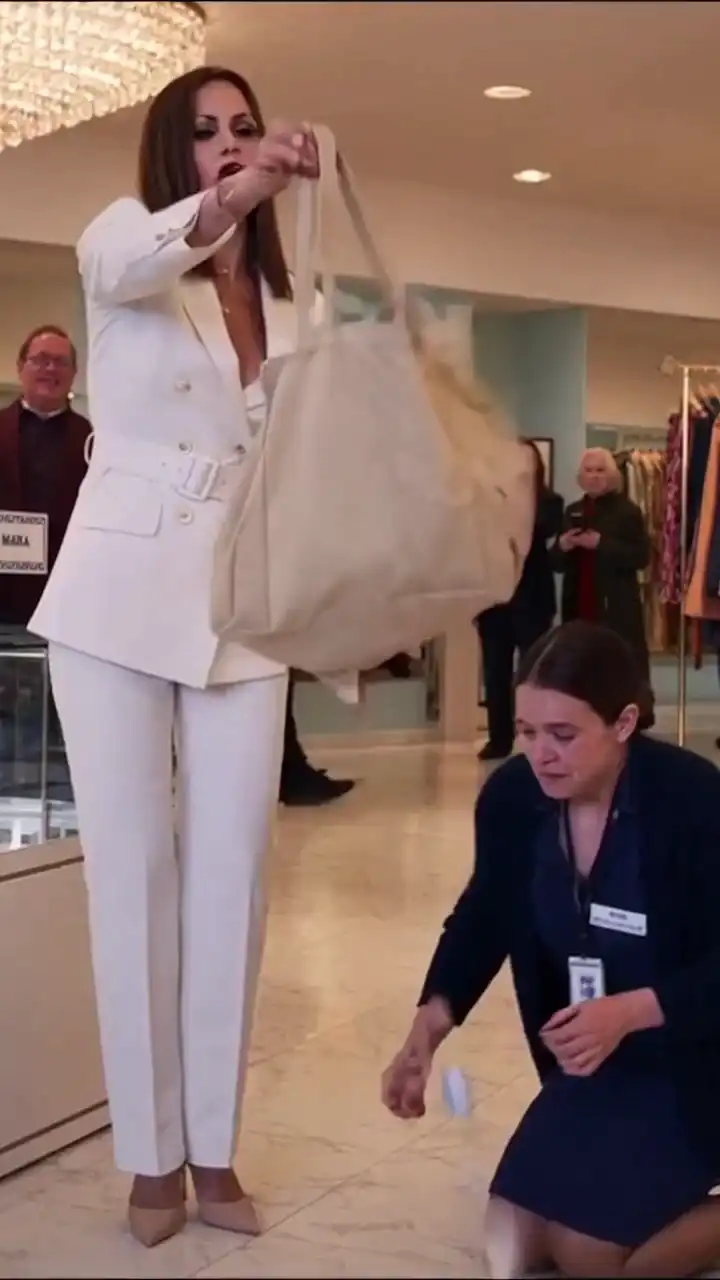
SHE DUMPED A CHURCH VOLUNTEER’S BAG ACROSS THE SHOWROOM FLOOR TO “PROVE A THEFT” — THEN THE QUIET WOMAN BY THE MIRROR SPOKE