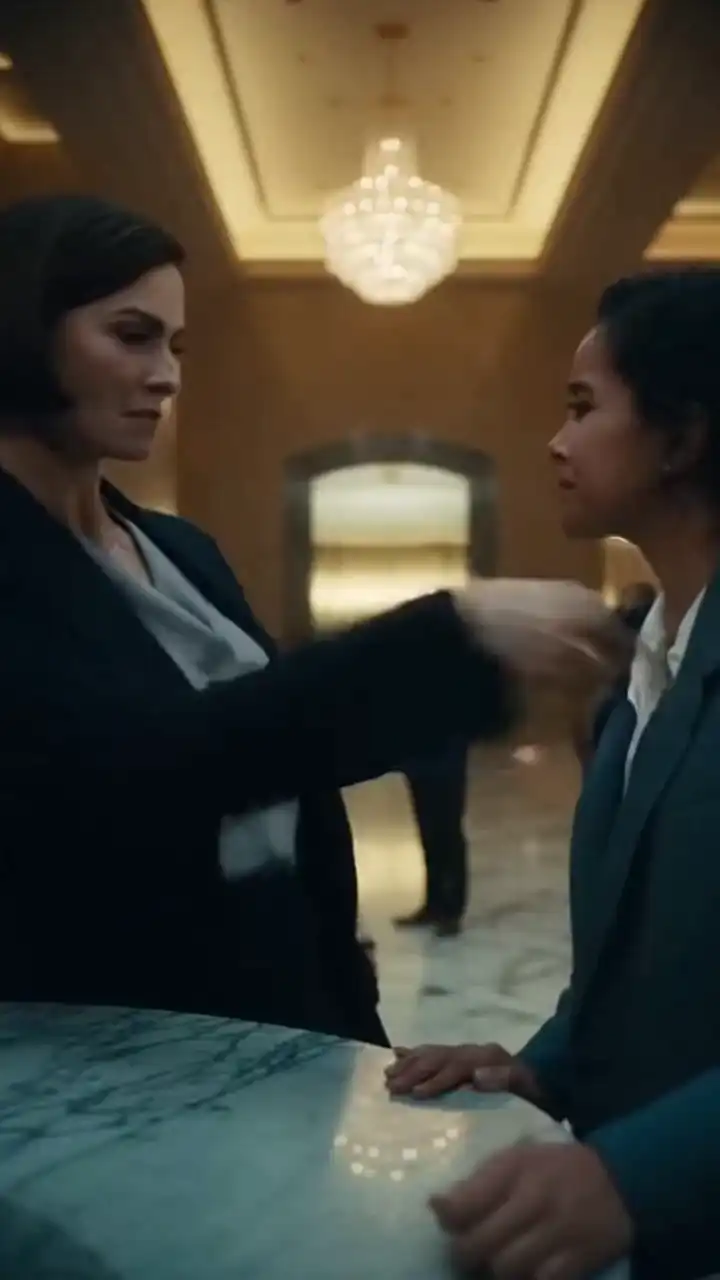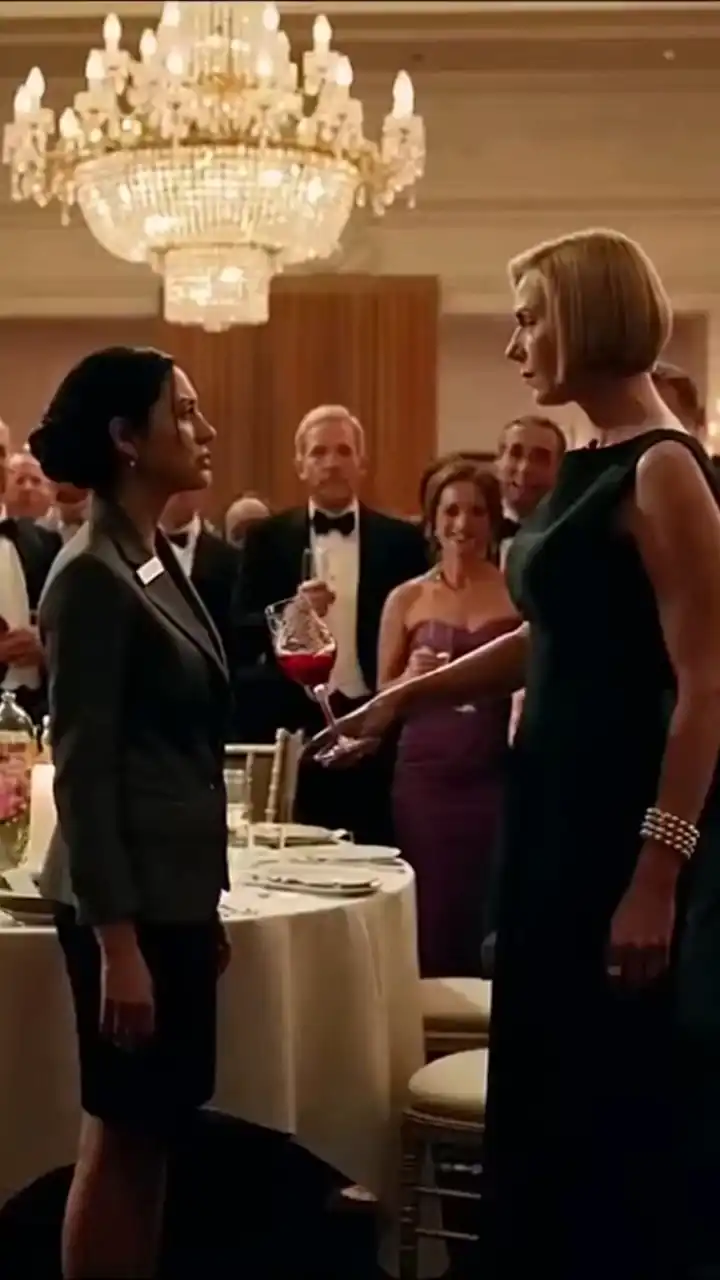
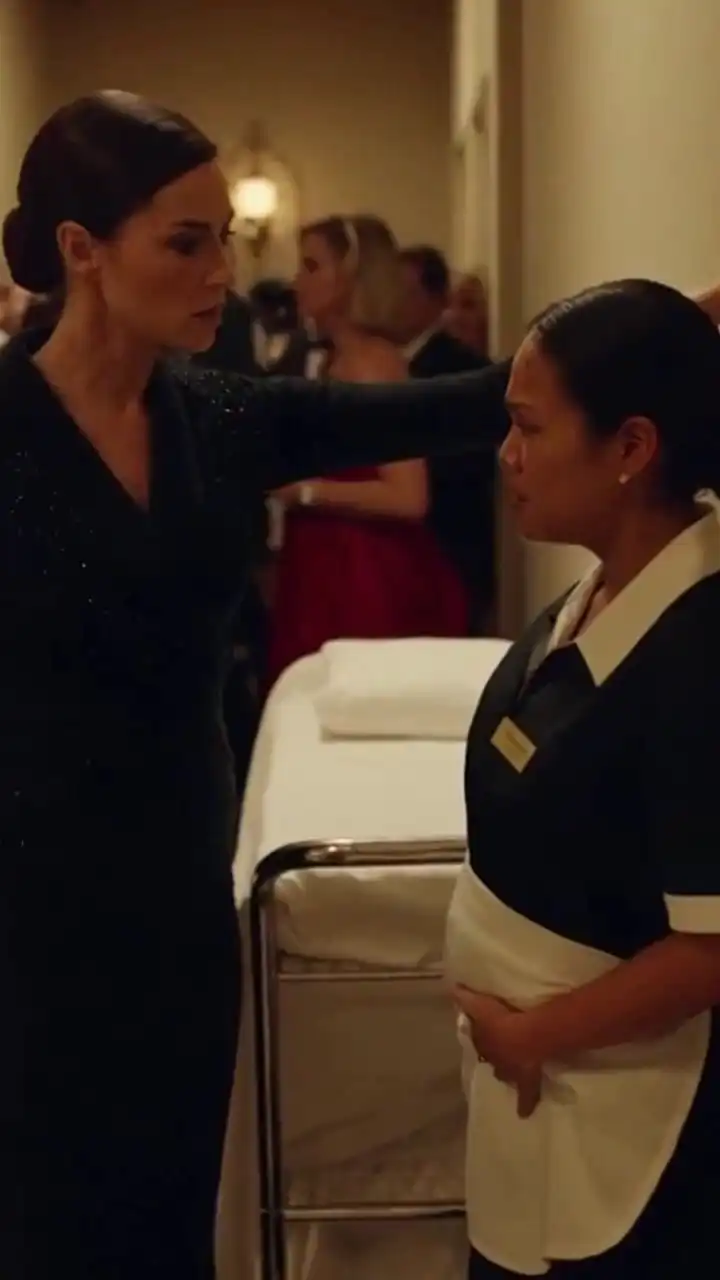
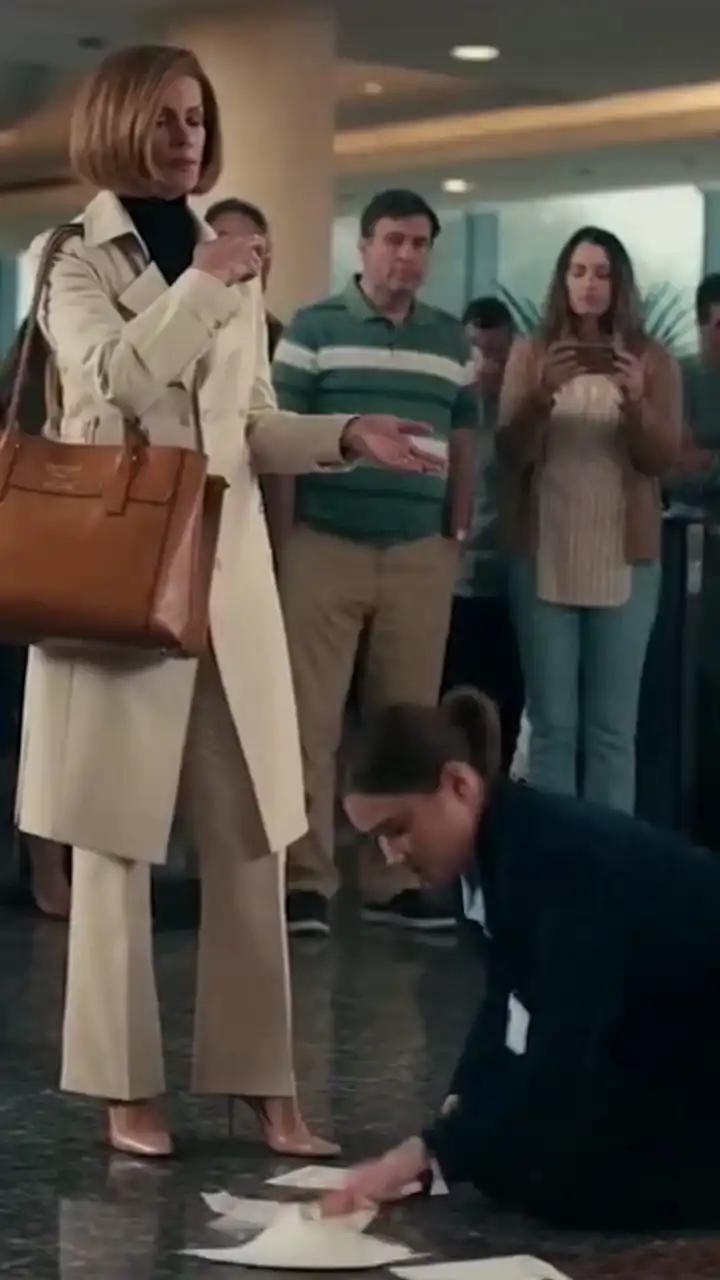


SHE PUBLICLY ACCUSED THE VALET OF RUINING A LUXURY BAG WHILE HE WAS TRYING TO HELP A SICK CHILD—AND THEN THE WRONG FAMILY MATRIARCH WALKED IN
The voice came from the young mother in the lounge chair.
She had one arm wrapped around her daughter now, the inhaler pressed against the little girl’s mouth as the child took shaky breaths. Her face was wet with stress and humiliation, but she forced herself to speak louder the second time.
“He found her inhaler,” she said. “I dropped it. He brought it to us. He didn’t touch her bag. He was helping my daughter.”
No one rushed to agree with her.
That was the ugliest part of places like that lounge. Truth never entered the room at full strength if money was already talking.
Celeste let out a short laugh, brittle and fast. “Of course he coached you. People always get emotional when they’re caught in something embarrassing.”
Mrs. Bennett turned her head slowly.
She was not a loud woman. She didn’t need to be. The whole donor floor knew Evelyn Bennett’s face from gala walls and annual reports, but most of them only knew one version of her—the polished widow of the hospital’s founding benefactor, the woman whose name opened wings and closed conversations.
What they did not know, at least not most of them, was that she had once spent nearly eight months in and out of that hospital beside a grandson who had needed a transplant to stay alive. She knew every hallway smell, every bad vending machine, every overnight shift face, and every small mercy that never made it onto a plaque.
Her gaze stayed on Marcus.
“Did you?” she asked.
Marcus straightened, even with the heat crawling up his neck. “No, ma’am.”
That was all.
He didn’t point at the child. He didn’t defend himself with a speech. He didn’t beg.
Evelyn looked at the broken strap. “How was it damaged?”
Celeste seemed relieved to be speaking again. “I set it down for one second. He came in here where he didn’t belong, grabbed things, and then suddenly the strap was torn. It’s obvious.”
“Is it?” Evelyn asked.
The room went still in a different way now.
Celeste wasn’t used to having to build a lie all the way out. Usually her last name and her donor checks did the heavy lifting for her. Marcus had seen that before. She wasn’t old money, not really. She had married into donor circles through her late husband’s family foundation, and because she was always trying to prove she belonged at the top tier, she performed power harder than people born into it.
That was why she picked safe targets.
Valets. Receptionists. Housekeepers. Delivery drivers. People who needed the job more than they needed justice.
Marcus had taken it from her before. Not like this, but enough.
He remembered her tossing keys into a puddle beside the valet stand because her SUV had taken too long during a thunderstorm. He remembered her complaining to his manager that he “looked tired and unfriendly” after he’d worked a double shift. He remembered her once snapping her fingers at him in front of two surgeons and saying, “Trunk,” as if he were less than the button on her key fob.
He had smiled through all of it because his boys needed school lunch money more than he needed pride.
Now she was standing in the donor lounge trying to turn him into a thief in front of security.
Evelyn held out her hand. “May I?”
Celeste hesitated, then passed over the bag.
Evelyn examined the torn strap with the same calm expression she might have used reading a menu. Then she turned the bag over slightly. The leather near the metal ring was cracked white at the fold, worn thin in a line that had clearly been weakening for a long time.
“This didn’t tear just now,” Evelyn said.
Celeste’s face tightened. “With respect, it absolutely did.”
“Then with respect,” Evelyn replied, “you should have chosen a better lie.”
A few people looked down immediately.
Celeste flushed. “I don’t appreciate being spoken to like that over an employee.”
Marcus felt the air shift again at that word. Employee. Not because it insulted him—he was an employee—but because she said it like human value ended there.
Evelyn handed the bag back without taking her eyes off Celeste. “And I don’t appreciate someone trying to make a working man pay for a bag that was already failing at the seams while he was helping a child in respiratory distress.”
One of the guards finally moved, but not toward Marcus. He stepped back from him.
Celeste caught it. So did everyone else.
Her voice rose. “This is ridiculous. My family has given millions to this hospital.”
The nurse at the desk went perfectly still.
Evelyn said, “Then your family should know better than to stage a public execution in a pediatric donor lounge.”
Celeste opened her mouth, but before she could speak, the little girl across the room started coughing again. Her mother fumbled with the spacer, hands still shaking. Marcus moved on instinct.
He took one step.
Then stopped, not wanting to make it worse.
Evelyn noticed. “Go ahead,” she said.
Marcus crossed the room carefully and knelt beside the chair, keeping enough distance not to crowd them. “Turn it a little,” he told the mother softly. “Yeah. Like that.”
The child took another breath. Then one more. The hard panic sound in her chest eased just enough for the room to hear it.
Her mother looked up at Marcus like she might cry from relief. “Thank you.”
Celeste’s friend suddenly became fascinated by her phone.
Evelyn watched Marcus for a long second, and something in her face changed—not surprise, exactly, but recognition being confirmed.
“Come here when she’s steady,” she said.
Marcus nodded and stepped back once the girl’s breathing settled.
Celeste folded her arms, trying to recover. “Even if there’s confusion about the bag, he should never have been in this lounge. Staff needs boundaries.”
That one was aimed at the room. At management. At the old social reflex that said certain bodies belonged in service corridors, not soft chairs and donor air.
Evelyn answered before anyone else could.
“He was in this lounge because I asked him to be on this floor today.”
Now people really looked up.
Marcus did too.
He knew she had requested extra valet coverage all week for donor family arrivals, but he had not known she remembered him specifically. Not until that second.
Celeste blinked. “Why?”
Evelyn turned fully toward the room now, and when she spoke, her voice carried without force.
“Because six years ago,” she said, “when my grandson collapsed outside this hospital and the curbside team froze waiting for transport, Marcus Pickett picked up a twelve-year-old boy in his arms and ran him through those front doors himself.”
Nobody moved.
The nurse at the desk looked at Marcus like she was seeing a second person inside the first one.
Evelyn continued. “He stayed after his shift to help me find the admitting unit. He brought coffee no one asked for. He sat with my daughter when she thought her son might die in surgery because she was alone and shaking too badly to hold the forms straight.”
Marcus dropped his eyes. He had never told that story at work. To him it was never a story. It was just a night. A terrible one. A family in crisis. A boy turning gray in the face. Something that needed doing.
Celeste gave a small, dismissive laugh that sounded weaker than she meant it to. “That’s very touching, but it doesn’t change hospital policy.”
Evelyn looked at her with open dislike now.
“I helped write the donor family access policy after that year,” she said. “And one reason I did was because I learned some of the most useful, trustworthy people in this building do not wear the titles people like you respect.”
The room got very quiet.
The security guards were no longer pretending not to choose a side. One had his hands clasped in front of him now, posture formal, waiting.
Celeste realized she was losing the floor and pushed harder. “So what? He did one nice thing years ago. That doesn’t mean staff gets to roam around touching donor property.”
The young mother finally found her backbone in the silence.
“He didn’t touch your property,” she said, louder now. “You kicked your own bag under the chair when you stood up and started yelling because the coffee wasn’t oat milk.”
A few heads snapped toward Celeste.
The volunteer by the coffee station whispered, “It was almond milk,” before catching herself.
Celeste turned on her. “Excuse me?”
The volunteer went pale, but Evelyn spared her by speaking first.
“Enough,” Evelyn said.
Then she turned to the nurse at the desk. “Please call Administration and Risk. I want this incident documented in full, including the false accusation, the disruption of patient family space, and the intimidation of staff.”
Celeste stared. “You can’t be serious.”
“Oh, I’m entirely serious.”
“My foundation sponsors the winter campaign.”
“And if your foundation is tied to your behavior, that will be discussed as well.”
The words landed like dropped metal.
For the first time, real fear cut through Celeste’s posture. Not social annoyance. Not offended pride. Consequence.
She stepped toward Evelyn, lowering her voice in that fake private tone people use when they realize public force has failed. “Mrs. Bennett, I think this is becoming bigger than it needs to be.”
Evelyn did not lower hers.
“It became exactly this big when you tried to pin your own damaged bag on a man making barely enough to survive while a child needed help.”
Marcus felt every eye in the room swing back to him, but this time it wasn’t with contempt. It was worse in one way and better in another. People were measuring what they had allowed.
Celeste saw it too. “Fine,” she said tightly. “If he didn’t damage the bag, then this was a misunderstanding.”
Marcus finally spoke. “No, it wasn’t.”
The words were calm, almost gentle. But they carried.
Celeste looked at him like he had broken some rule deeper than policy.
He went on. “A misunderstanding is when someone gets something wrong and wants the truth. You wanted someone smaller to blame.”
Nobody helped her now.
Evelyn glanced at Marcus, and there was something close to respect in it. “How long?” she asked.
He knew what she meant. He hesitated anyway.
“A while,” he said.
The valet supervisor, who had just rushed in after getting three different texts, stopped short near the door. “Marcus?” he said.
Celeste seized on that. “Good. You’re here. He needs to be retrained, at minimum.”
The supervisor looked from Celeste to Evelyn to security and understood instantly that the ground had already moved under everyone’s feet.
Evelyn said, “No. He needs to be protected from donors who think service workers come without dignity.”
The supervisor swallowed. “Yes, ma’am.”
Marcus stood very still. He wasn’t used to hearing anyone in authority say something like that out loud, especially not where other people could hear it.
Evelyn addressed the supervisor next. “I want Mr. Pickett removed from valet rotation for the rest of today with pay, and I want him in my office tomorrow morning.”
Marcus’s stomach tightened. A meeting in her office could mean anything.
She continued, “There is a patient family relations position opening on the transplant side. If he wants it, I want him interviewed before the posting goes public.”
Marcus looked up so fast he almost seemed younger.
Celeste gave a disbelieving laugh. “You’re promoting him because he embarrassed me?”
“No,” Evelyn said. “I’m advancing him because he has spent years doing work half this institution relies on and none of it has fit on his badge.”
Marcus couldn’t speak for a second.
He thought of school pickup notices folded in his pocket. The overdue electric bill on his kitchen counter. His younger son asking last week if they could maybe stop buying the cheap cereal that got soggy too fast. He thought of every time he had stayed silent because silence was rent money.
The nurse returned to the desk phone. “Administration is on the line,” she said quietly.
Evelyn nodded. “Put them through speaker.”
Celeste stepped back. “That won’t be necessary.”
“It is now.”
The call took less than five minutes to wreck what was left of Celeste’s control. Evelyn stated the facts plainly. The mother of the little girl confirmed them. The volunteer confirmed the coffee tantrum. Security confirmed that no one had seen Marcus touch the bag until Celeste thrust it into him. The nurse added that the accusation had delayed care in the lounge.
Each sentence stripped away another layer of Celeste’s protection.
Then came the concrete loss.
Administration informed her, in careful corporate language, that pending review, her private access privileges to the donor family floor were suspended. Any event planning connected to her foundation would be reassigned. A formal incident report would go to the philanthropy committee. If she wished to remain associated with the hospital, she would be expected to issue written apologies to staff and the affected patient family.
Celeste went white.
Her friend quietly moved two full steps away from her.
“This is insane,” Celeste said. “Over a bag?”
Evelyn answered, “No. Over what you thought a man like him could be forced to carry for you.”
No one argued after that.
A transport aide came to take the little girl upstairs for evaluation. As they passed, the mother touched Marcus’s sleeve.
“I’m sorry I didn’t speak sooner,” she whispered.
“You spoke when it counted,” he said.
She nodded, eyes filling, and followed her daughter out.
Celeste tried one last time before leaving. She turned to Marcus directly, maybe expecting him to save her by backing down, by saying it was fine, by returning to the role she preferred.
“I was upset,” she said. “If this affected your feelings—”
Marcus met her eyes.
“It affected my job,” he said. “My name. And that child’s air.”
She had nothing for that.
Security escorted her and her friend from the lounge, not roughly, just publicly enough for everyone to understand what had happened. That mattered. In places built on status, removal was its own language.
When the doors shut behind her, the room didn’t clap. It didn’t need to. People just started moving again, slower and quieter, as if ashamed of their own bodies for standing still so long.
The volunteer from the coffee station came over first. “Mr. Pickett,” she said, voice trembling, “I should have said something.”
Marcus gave her a tired nod. “Next time, do.”
She nodded hard.
His supervisor approached next, looking miserable. “I didn’t know it had gotten that bad with her.”
Marcus almost smiled at that. Not because it was funny, but because everyone only said that after they were finally forced to see what had been right in front of them.
“It doesn’t start bad,” Marcus said. “That’s how it keeps going.”
The supervisor had no answer.
Evelyn stepped closer once the room had thinned out. Up close, she looked older than the portraits and more tired than the donors ever noticed.
“You should have reported her before,” she said.
Marcus gave an honest shrug. “And if nothing happened?”
She accepted that because she knew the answer.
Then she said, “Something happened now.”
He looked down at his hands. They were still steady. That surprised him.
“I can’t promise I’m the right person for an office job,” he said.
Evelyn almost smiled. “Good. The wrong people are always the most certain.”
That pulled a breath of laughter out of him, the first one all afternoon.
She reached into her coat pocket and handed him a folded business card with a direct number written on the back. “Tomorrow. Ten o’clock. If you don’t want the position, we’ll discuss another one. But you’re done standing in a storm while people decide whether you count.”
Marcus closed his hand around the card.
For years he had walked through that hospital as part of the background—holding doors, taking tickets, absorbing moods, disappearing on cue. Even today, in the beginning, that was all the room had let him be.
A target. A uniform. A safe place to dump shame.
Now the same room had watched someone important say his full name like it mattered.
When he finally left the lounge, the nurse at the desk stopped him.
“Mr. Pickett?”
He turned.
She stood and held out a fresh visitor coffee cup with a lid. “For the road,” she said. “On the house.”
It was a small thing. Maybe too small for what had happened.
But small things were what he had always carried for everybody else.
This time, he took it, nodded once, and walked out through the donor hallway without lowering his head.
Disclaimer: Mention of any brand or trademark is for identification only and does not imply partnership or endorsement
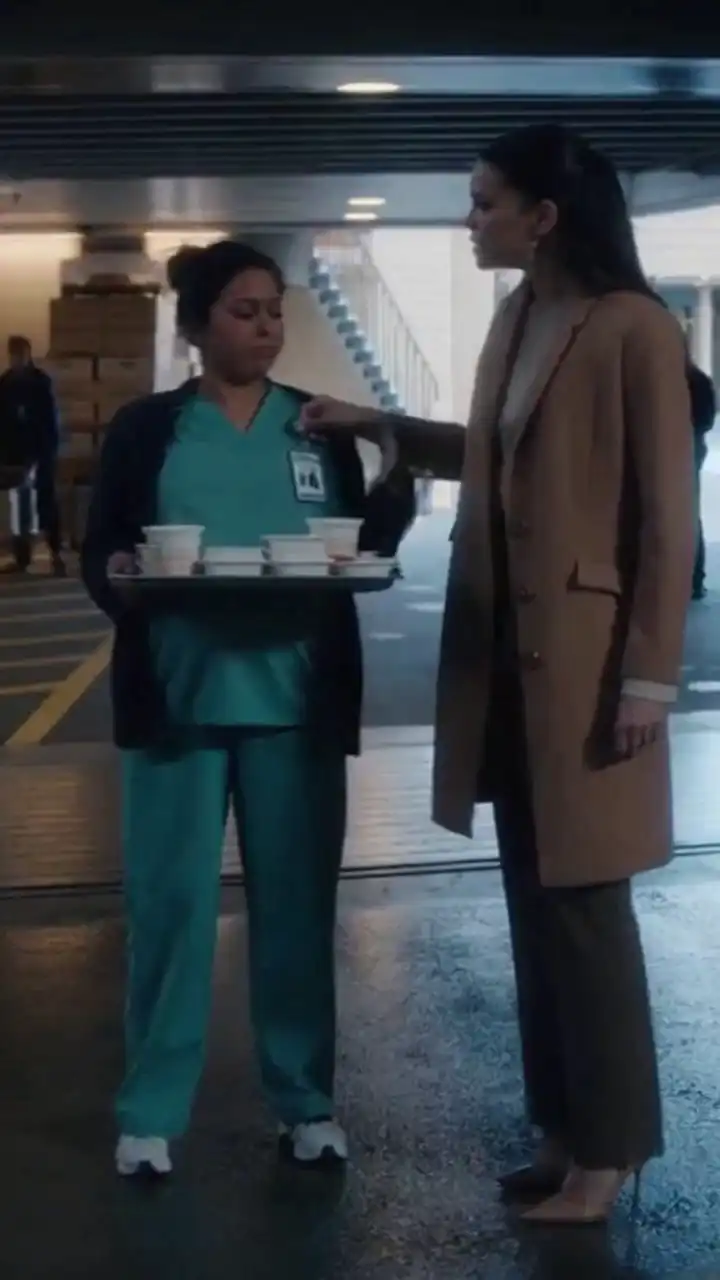
SHE RIPPED THE BADGE OFF A PREGNANT NURSE AIDE IN THE LOADING BAY TO SHOW EVERYONE WHO MATTERED—AND PICKED THE WORST POSSIBLE WITNESS
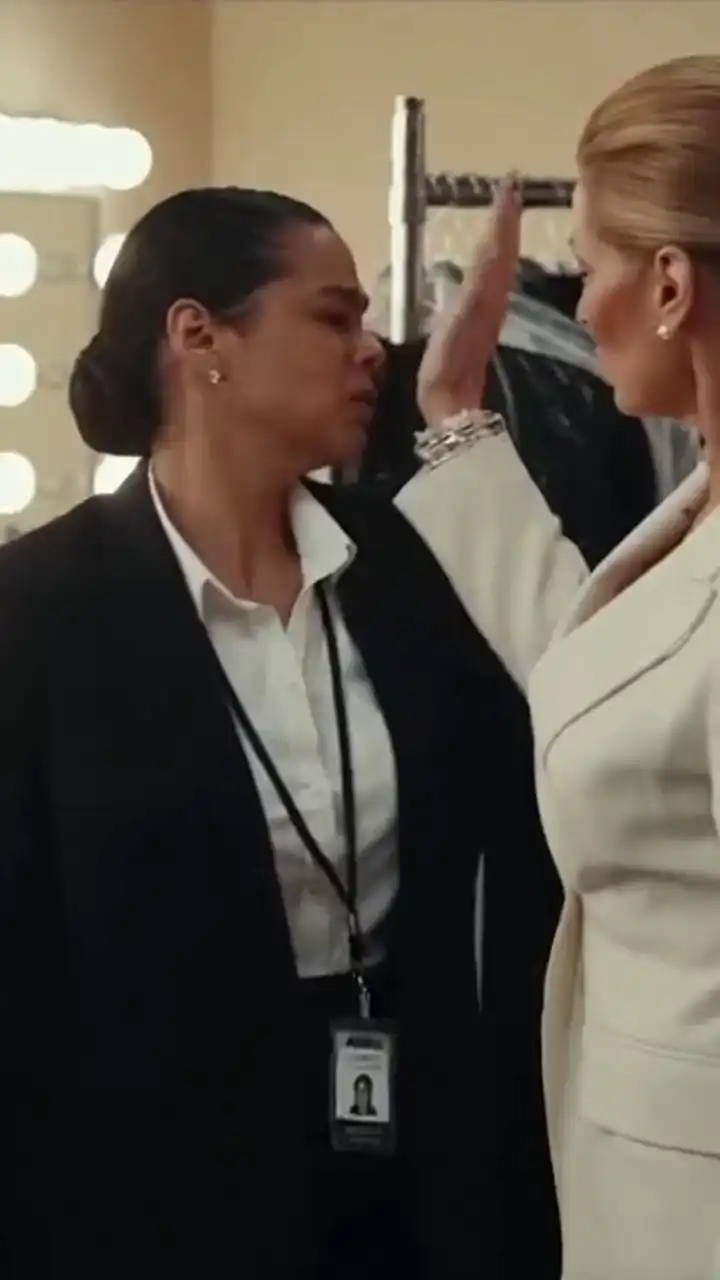
SHE SLAPPED THE THEATER USHER IN THE FITTING ROOM AND TURNED HER INTO A LESSON—UNTIL A QUIET VOICE FROM THE DOOR SAID HER NAME

SHE DUMPED A CHURCH VOLUNTEER’S BAG ACROSS THE SHOWROOM FLOOR TO “PROVE A THEFT” — THEN THE QUIET WOMAN BY THE MIRROR SPOKE