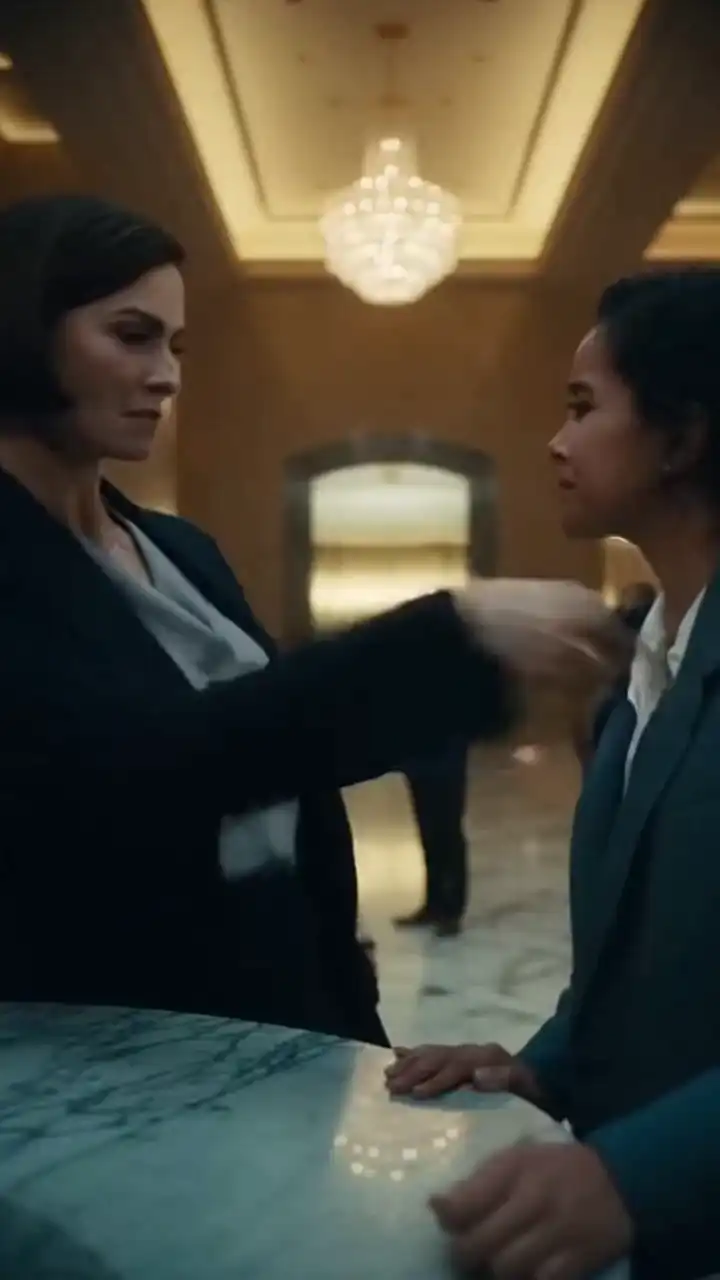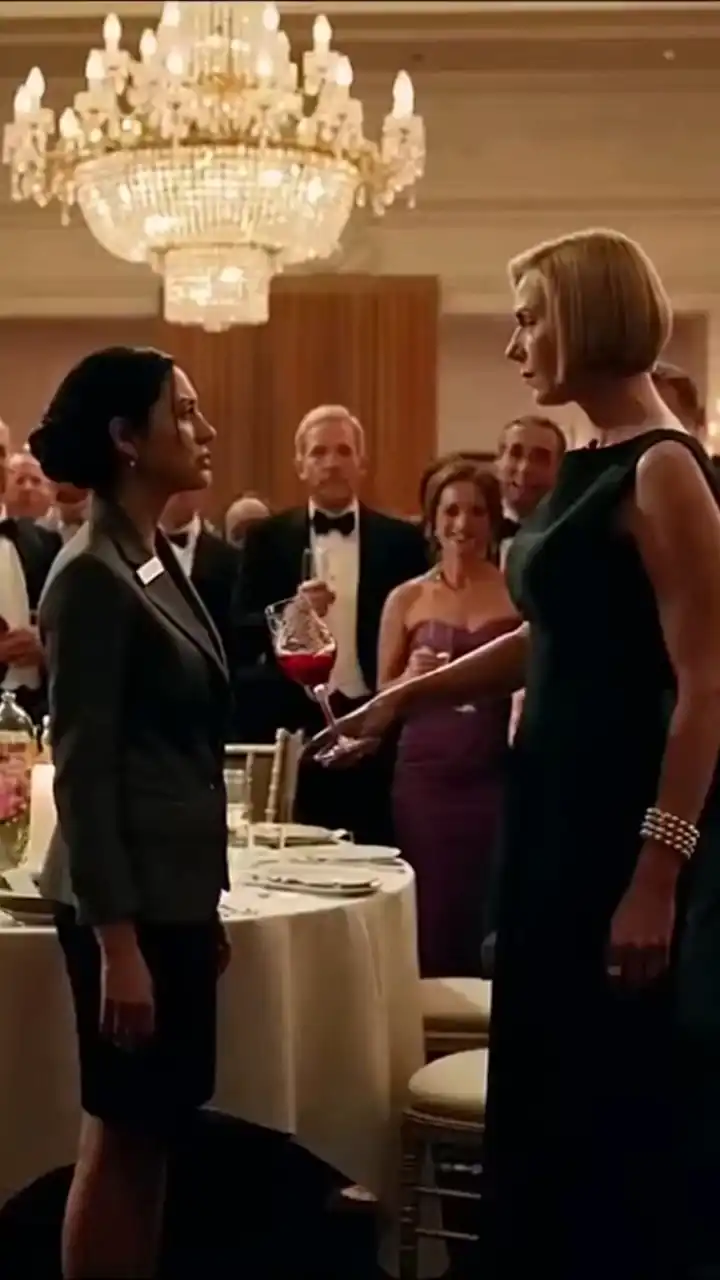
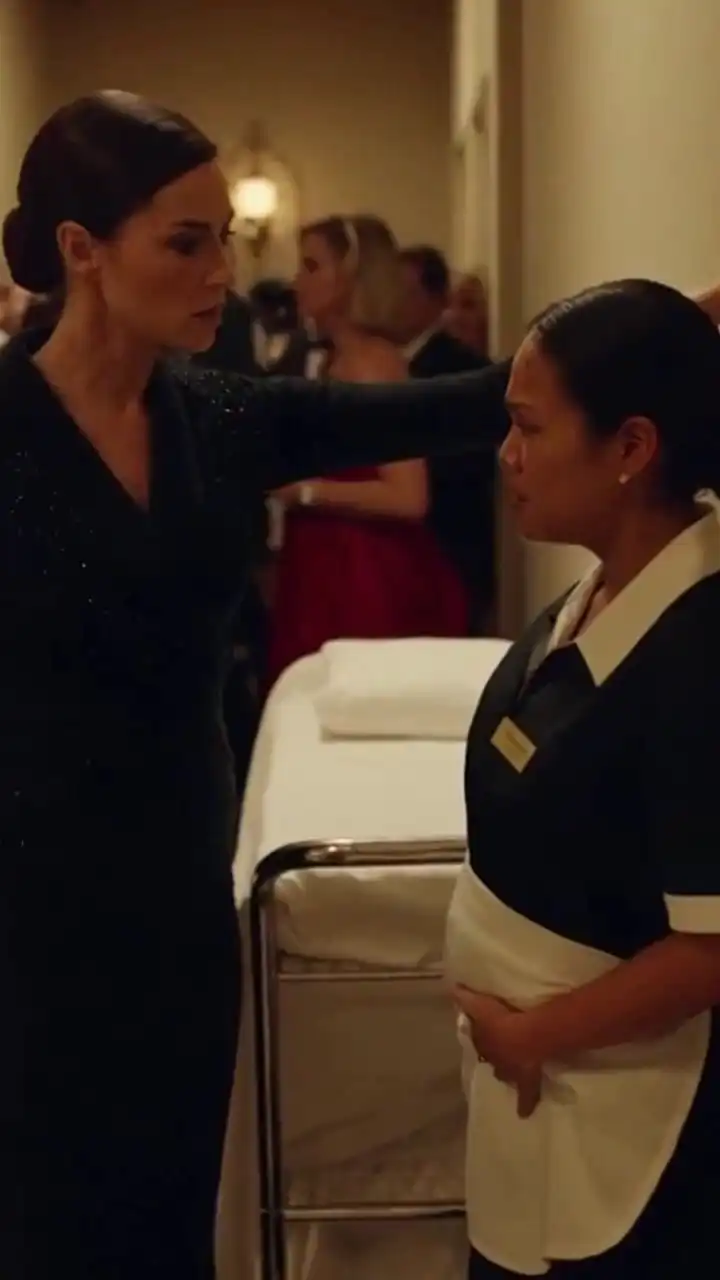
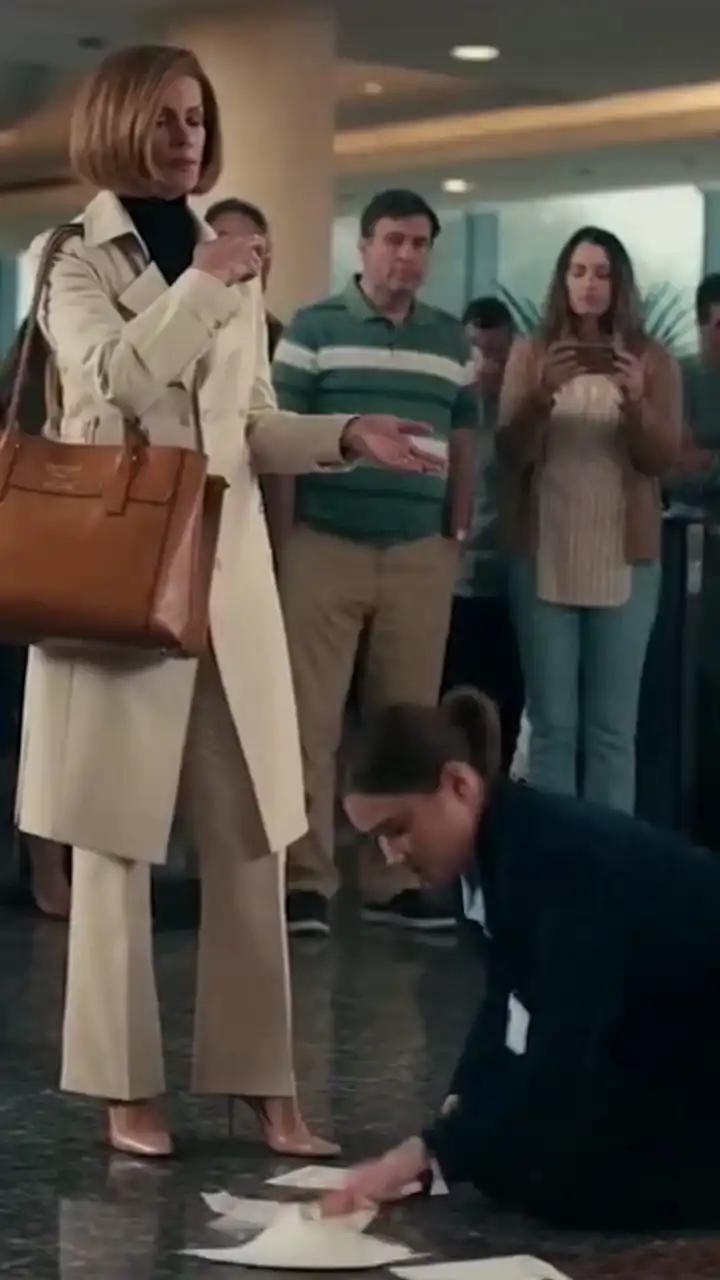

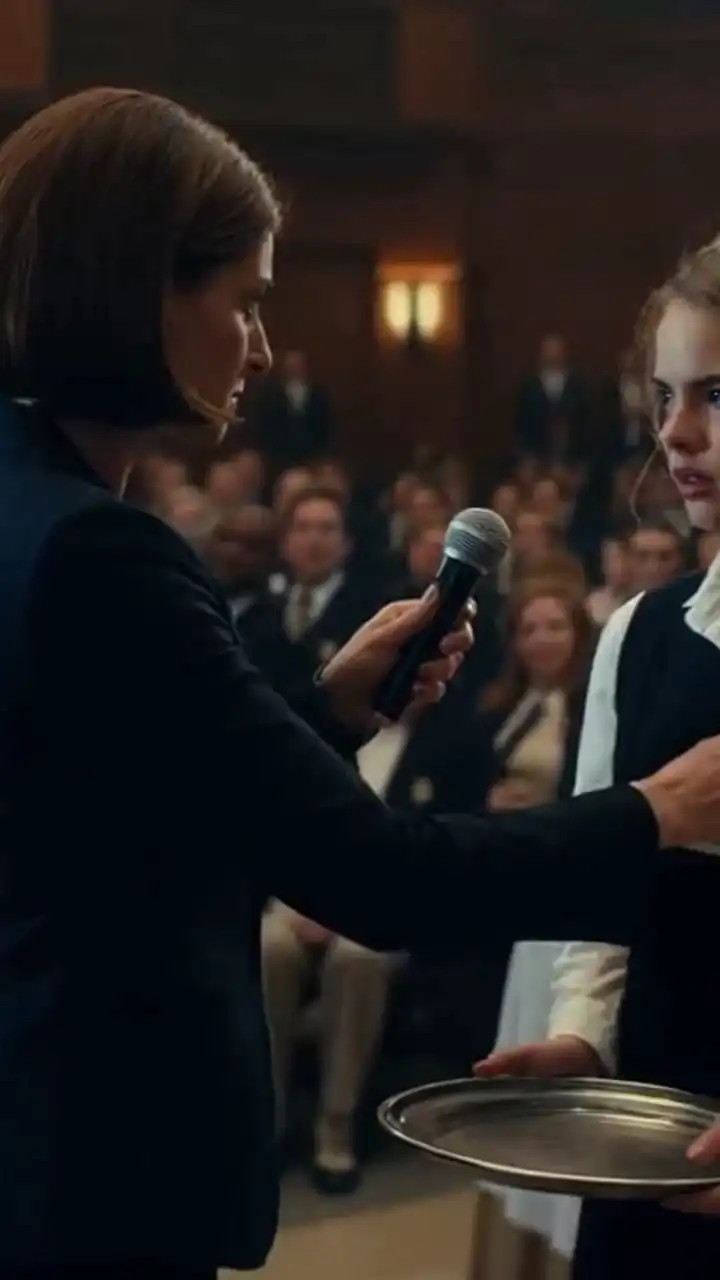
THE HEAD OF SCHOOL MADE THE QUIET CAREGIVER STAND IN FRONT OF THE WHOLE AUDITORIUM AND REPEAT “I AM ONLY THE HELP” UNTIL THE WRONG PERSON LOOKED UP
<<
“Full name,” she said. “And your role.”
Lena’s mouth had gone dry. She could feel hundreds of eyes on her, but the one thing holding her steady was Tori’s face off to the side—white with panic, lips pressed together so hard they were almost shaking. If Lena broke open right now, Vanessa would punish the girl next. Not today, maybe. But soon. Quietly. Efficiently. The same way she punished anyone in the building who couldn’t fight back.
So Lena said, “Lena Brooks. Caregiver for Mr. Calder.”
Vanessa tilted her head. “No. Try again. Properly.”
Arthur Calder’s cane struck the floor once.
It wasn’t loud, but in the sudden quiet it cut through the room.
“Enough,” he barked, his voice rough with age.
A few people jumped. Vanessa gave him the kind of smile adults use on elderly people when they want to dismiss them without seeming rude.
“Mr. Calder, we’re just clearing up a staffing issue before we continue.”
Lena saw his face tighten. He hated being talked around. More than that, he hated when people treated workers like furniture. She had learned that on her first week with him, when he made a country club server sit down and drink water before finishing his own lunch because the kid looked like he might faint.
Arthur tried to rise again, but his daughter, Elise Calder, was still across the lobby taking a call with two trustees and hadn’t seen what had happened yet. Without Lena at his side, he was unsteady.
Vanessa knew that too. That was part of why she had chosen this moment.
“Say it,” Vanessa ordered.
The silver-haired man in the front row stood up.
He didn’t rush. That made it worse for Vanessa, because his calm pulled attention from her before he even spoke. His chair scraped. Several trustees turned. One teacher at the side door visibly straightened.
Vanessa’s expression shifted into instant charm. “Judge Whitmore, we’ll begin the scholarship announcements in just one moment—”
He didn’t answer her. He was looking at Lena.
“Ms. Brooks,” he said, clear and direct, “what happened to your hand?”
Lena blinked.
For a second, the room seemed confused by the question. Then she looked down. In the scramble with the tray, hot coffee from another cup had splashed over the back of her wrist. Her skin was red and starting to welt.
Vanessa spoke too quickly. “It was nothing. She caused a disruption and—”
Judge Daniel Whitmore turned his head so slowly toward Vanessa that she stopped talking on instinct.
“I asked Ms. Brooks.”
Lena drew in a breath. “A student volunteer bumped me backstage. It was an accident. I was bringing water to Mr. Calder.”
“And the spill on the donor table?”
“Water,” Lena said. “A few drops.”
A murmur moved through the room. Not outrage yet. Just discomfort, because everybody could now feel how small the original offense had been compared to the punishment they had just watched.
Vanessa lifted her chin. “At Ashby we have clear event protocols. Staff are expected to remain in designated areas unless directed otherwise. She was warned before.”
There it was. Not just today. The pattern, said out loud like policy.
Judge Whitmore’s eyes stayed on her. “Warned not to bring water to an eighty-six-year-old board member in a crowded auditorium?”
Vanessa opened her mouth, then shut it.
Arthur hit his cane again. “She was with me because I asked for her,” he said. “And if anybody in this room belongs where she stands, it’s her.”
That got more heads turning, especially from the parent tables. Arthur Calder was not just some aging guest. He had a building named after his late wife. People who hadn’t cared a minute ago started paying attention very fast.
Vanessa forced out a laugh that sounded thin now. “Of course, Mr. Calder, no one is attacking your caregiver. This is simply about maintaining standards and boundaries.”
“Boundaries?” Arthur snapped. “You made her announce herself like a trespasser.”
Tori suddenly found her voice. “It was my fault,” she blurted from the side. “I mean, not even fault, really. I backed into her because the sign boards were blocking the ramp lane. Ms. Brooks didn’t do anything wrong.”
Vanessa whipped around. “Tori, that is enough.”
“No,” Judge Whitmore said. “Let the girl speak.”
Tori’s eyes got wet, but she kept going. “Ms. Brooks was helping Mr. Calder because he said he was dizzy. She asked if someone could move the display. Nobody moved it. Then I bumped her.”
A faculty member near the back nodded before catching himself. Too late. Someone had seen.
Judge Whitmore looked toward the side doors. “Who oversees event setup?”
A facilities supervisor raised one hand halfway. “Vanessa approved the floor plan.”
Another murmur.
Vanessa was losing the room in pieces now, not all at once. First the scale of the offense. Then the blocked accessibility lane. Then the forced apology. Then the badge. Every fact made what she had done look less like management and more like theater.
She switched tactics.
“With respect,” she said, now addressing the room as much as Whitmore, “private schools run on standards. If service vendors begin crossing into family spaces, confusion follows. Parents expect professionalism.”
“Service vendors?” Arthur said, disgusted. “She’s a human being.”
Elise Calder had entered through the side doors halfway through that exchange, her phone still in her hand. She stopped dead when she saw Lena at the microphone and her father half-standing with his cane planted like a weapon.
“What is going on?” Elise asked.
Nobody answered fast enough, which told her plenty.
She crossed the aisle in heels that clicked hard on the floor and looked from Vanessa to Lena’s red hand to Tori’s tears.
“Lena?” she said.
Vanessa jumped in. “A small staffing issue. Already under control.”
Elise didn’t even look at her. “Lena.”
Lena kept her voice even. “Mr. Calder asked for water. There was a spill. Ms. Pike felt I needed to clarify my place in the room.”
That sentence landed harder than shouting would have.
Elise turned to Vanessa. “Clarify her place?”
Vanessa tried to stand on authority. “This event includes major donors, legacy families, and prospective trustees. We cannot have aides wandering in and out of restricted areas without—”
“Aides?” Elise cut in. “She has cared for my father through every event this year. Through his rehab after his fall. Through the winter gala when your own emergency response team froze and she was the only one who knew how to lower his chair and keep him calm. You know exactly who she is.”
Several people looked at Lena differently then. Not richer. Not secretly important. Worse for Vanessa, actually. Useful, trusted, proven. A person the institution relied on while pretending she was beneath notice.
Vanessa’s smile had gone stiff. “This isn’t personal. We simply need role lines respected.”
Judge Whitmore finally stepped fully into the center aisle.
He was chair of the scholarship foundation that funded nearly a quarter of Ashby’s aid program, but more than that, he was one of the oldest board figures attached to the school. People listened when he asked where money went. They listened even harder when he stopped sounding ceremonial.
“You seem very concerned with role lines,” he said. “Let’s discuss yours.”
Vanessa’s face changed.
The room had known him as a donor all morning. But the teachers knew. The trustees knew. And now the parents were figuring it out from the silence.
He continued, “Three years ago, my late wife’s endowment created the caregiver support grant attached to this school’s elder outreach partnership. Ms. Brooks helped pilot that work at St. Anne’s Memory Center before she ever came here. I know her because my wife spent the last six months of her life under that program’s care.”
The auditorium went still in a different way now. No nervous shifting. No fake smiling. Just attention.
Whitmore looked at Lena, and for the first time all morning there was softness in somebody’s voice when they said her name.
“She was one of the few people who treated my wife as a person after everyone else started speaking over her,” he said. “She sat with her when visiting hours ended. She called me at midnight the night my wife stopped breathing because she knew I would want to be there before the hospital declared anything. I know exactly who Ms. Brooks is.”
Vanessa actually took a step back.
Lena felt heat rush up her neck again, but this time it wasn’t shame. It was the shock of being seen in full in a room that had just agreed to reduce her to a badge.
Whitmore turned back to Vanessa. “And I know exactly what I just watched you do.”
Vanessa tried one last defense. “Judge Whitmore, had I known there was a prior connection—”
“That is the problem,” he said sharply. “You believe basic dignity depends on prior connection.”
A few parents looked down at their plates.
One mother who had laughed earlier slowly set her phone face down.
Whitmore gestured toward the microphone. “You made her repeat that she did not belong in the guest area unless called. In front of children. In front of faculty. In front of donors. Over water. Is this your idea of leadership?”
Vanessa’s voice thinned further. “We have an image to protect.”
Elise let out a disbelieving breath. “You just destroyed it yourself.”
Arthur sank back into his seat, exhausted but furious. “Fire her,” he said flatly.
Vanessa turned toward Elise as if family loyalty might save her. “You can’t make a staffing decision in the middle of an event.”
“No,” Whitmore said, “but I can make a governance recommendation in the middle of one, and I am doing that now.”
He looked toward the trustees clustered near the wall. “As foundation chair, I want Ms. Pike removed from event authority immediately pending board review. Effective now. She will not speak for this institution for the rest of this program.”
One trustee, a man who had spent the whole morning nodding along with Vanessa, cleared his throat and said, “That seems… prudent.”
Prudent. The coward’s word for panic.
Elise added, colder than before, “And as Mr. Calder’s daughter, I’m filing a formal complaint for mistreatment of contracted medical support assigned to a board family member and for creating an accessibility hazard after being warned.”
The facilities supervisor spoke up again, more confidently this time. “We did tell her the sign boards narrowed the access lane.”
Vanessa spun toward him. “That is not what you said.”
He held her stare for one painful second, then looked away and said, “I have the email.”
That was another crack. Small, but fatal.
Because once one person stopped protecting her, others remembered they could too.
A language arts teacher stepped forward from the back row. “I saw her pull Ms. Brooks’ badge out and hold it up.”
One of the caterers said, “She told us not to intervene.”
A parent near the aisle added, embarrassed, “My son recorded part of it.”
Vanessa’s head snapped around. “You cannot share unauthorized video from a school event.”
The teenager in the navy blazer answered before his father could stop him. “I already sent it to my mom.”
The father closed his eyes.
Whitmore didn’t raise his voice, but the authority in it was heavier than shouting. “There will be no confiscating phones, no pressuring witnesses, and no retaliating against staff or students who speak. If that happens, funding discussions next quarter will be very short.”
That sentence hit every adult in the room where it counted.
Money. Governance. Exposure. Consequences that didn’t disappear after the breakfast ended.
Vanessa was no longer the woman holding the microphone. She was the woman standing under it.
She tried to hand it off to a stage assistant as if she could slide back into logistics and survive there.
Whitmore stopped her. “Before you go, apologize.”
She stared at him, stunned.
Not because apologizing was so impossible. Because now she was the one being told to perform in public.
Elise’s voice was ice. “To Lena. By name. Without the word if.”
Vanessa’s jaw tightened. The whole room watched. This time no one laughed for her.
“I apologize, Ms. Brooks,” she said finally, each word dragged out like it hurt. “My response was… excessive.”
Arthur made a disgusted sound. “Excessive? You treated her like dirt.”
Vanessa’s face flashed with anger at being corrected by the man she had counted on being too frail to disrupt her. But she had nowhere to put it now.
Lena could have let that apology sit there, thin and ugly and forced. She almost did.
Then she looked at Tori.
The girl still looked terrified. Not of Vanessa anymore, but of what came after. People like Vanessa rarely forgot who had spoken up.
So Lena said, quietly but clearly, “And Tori did nothing wrong.”
Vanessa hesitated.
Whitmore waited.
Elise folded her arms.
Vanessa swallowed. “Tori did nothing wrong.”
It wasn’t redemption. It was record.
Lena nodded once. “Thank you.”
That was all. No grand speech. No lecture. No dramatic victory line.
But because she stayed steady, the emptiness of Vanessa’s apology sat exposed in front of everyone.
Elise walked to Lena and gently took the microphone from its stand. “You’re done here,” she said to Vanessa. Then, to campus security at the side doors: “Escort Ms. Pike to her office and collect her event credentials.”
Two guards moved immediately. Not rough. Not theatrical. Just final.
Vanessa looked around like someone might still save her. The parents didn’t. The trustees didn’t. Even the people who had laughed earlier suddenly found their coffee fascinating.
As she was led out, she tried one last line over her shoulder. “This is a gross overreaction.”
Whitmore answered without looking at her. “No. What happened before this was.”
The doors closed behind her.
Only then did the room exhale.
The breakfast was a mess now. The polished program was broken. Students were whispering. Donors were pretending not to be thrilled by scandal while clearly storing every detail. But the ugliness was no longer hidden behind protocol.
Elise turned to Lena, her voice lower. “Are you hurt?”
Lena looked at her hand. “Just burned a little.”
Tori rushed over with a first aid kit she’d probably been clutching for ten minutes. “I’m so sorry,” she whispered, tears spilling now that it was safe.
Lena took the kit from her and squeezed her wrist lightly. “You didn’t do anything wrong.”
Arthur reached for Lena from his seat. She knelt beside him—not because anyone forced her there, but because he was old and angry and relieved, and because kneeling beside him was part of care, not humiliation.
He covered her hand with his own. “Should’ve shouted sooner,” he muttered.
“You did,” she said.
He looked up toward the front of the room. “Not soon enough.”
Whitmore approached them then, slower than before. Up close, he looked less like a public figure and more like an old man carrying a memory he hadn’t expected to meet in an auditorium.
“I never properly thanked you,” he told Lena.
She shook her head once. “You don’t owe me that here.”
“Yes,” he said. “I do.”
And in front of the same room that had just watched her be reduced, he said, “My wife died with dignity because of women like you. This school will not use your work and insult your humanity at the same time. Not while I have any say in it.”
Nobody had a clever response to that.
The rest of the morning changed shape around those words.
The scholarship announcements were delayed. The trustees gathered in a side cluster, urgent and pale. Elise canceled Vanessa’s afternoon parent reception on the spot. By noon, an email went out to faculty and board members: Vanessa Pike had been placed on administrative leave pending formal review for misconduct, hostile treatment of contracted care staff, and retaliation concerns. By evening, parents had the watered-down version. By the next afternoon, enough witness statements had been collected that “leave” became termination.
But the loss didn’t stop there.
The accessibility contractor sent an audit request after hearing the blocked-lane issue. The senior support agency filed its own complaint and suspended all nonessential placements at Ashby until staff training standards were reviewed. Two donors quietly told the board they would freeze discretionary gifts if the school tried to bury what happened. One trustee resigned from the event committee before anyone could ask why he had stood there smiling.
Tori kept her position.
More than that, she got moved under a different supervisor, one recommended by Elise herself. The girl’s hands still shook a little the next week, but not when Vanessa’s name came up, because nobody expected her to stay silent anymore.
As for Lena, she offered to finish out only Mr. Calder’s direct care schedule through the end of the month and then requested reassignment. BrightSteps approved it immediately, along with a written note that any future school placement involving her would require administrative protections in place first.
On Lena’s last day at Ashby, Arthur insisted on waiting with her at the front courtyard instead of in the private pickup area.
Parents passed by, slower than usual.
Some said hello.
Some said thank you awkwardly, like they were trying to pay off the memory of having watched and done nothing.
Lena didn’t rescue them from that feeling. She just stood there beside Arthur’s chair in the spring sun, one hand resting on the handle, not hidden in a service hallway, not pushed behind a curtain, not told to explain what she was.
When the car came, Arthur looked up at her and grumbled, “You know, this place was always too impressed with itself.”
Lena almost smiled. “A little.”
He patted her hand. “They learned something expensive.”
This time, when she walked through the front doors, nobody asked her to repeat her name.
Disclaimer: Mention of any brand or trademark is for identification only and does not imply partnership or endorsement
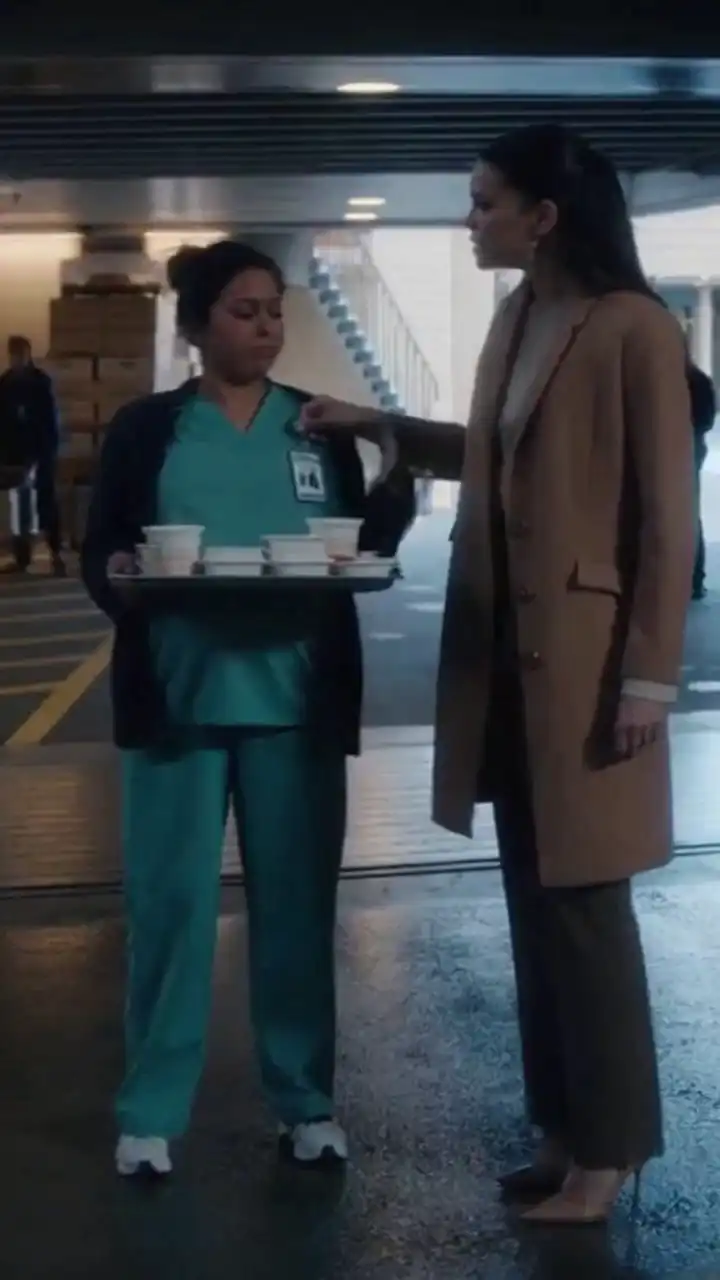
SHE RIPPED THE BADGE OFF A PREGNANT NURSE AIDE IN THE LOADING BAY TO SHOW EVERYONE WHO MATTERED—AND PICKED THE WORST POSSIBLE WITNESS
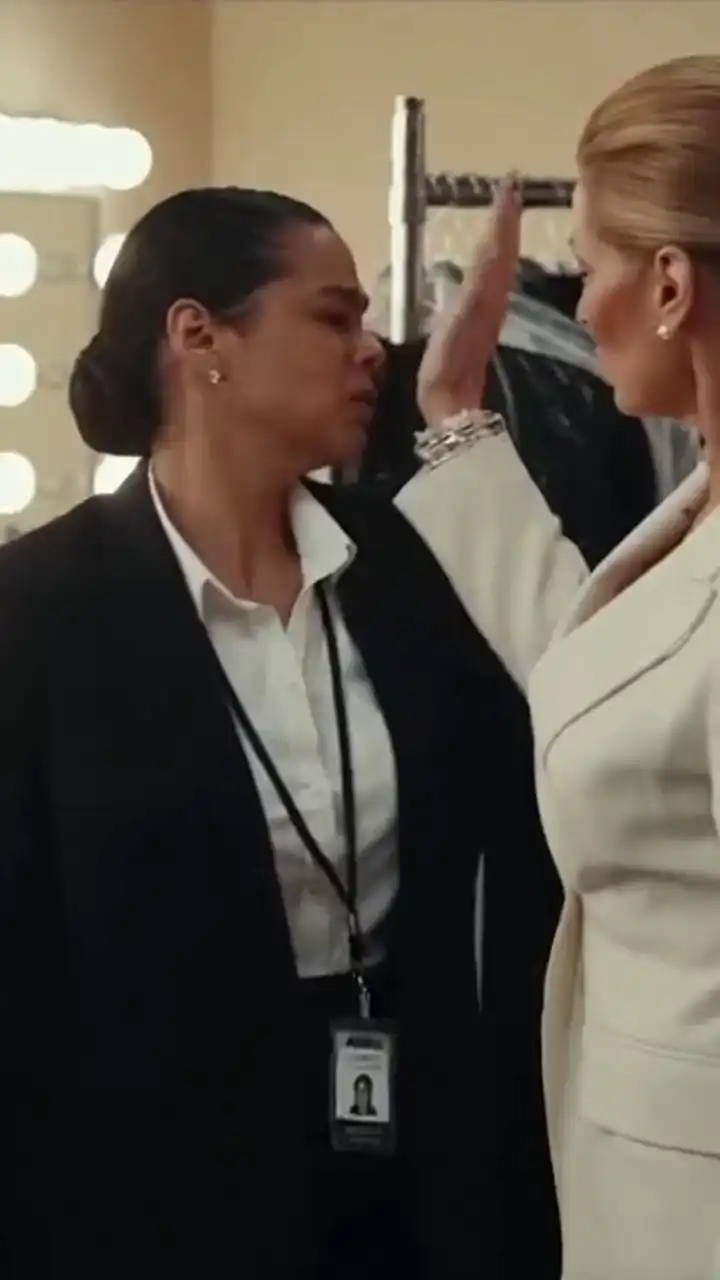
SHE SLAPPED THE THEATER USHER IN THE FITTING ROOM AND TURNED HER INTO A LESSON—UNTIL A QUIET VOICE FROM THE DOOR SAID HER NAME

SHE DUMPED A CHURCH VOLUNTEER’S BAG ACROSS THE SHOWROOM FLOOR TO “PROVE A THEFT” — THEN THE QUIET WOMAN BY THE MIRROR SPOKE