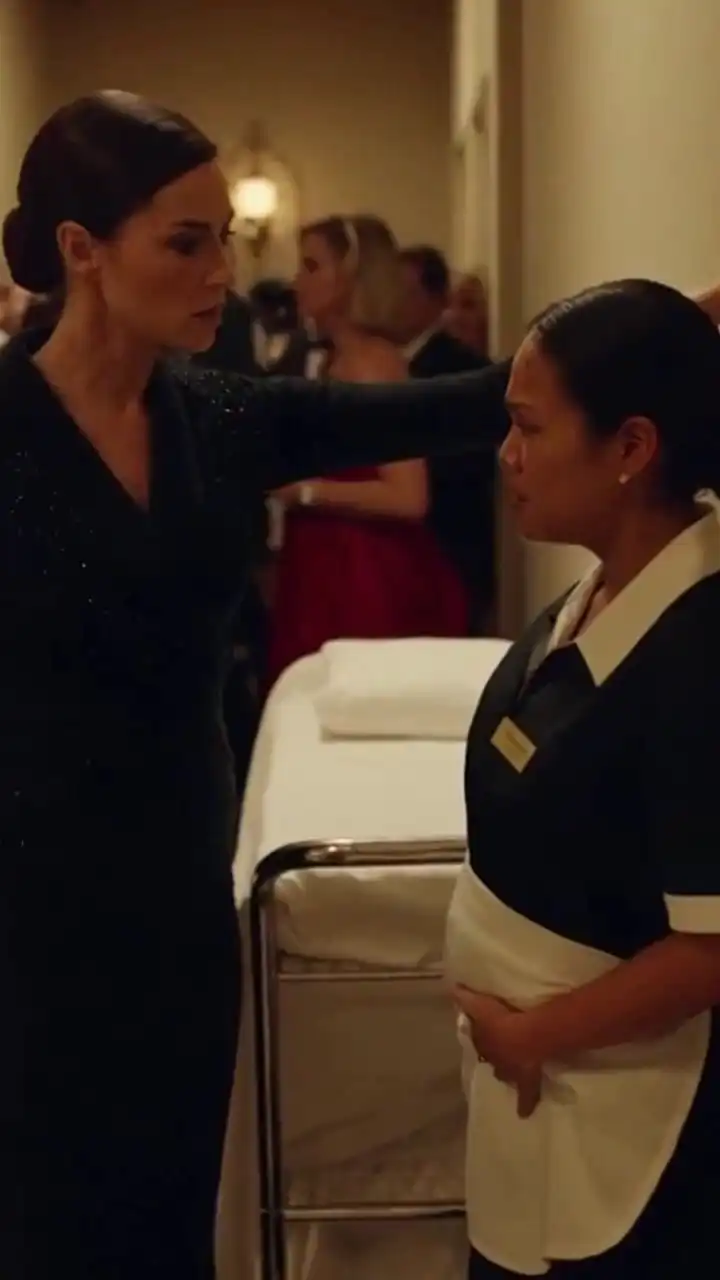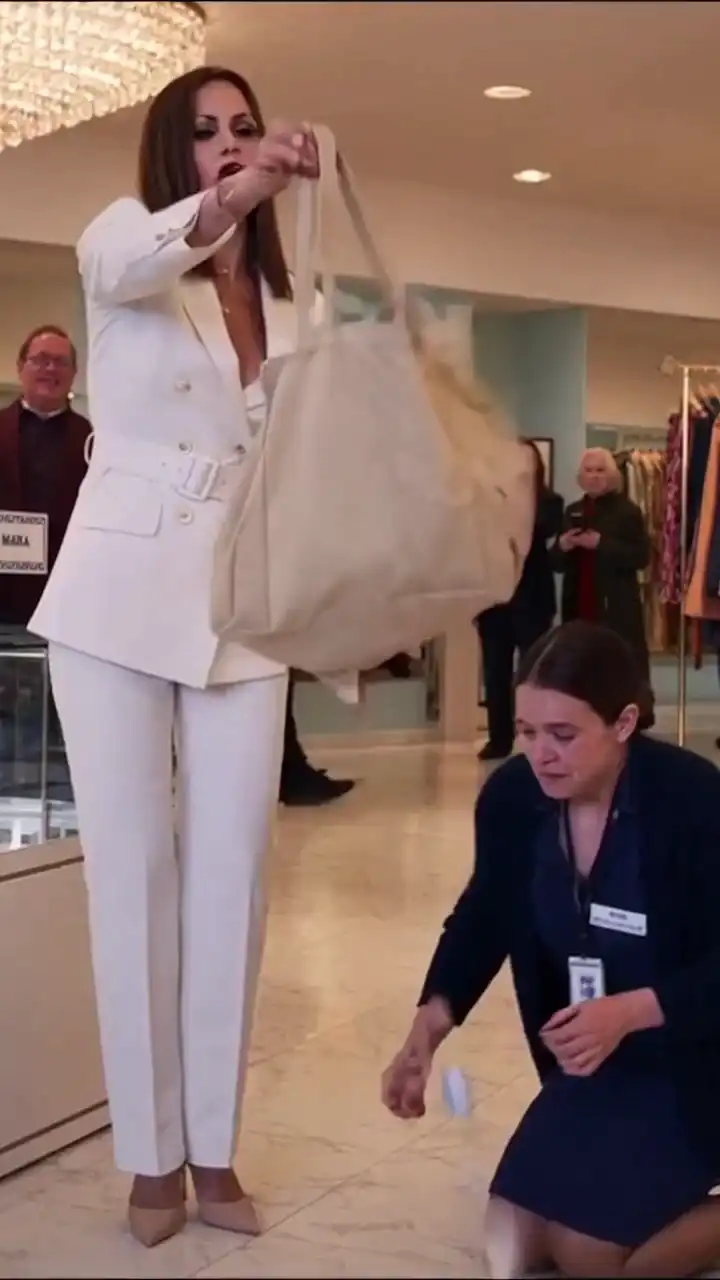
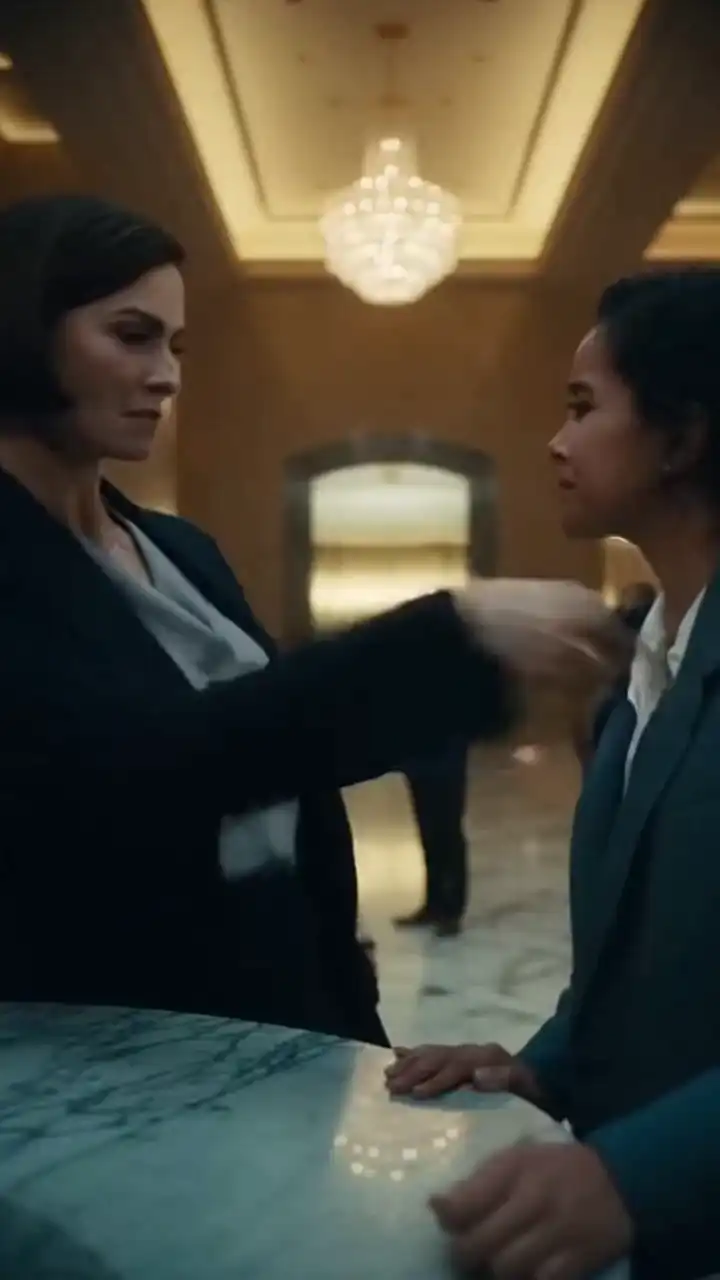
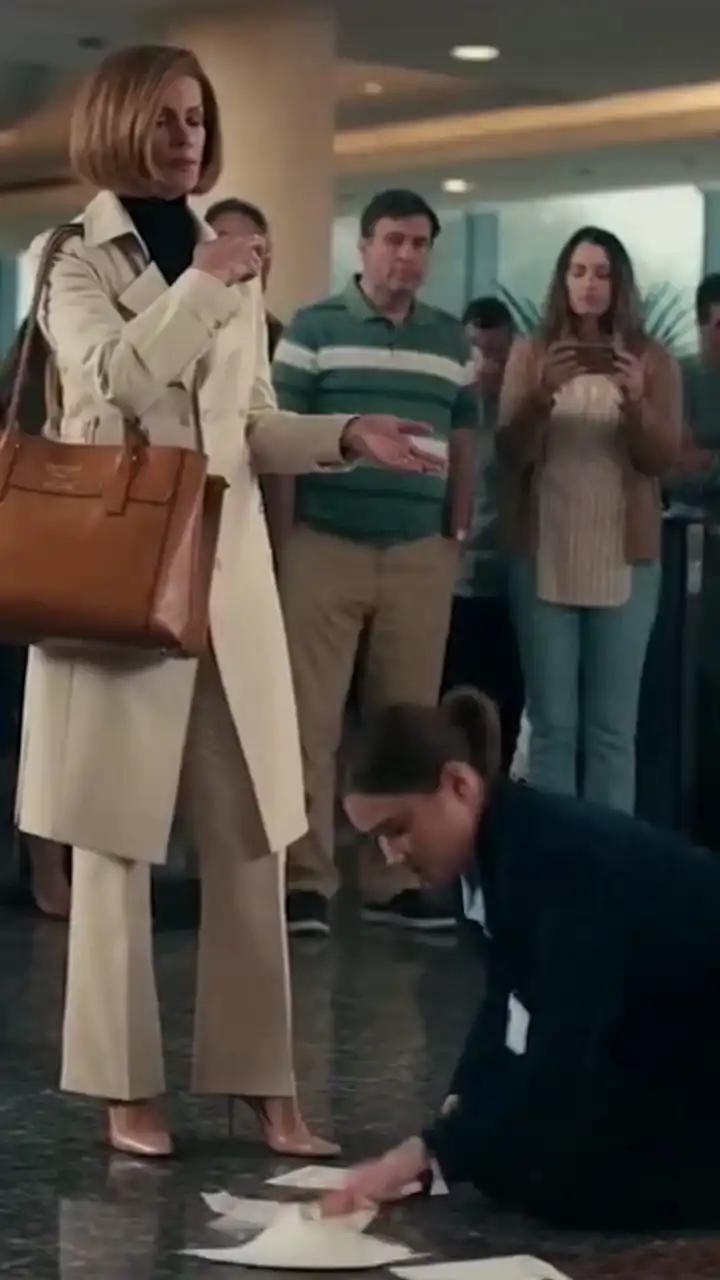

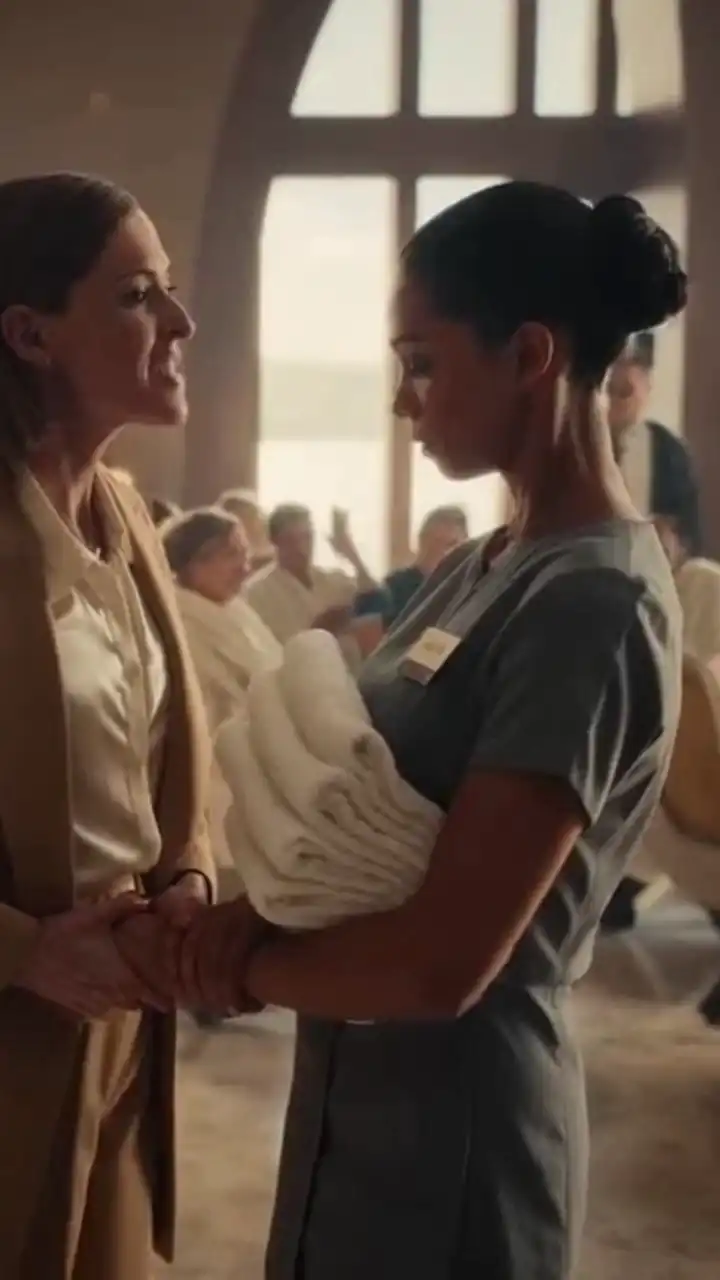
SHE MADE THE SPA ATTENDANT EXPLAIN HERSELF TO A ROOM FULL OF DONORS—UNTIL ONE MAN IN THE CROWD STOPPED FILMING AND RECOGNIZED WHO SHE WAS
The man took two steps forward before he spoke.
“Mara Bennett?”
Vanessa turned, annoyed at being interrupted, but Mara looked up fast. The man was in his late fifties, broad-shouldered, expensive watch, donor badge hanging from a navy blazer he had thrown over spa clothes. She knew his face, but not from the donor brochure tables downstairs.
She knew it from an old VA hospital hallway in San Diego.
He looked at her shoulder, the way she was bracing it, then at Vanessa, then back at her. “Sergeant Mara Bennett?”
The room shifted, not all at once, but enough to break Vanessa’s rhythm.
Vanessa laughed lightly, trying to keep control. “If you know her, great. Maybe you can explain why she thinks basic instructions don’t apply to her.”
The man didn’t answer her. He was still looking at Mara. “You were with the 82nd medical support unit outside Fallujah.”
Mara’s throat tightened. “Yes, sir.”
Now more people were watching him than Vanessa.
He took another step closer. “You pulled my daughter out of a transport after the second blast.”
Silence.
Not polite silence. Real silence.
Mara’s eyes flickered once. She didn’t like being looked at like this either, but there was no way around it now. “Your daughter was pinned. Anyone there would have done the same.”
“No,” he said, voice rougher now. “Not anyone did.”
A woman beside him put her hand over her mouth. “Elliot…”
So that was who he was—Elliot Mercer. Mara knew the name then. Not just another donor. Mercer Health Systems. Major trauma centers, rehab grants, military family scholarships. One of the resort’s top institutional partners.
Vanessa recovered enough to cut in. “I’m sorry, but this is a staff discipline issue. We can all appreciate her service without pretending she can ignore direct guest requests.”
“Direct guest requests?” Elliot finally looked at Vanessa. “Is that what this was?”
Vanessa squared her shoulders, still smiling for the room. “This employee abandoned assigned duties, left my party unattended, and then argued when corrected. Blue Ash works because standards are maintained.”
Mara saw the assistant manager flinch at the word corrected. So did a few others. Vanessa had said it like she was discussing a dog.
Elliot’s gaze moved to Mara’s wrist. Red marks were already coming up where Vanessa had grabbed her.
“Did she put her hands on you?” he asked.
Mara hesitated. Not because the answer was hard. Because she knew what happened next if she said yes. She knew the weight of scenes once powerful people started caring.
Vanessa jumped in before she could speak. “Please. I stopped her from walking away while I was speaking.”
That landed badly. A couple of the silent guests looked down.
At the edge of the room, Trent finally stepped forward. “Mr. Mercer, there was a child near the reflection pool. Ms. Bennett responded when no one else was immediately there.”
Vanessa snapped her head toward him. “Trent, don’t undermine me over a misunderstanding.”
But now that one person had spoken, another found courage.
A nurse from the recovery floor came in through the side hall, still in scrubs. “It wasn’t a misunderstanding,” she said. “The little boy was barefoot on wet stone. Mara called me in. He was crying so hard he could barely breathe.”
A guest in a cream robe added quietly, “I saw that part. The child was terrified.”
Vanessa’s smile thinned. “That still doesn’t excuse insubordination.”
Elliot stared at her for a long second. “You keep using words like standards and insubordination like you’re running a barracks.”
Vanessa lifted her chin. “My family funds this place. We expect professionalism.”
Mara saw it hit the room wrong the moment it came out.
Not because it was false. Because it was too true.
There it was in one clean sentence: not concern, not policy, not safety. Ownership theater.
Elliot reached for his donor badge, unclipped it, and looked toward the entrance. “Who is the senior administrator on site right now?”
A woman from conference services hurried off before anyone answered. Trent said, “General manager’s in the atrium with the board lunch. I can get him.”
“Get him,” Elliot said.
Vanessa gave a short disbelieving laugh. “This is absurd. We’re stopping an event because an attendant got emotional and a donor recognized her from twenty years ago?”
Mara’s face went cold at that. She had not cried. She had not raised her voice. Yet Vanessa still needed her smaller than reality.
Elliot heard it too. “You think this is about nostalgia?” he said. “No. This is about whether a partner institution lets board families publicly degrade staff and lay hands on veterans in a medical retreat.”
That word changed several faces at once.
Partner institution.
Not benefactor petting zoo. Not donor playground. Institution.
A few phones that had been recording were suddenly lowered.
Vanessa crossed her arms. “With respect, Mr. Mercer, the Caldwell Foundation underwrites nearly fifteen percent of the retreat’s expansion campaign. My mother chairs the donor council. We all know how these places work.”
Mara watched Elliot’s expression harden.
“Yes,” he said. “We do.”
The general manager arrived two minutes later with two board members, one legal liaison, and Vanessa’s mother, Celia Caldwell, who came in already irritated from being pulled out of lunch.
“What on earth is going on?” Celia demanded.
Vanessa turned instantly, all wounded dignity now. “Mom, this employee abandoned our suite service, argued in front of guests, and now Mr. Mercer is turning it into some moral spectacle because he happens to know her.”
Celia barely glanced at Mara. “Then remove her from shift and handle it privately.”
Elliot cut in. “Before you finish that sentence, you should know exactly what was handled publicly already.”
He spoke with brutal calm. He did not rush. He made them stand in the scene Vanessa had created.
He pointed to the witnesses one by one.
“This employee was physically stopped by Ms. Caldwell’s daughter. She was ordered to identify herself by full name and role to a room full of guests. She was accused of creating chaos for responding to a distressed child near a hazardous pool. Staff stayed silent because everyone here has learned whose family can make problems. And all of this happened in a retreat wing partly marketed around veteran care.”
The legal liaison’s face went pale.
Celia turned to Vanessa. “Tell me you did not touch staff.”
Vanessa’s composure cracked for the first time. “I touched her arm. That’s all. And only because she was being evasive.”
Mara said quietly, “I was trying to return to the recovery floor.”
No one missed that she had waited until asked.
Elliot looked at Trent. “Were there prior concerns?”
Trent froze. Mara could almost see the war inside him. Speak now and risk his job, or stay loyal to the system that had trained him to survive.
Then he exhaled.
“Yes,” he said. “Verbal complaints, but none formal. Ms. Bennett was not the only staff member Ms. Caldwell singled out. But she took the most because she never retaliated.”
Vanessa spun toward him. “You coward.”
Celia’s head snapped around. “Vanessa.”
The nurse from the recovery floor stepped up too. “I reported two incidents to shift leads. One involved Ms. Caldwell telling Ms. Bennett to use the service elevator because guests ‘shouldn’t have to look at military trauma before massages.’”
A sound went through the room then—small, ugly, shocked.
Vanessa’s face flashed with panic. “That is not what I meant.”
“It is exactly what you meant,” the nurse said.
Mara kept standing straight, but inside she felt something stranger than relief. Exposure. All those little humiliations she had swallowed to protect her tuition were no longer buried. They were in the air now, and she couldn’t control how they landed.
Celia looked at her daughter as if seeing her from a distance for the first time. “Did you say that?”
Vanessa didn’t answer quickly enough.
That was answer enough.
The general manager, Paul Rainer, turned to Mara. “Ms. Bennett, I need to ask directly: have you felt pressured not to report guest-family misconduct?”
Mara could have unloaded then. Every slight. Every threat wrapped in sweetness. Every time Vanessa had blocked a doorway, corrected her posture, sent her back for pointless errands just to prove she could.
But she kept it clean.
“Yes,” Mara said. “Because everyone knew who she was, and because I’m in the tuition program. If I lost this job, I lost school.”
That hit harder than a dramatic speech would have.
One of the board members, a retired judge, slowly removed her glasses. “So a donor family member used institutional leverage over a scholarship employee in a medical facility.”
No one tried to soften it after that.
Vanessa looked at her mother. “You’re all acting like I assaulted someone. She disobeyed me. In public.”
Celia closed her eyes for half a second. “You are not management,” she said.
Vanessa’s voice sharpened. “I am the reason half these people are even here.”
“No,” Elliot said. “Money opens doors. It does not make you the law inside them.”
Then he turned to Paul, the general manager.
“Mercer Health is suspending partnership review effective now,” he said. “Not permanently—yet. But every joint program, every donor-facing veteran campaign, every scholarship placement attached to my network is paused until this retreat shows it can distinguish hospitality from abuse.”
Celia went white. “Mr. Mercer, please—”
He didn’t raise his voice. He didn’t need to.
“And as of this moment,” he continued, “I am also requesting that the Caldwell Foundation’s daughter be stripped of all event-hosting privileges, donor-floor access, and any representative affiliation with this retreat pending board review. She is not to speak for this institution, direct staff, or appear in campaign materials.”
Vanessa actually took a step back. “You can’t do that.”
The retired judge answered before anyone else could. “He can request it. I can second it as a board member. And after what I’ve just heard, I do.”
The legal liaison nodded immediately. “For risk reasons alone, we need immediate separation.”
Celia looked between them, stunned. “Vanessa is not on payroll. She doesn’t hold formal authority.”
“Exactly,” Paul said, finally finding his spine. “Which makes her public direction of staff and physical interference even less defensible.”
Vanessa stared at him. “You never had a problem with me before.”
Paul met her eyes. “That was a failure.”
That line did more than all the policy words.
Because it named the room.
Not just Vanessa. The managers who smiled. The staff who were scared. The donors who enjoyed the show. The whole machine that had let her practice on people like Mara because everyone wanted the money to keep flowing.
Celia’s voice dropped low and furious. “Vanessa, apologize.”
Vanessa turned to Mara, but what came over her face wasn’t remorse. It was disbelief. The kind people get when they find out the floor under them was never theirs.
“I’m sorry if you were embarrassed,” she said.
“No,” Elliot said flatly.
The retired judge didn’t even hide her disgust.
Celia’s jaw tightened. “Try again.”
Vanessa looked at Mara a second time, and now the room was no longer helping her. No approving smiles. No amused silence. No crowd she could perform rank for. Just witnesses.
“I’m sorry,” she said, voice thin. “For grabbing you. And for what I said.”
Mara held her gaze. “You weren’t correcting me. You were using me.”
Vanessa looked away first.
That should have been enough, but Elliot wasn’t done.
He turned to Paul. “One more thing. Ms. Bennett’s scholarship status is not to be touched because of this incident. Put that in writing today. If she wants reassignment away from guest-facing donor events, grant it. If she wants to stay where she is, protect her.”
Paul nodded fast. “Done.”
The nurse beside Mara touched her elbow gently. “You should get that shoulder looked at.”
Only then did Mara realize how much it hurt.
A medic from the recovery side came to check her while the board members moved to a side table and started drafting emergency language. Not tomorrow. Not after a quiet phone call. Right there, while guests were still in the room and the truth was still hot.
Vanessa kept trying to speak to her mother, but Celia wouldn’t look at her. Finally Celia said, in a voice low enough that people still heard it anyway, “You will hand over your donor credentials and leave the retreat now.”
Vanessa’s mouth opened. “Mom—”
“Now.”
A security supervisor who had stayed invisible through the humiliation suddenly became very visible. He stepped forward, not touching Vanessa, just waiting. The same building that had watched Mara stand alone was now prepared to escort the right person out.
Vanessa ripped off her badge and shoved it at him. “This is insane.”
No one rushed to comfort her.
As she was led toward the atrium doors, a few guests moved aside without speaking. Not dramatically. Just enough to make her walk her own path out in full view.
The woman who had earlier laughed with her kept staring into her tea.
The person who had been filming deleted the video.
And Trent, still pale, came over to Mara with a paper cup of water because his hands needed something useful to do.
“I’m sorry,” he said quietly. “I should have stepped in before.”
Mara took the cup. “Yeah,” she said. “You should have.”
He nodded once. No excuses.
An hour later, after her shoulder was iced and incident statements were signed, Paul met Mara in a small admin office off the recovery corridor. The soundproofing there was too good. It made everything feel unreal.
He handed her a letter on resort stationery.
Her scholarship remained fully active.
Her employment record would show no misconduct.
She was being transferred, if she wanted it, to the clinical training side under nursing supervision instead of donor hospitality crossover.
And the board had voted unanimously to suspend all Caldwell family representative privileges pending a wider ethics review.
Institutional affiliation revoked on the spot, then formalized before sunset.
Vanessa hadn’t just lost face. She lost the thing she loved most: the borrowed power to command a room.
Mara read the letter twice. Not because she didn’t understand it. Because for weeks she had trained herself to expect punishment after every small cruelty. It took time for her body to catch up to the fact that this time, it wasn’t coming for her.
When she stepped back out into the corridor, Elliot Mercer was waiting by the window overlooking the pines.
He stood when he saw her. “I didn’t want to leave without saying thank you properly.”
Mara gave a tired half-smile. “You already did plenty.”
He shook his head. “Not compared to what you did for my family.”
She shifted the ice pack on her shoulder. “Your daughter made it out. That’s what mattered.”
“She’s a trauma surgeon now,” he said. “Because she got the chance to become one.”
That landed deeper than all the boardroom consequences.
For a second, the resort hallway disappeared, and Mara was back in heat and smoke and metal, doing the job in front of her because someone had to.
Elliot reached into his inside pocket and handed her a card.
“It’s direct,” he said. “If you want a placement when you finish nursing school, at any Mercer facility, call me. No donor theater. No politics.”
Mara looked at the card, then at him. “I’ll earn it.”
He smiled, not insulted. “That’s exactly why I offered.”
When he left, the hallway grew quiet again. Just carts rolling somewhere far off, a distant chime from the elevator, the ordinary sounds of a place trying to return to normal.
But it wasn’t the same normal.
Word traveled fast through Blue Ash Springs. By dinner, staff knew Vanessa had been removed. By morning, they knew the board was reviewing donor-family conduct and creating a direct reporting line outside guest services. The silence that had protected her was broken now, and once broken, it didn’t fit back together the same way.
A housekeeper Mara barely knew stopped her near linen storage and said, “I saw what happened. I’m glad you stood there.”
Mara almost corrected her. She hadn’t stood there because she was brave. She had stood there because leaving would have looked like guilt, because talking back could cost tuition, because humiliation sometimes pins you in place.
But she understood what the woman meant, so she just nodded.
Three weeks later, Mara started on the clinical floor in navy scrubs instead of slate gray. Her scholarship papers were secure. Her final tuition bill showed paid. Her shoulder had healed.
And the cedar lounge where Vanessa had made her explain herself to the room now had a printed plaque near the service hall:
STAFF SAFETY AND PATIENT PRIORITY OVERRIDE ALL GUEST PREFERENCES.
Most guests probably walked right past it.
Mara didn’t.
On her first shift after the transfer, she paused there for one second, touched the edge of her badge, and kept walking.
No one stopped her. No one asked her to explain herself to the room.
Disclaimer: Mention of any brand or trademark is for identification only and does not imply partnership or endorsement
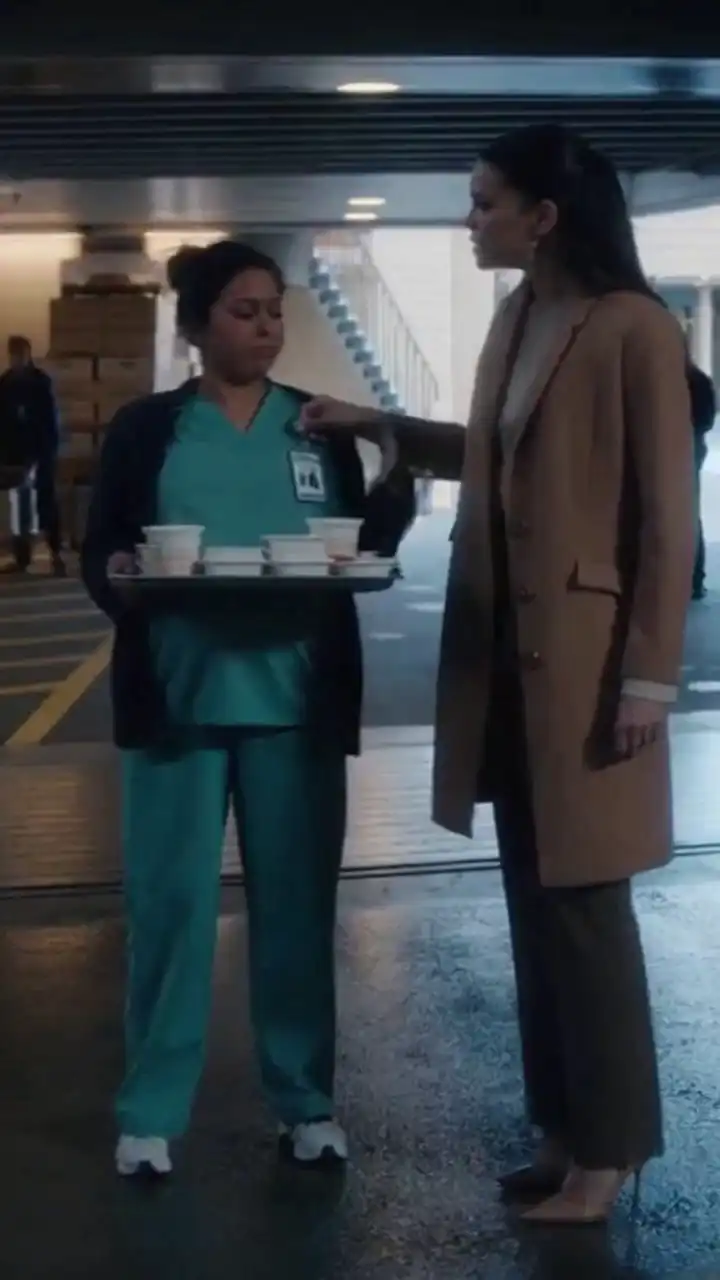
SHE RIPPED THE BADGE OFF A PREGNANT NURSE AIDE IN THE LOADING BAY TO SHOW EVERYONE WHO MATTERED—AND PICKED THE WORST POSSIBLE WITNESS
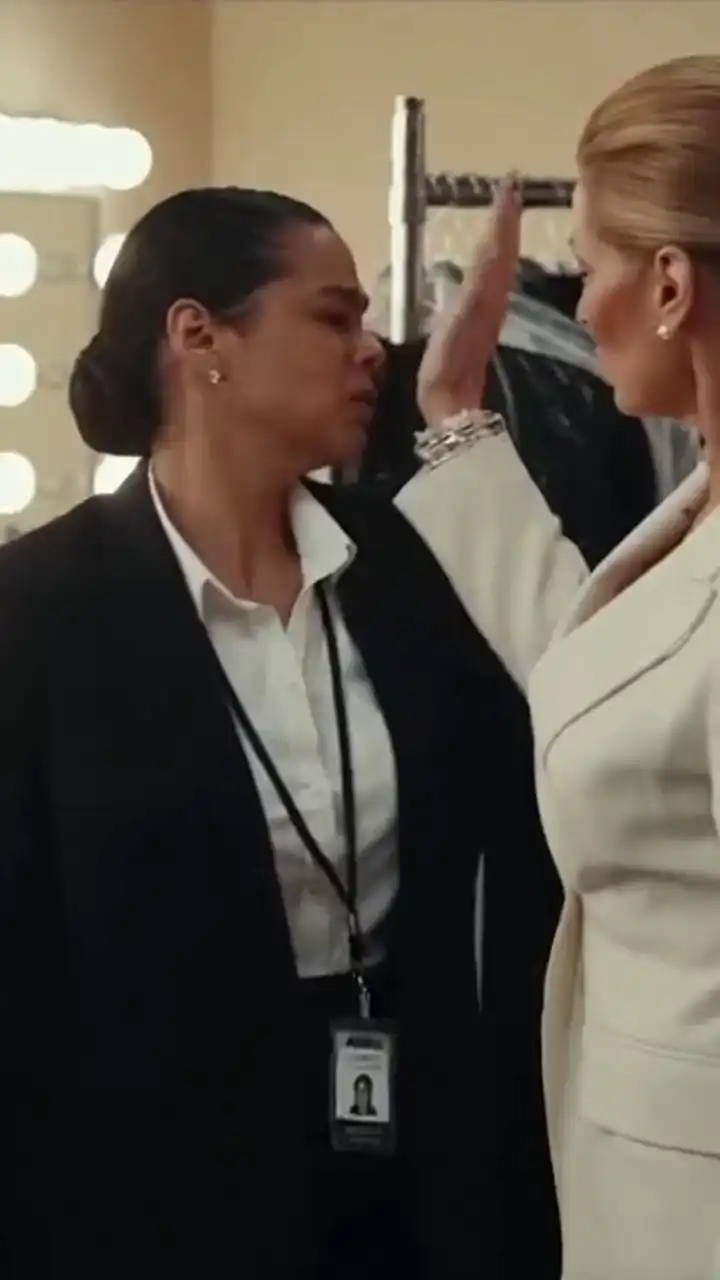
SHE SLAPPED THE THEATER USHER IN THE FITTING ROOM AND TURNED HER INTO A LESSON—UNTIL A QUIET VOICE FROM THE DOOR SAID HER NAME
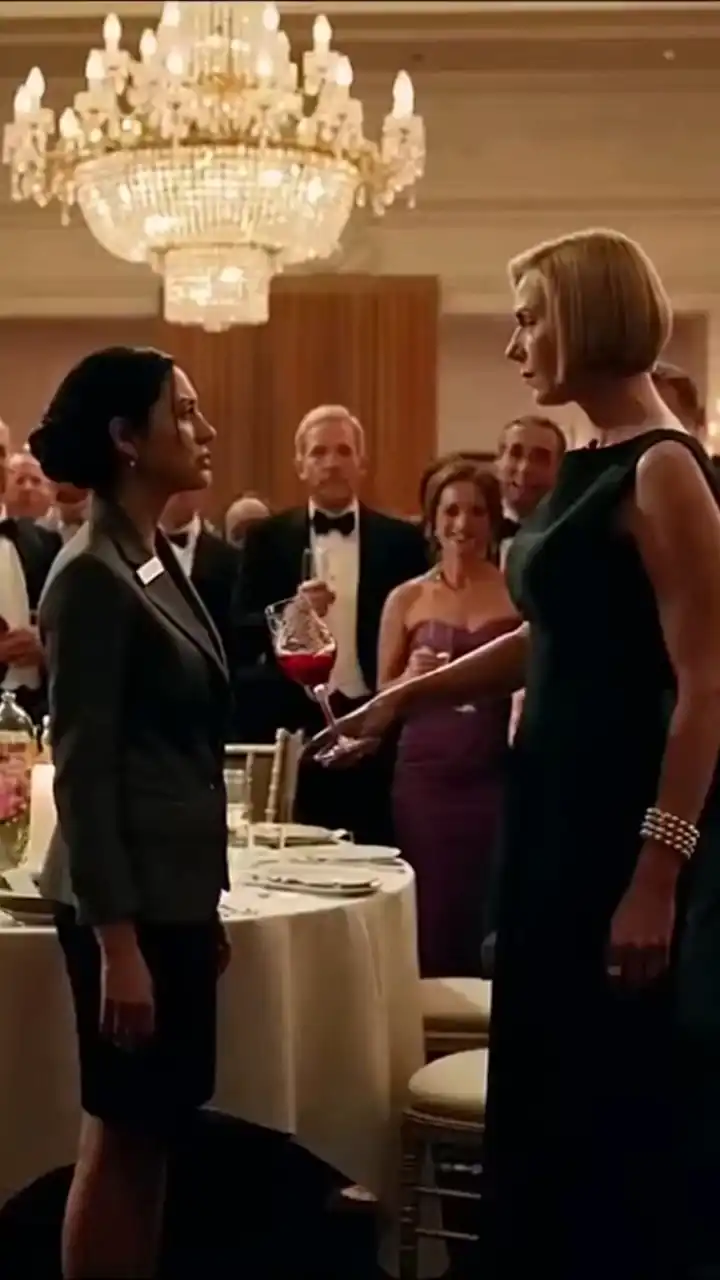
SHE MADE THE “HELP” STAND IN THE BANQUET HALL HOLDING A SPILLED WINE GLASS LIKE A CRIMINAL — UNTIL ONE NAME TURNED THE WHOLE ROOM AGAINST HER